25 Learning Activities for 3-Year-Olds That Actually Work (And Won’t Drive You Crazy)
Okay, real talk — three-year-olds are basically tiny scientists who have zero patience and maximum energy. If you have ever tried to sit a toddler down for a “structured lesson,” you already know how that goes. Spoiler: it doesn’t go well.
But here’s the thing — learning activities for 3-year-olds don’t have to feel like school. In fact, the best ones feel like pure play. I’ve rounded up 25 genuinely fun, easy-to-set-up activities that sneak in huge developmental wins while your little one thinks they’re just having a great time. Let’s get into it!
1. Sensory Bin Exploration

You know what costs almost nothing and buys you at least 30 minutes of focused toddler attention? A sensory bin. Fill a plastic container with dried rice, pasta, or kinetic sand and toss in some scoops, small cups, and little figurines. Your 3-year-old will dig, pour, and sort for ages. This kind of unstructured play builds fine motor skills, focus, and early math concepts like volume and measurement. It’s basically sneaky genius.
The beauty of sensory bins is that you can change the theme every week without spending much. Try a ‘beach bin’ with sand and shells, or a ‘farm bin’ with dried corn and animal toys. Kids at this age learn through their hands and senses, so letting them squish, scoop, and transfer materials is one of the most powerful learning activities for 3-year-olds you can offer. Plus, cleanup is your only real challenge — and honestly, that builds character too. 🙂
2. Color Mixing with Watercolors

Ask any 3-year-old what happens when you mix blue and yellow, and you’ll get a blank stare. Ask them to actually mix it themselves, and you’ve got a scientist on your hands. Set up a simple watercolor station with a few primary colors and let them experiment freely. Color mixing teaches basic science concepts, color theory, and cause-and-effect thinking in the most visual, tactile way possible. No lecture needed — the colors do the talking.
Don’t worry about keeping things neat or making ‘proper’ paintings. The process is what matters here, not the product. Let your child mix colors freely, name the new shades they discover, and talk about what they see. ‘Whoa, it turned purple! What do you think happens if we add red?’ Those little conversations are doing more for their brain development than any flashcard ever could. Creativity and curiosity are the real wins here.
3. Playdough Shape Making

Playdough is genuinely one of the greatest inventions for toddler learning — IMO it beats half the expensive educational toys out there. Rolling, squishing, poking, and pressing playdough strengthens the small muscles in little hands that they’ll later use for writing. Set out some cookie cutters, plastic knives, and rolling pins, and let them go wild. Shape recognition, counting, and imaginative play all come naturally during playdough sessions.
You can make homemade playdough in under 10 minutes with flour, salt, water, and food coloring — it’s softer and lasts longer than most store-bought versions. While your child plays, casually introduce vocabulary: ‘Can you make a tall snake? A flat pancake? A tiny ball?’ These simple challenges are secretly building spatial reasoning and following multi-step directions, which are both major 3-year-old developmental milestones. Playdough play is never just play — it’s prep work for a lot of big skills.
4. Letter Tracing in Sand

Forget worksheets. If you want your 3-year-old to start recognizing letters, put the knowledge in their hands — literally. Fill a shallow tray or baking dish with a thin layer of sand or salt and let your child draw letters with their finger. Writing in sand is a multisensory experience that helps letters stick in memory far better than pencil-on-paper tracing at this age. You can draw a letter first and ask them to copy it, or trace their name together.
The magic here is that mistakes don’t matter — just shake the tray and start fresh. There’s no pressure, no erasing, no frustration. That low-stakes environment actually makes kids more willing to try. Start with the letters in their name since those are the most personally meaningful. Research backs this up: children learn letters faster when they have emotional relevance, and there’s nothing more relevant to a 3-year-old than their own name.
5. Counting with Everyday Objects
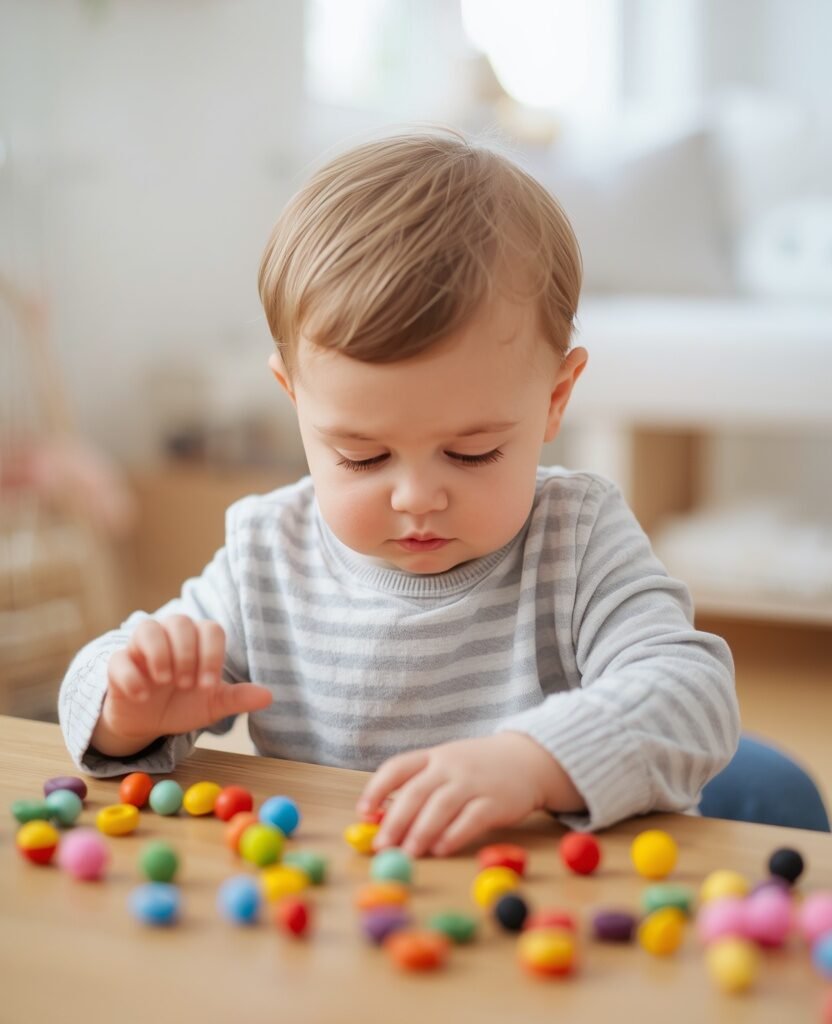
You do not need a fancy math curriculum to teach a 3-year-old to count. Grab some pom poms, buttons, rocks, or even goldfish crackers and start counting together. The key to early math with toddlers is making it concrete and hands-on — abstract number concepts don’t stick at this age, but physically touching and moving objects while counting absolutely does. Ten pom poms sorted by color is a full math lesson in disguise.
Turn counting into a game throughout the day rather than a sit-down activity. Count the stairs as you go up. Count apples at the grocery store. Count how many times they can jump. This kind of embedded math practice builds number sense in a natural, stress-free way that prepares for kindergarten math better than any workbook. And honestly, it’s kind of fun for you too. Ever wondered how many Goldfish crackers are in a bag? Now’s your chance to find out.
6. Storytime with Puppets

Reading to your child is great. Reading with puppets is next level. Grab a couple of simple hand puppets — or make sock puppets in about 60 seconds — and act out a favorite story together. Puppet storytelling builds language skills, emotional vocabulary, and narrative comprehension in ways that passive listening can’t match. When kids interact with puppets, they’re practicing conversation, predicting story outcomes, and making sense of emotions through characters.
You don’t need a script or a perfect story. Let your child take the lead. Ask questions: ‘What do you think the puppet should do next? How does the puppet feel?’ You might be surprised by the answers — 3-year-olds have rich inner worlds that puppets give them a safe way to express. This activity is especially powerful for kids who are still developing their verbal confidence, since speaking through a puppet can feel less intimidating than speaking directly.
7. Simple Puzzles

Puzzles are one of those activities that look simple but pack a massive developmental punch. A 6-12 piece puzzle challenges a 3-year-old to use spatial reasoning, problem-solving, hand-eye coordination, and persistence all at once. Start with chunky wooden puzzles that have knobs for easy grasping, then gradually move to more pieces as their skills grow. The satisfaction on their face when that last piece clicks in? Priceless.
Don’t rush in to help the moment they get frustrated — that frustration is actually the good stuff. It’s where the learning happens. Give them time to try, rotate pieces, and figure it out. If they’re truly stuck, guide them with questions rather than solutions: ‘Which piece do you think goes near the dog’s ear? What shape does that hole look like?’ This kind of guided problem-solving builds the kind of resilience that helps kids through school and beyond.
8. Nature Scavenger Hunt

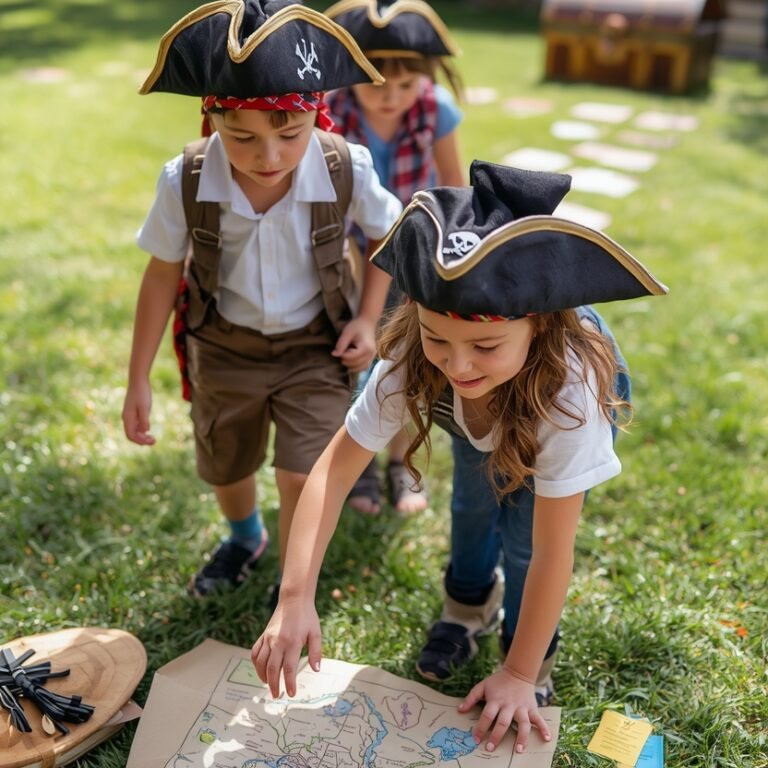
Fresh air plus a mission equals one very engaged 3-year-old. Create a simple picture-based scavenger hunt with items like a leaf, a rock, something yellow, something soft, or a pinecone. Nature scavenger hunts build observation skills, vocabulary, and early science concepts while giving toddlers a sense of independence and accomplishment. You can do this in your backyard, a park, or even just around the block — no fancy destination required.
As you collect items, talk about them. Where did this leaf come from? Is this rock heavy or light? What does the bark feel like? These conversations build descriptive language and scientific thinking without any curriculum. The goal isn’t to find everything on the list — it’s to stay curious and keep looking. FYI, this one works great as a weekly ritual that changes with the seasons, which makes it endlessly fresh.
9. Matching Games

Matching games — whether it’s memory cards, shape matching, or color sorting — are secretly brilliant learning tools for 3-year-olds. They build visual discrimination, memory, concentration, and early categorization skills while feeling like pure play. Start with simple matches (same colors, same animals) before moving to more complex versions like matching uppercase to lowercase letters or numbers to quantities.
You can make your own matching cards at home with index cards and stickers — no need to buy anything. Play together and narrate your thinking out loud: ‘Hmm, I’m looking for another red apple. Do you see one?’ This kind of think-aloud modeling teaches kids how to approach problems strategically. Matching games also teach turn-taking and patience, which are huge social skills at this age. The patience part may need some practice. Okay, a lot of practice.
10. Dancing and Movement Activities

If your 3-year-old has been sitting still for more than five minutes, something is wrong. Movement is their natural state, so lean into it. Put on some music and dance, play freeze dance, or follow YouTube kids’ movement videos. Gross motor activities build coordination, body awareness, and even language skills as kids learn action words like ‘jump,’ ‘spin,’ ‘stomp,’ and ‘wiggle.’ Plus, it burns energy in the best possible way.
Add a learning twist by calling out colors, animals, or letters and having your child act them out. ‘Move like a slow turtle! Now move like a fast cheetah! Freeze like a letter T!’ This kind of active learning connects physical movement to cognitive concepts, which research shows improves memory and retention for young children. It also makes learning extremely fun — and if learning is fun at age 3, that’s a gift that keeps on giving.
11. Simple Cooking and Baking
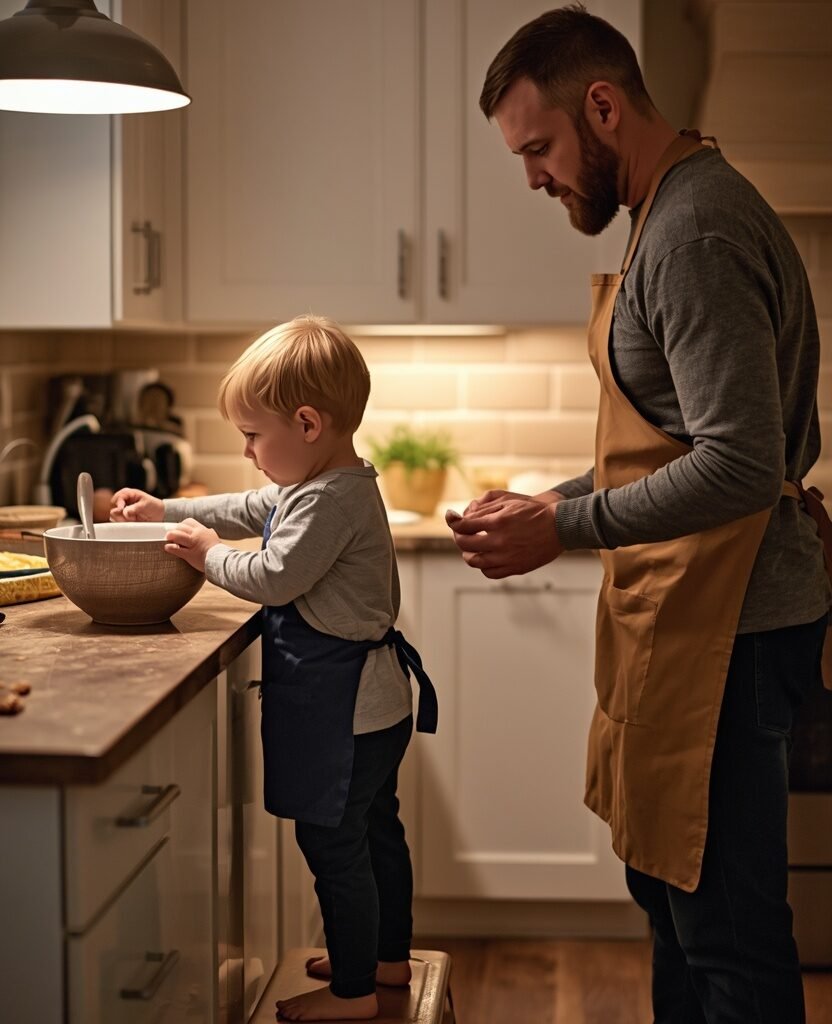
Letting a 3-year-old help in the kitchen might feel like inviting chaos — and honestly, it is — but the learning payoff is massive. Pouring, stirring, measuring, and mixing build math skills, fine motor control, sequencing, and following instructions. Simple recipes like banana muffins, no-bake energy balls, or decorated crackers are perfect for this age. Bonus: they’re way more likely to eat what they helped make.
Keep tasks age-appropriate — washing vegetables, stirring batter, rolling dough, or pressing cookie cutters are all 3-year-old-friendly. Talk through each step as you do it: ‘First, we add the flour. Now what do you think comes next?’ This teaches sequencing and introduces early reading comprehension skills like predicting and following a recipe as a text format. Messy? Absolutely. Worth it? Every single time.
12. Finger Painting

There’s something deeply satisfying about squishing paint between your fingers and dragging it across paper — and 3-year-olds know this instinctively. Finger painting is one of those classic learning activities for 3-year-olds that never gets old because it’s intensely sensory and completely open-ended. It builds fine motor control, color recognition, and creative expression all at once. Set up outside or lay down a plastic tablecloth and let them go, full abstract artist.
Don’t limit them to paper — try painting on cardboard, paper plates, or even rocks for a fun twist. Ask open-ended questions while they work: ‘What are you making? What does that feel like? What happens when you mix those two colors?’ The conversation around the art is as valuable as the art itself for language development. And if the paint ends up everywhere, including on the dog — well, that’s just extra texture.
13. Building Blocks and LEGO Duplo

Blocks are the OG educational toy, and for good reason. Whether it’s wooden unit blocks, LEGO Duplo, or magnetic tiles, building activities give 3-year-olds a workout in spatial reasoning, early engineering concepts, cause and effect, and creativity. Stacking, balancing, and constructing teach physics concepts kids won’t officially study for years, but they’re building (pun intended) intuitive understanding right now.
Give them open-ended challenges: ‘Can you build something taller than you? Can you make a house for this toy dinosaur? What happens if you put the big block on top?’ Challenge-based block play develops persistence and flexible thinking alongside all those fine motor and spatial skills. For more structured indoor play ideas that complement block building, check out these indoor activities for kids that keep little minds busy and engaged.
14. Sorting by Color, Shape, or Size

Sorting might seem basic, but it’s genuinely one of the most foundational math and science skills you can build at age 3. Give your child a collection of objects — pom poms, buttons, LEGO pieces, or even socks — and ask them to sort by one attribute at a time. Categorization skills form the bedrock of later math, science, and reading comprehension. Start with color, then try size, then shape, then mix it up and let them choose their own sorting rule.
The ‘let them choose their own rule’ part is important. When a child invents their own sorting system (‘these are the sparkly ones!’), they’re practicing higher-order thinking. Accept unconventional sorts and ask them to explain their reasoning. Explaining their sorting rule out loud builds metacognitive skills — the ability to think about their own thinking — which is a very big deal in early childhood development. Even if their sorting rule makes zero logical sense to you.
15. Water Play Activities

Water play is one of those magical activity categories that toddlers never get tired of. Set up a water table, a plastic bin, or even just the kitchen sink with some cups, funnels, squeeze bottles, and spoons. Water play teaches early science concepts like volume, capacity, cause and effect, and properties of liquids while also being deeply calming for most kids. Overstimulated toddler? Water play to the rescue.
Add color with a few drops of food coloring, or freeze small toys in ice cubes for an excavation twist. Ask questions to extend the thinking: ‘Which cup holds more? Where does the water go when you tip the funnel? What makes that bottle squirt so far?’ These questions introduce scientific vocabulary and encourage hypothesis-forming at a developmentally appropriate level. And yes, the floor will get wet. Invest in a good bath mat and embrace it.
16. Simple Science Experiments

You do not need a lab coat or a degree in chemistry to do science with a 3-year-old — a box of baking soda and some vinegar will do. Simple experiments like the classic volcano reaction, dissolving sugar in water, or watching oil and water separate are absolutely mesmerizing to toddlers. These activities introduce cause-and-effect reasoning and basic scientific observation skills in a way that’s completely accessible and wildly entertaining.
Always frame experiments as questions rather than demonstrations: ‘What do you think will happen when we add the vinegar? Let’s find out!’ Then talk about what happened afterward. This predict-observe-explain cycle is the foundation of scientific thinking, and it maps perfectly onto how 3-year-olds naturally explore the world anyway. They’re already asking ‘why’ about everything — science experiments just give that curiosity a focused outlet. And a very satisfying fizz.
17. Play-Based Grocery Store

Set up a pretend grocery store with toy food, a basket, price tags, and some play money, and watch your 3-year-old’s brain light up. Dramatic play like this builds language, early math, social skills, and imaginative thinking simultaneously. They’ll sort items, count money (approximately), read labels (pretend-read, but still!), and practice conversational exchanges like a tiny professional. It’s genuinely one of the richest learning setups you can create with stuff already around the house.
Take turns being the customer and the shopkeeper. When you’re the customer, model polite language, asking questions, and counting money. When your child is the shopkeeper, let them lead entirely — even if the apple costs forty-seven dollars. Role reversal in pretend play builds empathy and perspective-taking skills that are foundational for social-emotional development. Plus, it’s genuinely hilarious to watch a 3-year-old run a business.
18. Alphabet Recognition Games

Formal letter drills at age 3 are a great way to make kids hate letters. Instead, sneak alphabet learning into games and everyday life. Foam alphabet mats, magnetic letters on the fridge, alphabet puzzles, and letter-shaped cookie cutters all make letter recognition feel like play rather than work. Point out letters in the world around you — on signs, books, cereal boxes — and make it a hunt.
Focus on the letters in your child’s name first, since those carry the most meaning. Then expand to letters from favorite characters, foods they love, or pets’ names. Connecting letters to meaningful words dramatically accelerates recognition and retention. You can also try this collection of fine motor activities for preschoolers that includes letter-tracing activities perfect for building the hand strength needed for writing later on.
19. Music and Rhythm Activities

Music is one of the most powerful learning tools for early childhood, and 3-year-olds are hardwired to respond to it. You don’t need instruments — pots and wooden spoons work just as well. Rhythm activities build phonological awareness (the foundation of reading), counting skills, coordination, and memory, often all in the same song. Clap syllables in words. Tap a beat and have them copy it. Sing songs that involve counting, days of the week, or the alphabet.
Introduce simple instruments like shakers, bells, or drums and let your child experiment freely with sound. ‘That was loud! Can you make a quieter sound? Can you play fast? Now slow?’ These opposites — loud/quiet, fast/slow — are important cognitive concepts that music makes intuitive. And look, if your living room sounds like a chaotic percussion ensemble for a while, that’s just the sound of learning happening. You’re welcome.
20. Drawing and Scribbling Practice

Do not underestimate the humble scribble. At age 3, scribbling is actually the developmental stage right before representational drawing, and it’s doing important work. Drawing builds fine motor skills, hand strength, pencil grip, and spatial awareness — all prerequisites for writing. Give your child large paper, chunky crayons, and zero expectations about what it should look like. Let them scribble freely.
Ask them to tell you about their drawing rather than guessing what it is (lesson learned the hard way — never ask ‘is that a dog?’ when it’s clearly their mom’s face). Their verbal description of their scribbles is also building narrative language, vocabulary, and the concept that pictures can represent real things — a key pre-literacy concept. The messier and freer you allow it to be, the more they’ll draw. And the more they draw, the more they learn.
21. I Spy Color and Shape Game

‘I spy with my little eye, something blue and round.’ That’s it. That’s the whole activity — and it’s genuinely fantastic. I Spy builds visual scanning skills, color and shape vocabulary, deductive reasoning, and sustained attention in a format that requires zero materials and works literally anywhere. In the car, at the grocery store, at a restaurant — I Spy goes wherever you go and keeps brains working.
Start with simple one-attribute clues (just a color) and build up to two attributes (blue and big) or even three (blue, big, and fuzzy) as their skills grow. When it’s their turn to give the clue, you get fascinating insight into what they notice and how they describe the world. Toddler I Spy clues are often beautifully illogical, which makes the game even more fun. Hint: ‘it’s the invisible thing’ is a legitimate 3-year-old clue, and you just have to roll with it.
22. Planting Seeds and Gardening

There is something incredibly powerful about giving a 3-year-old a seed, a pot of dirt, and a little watering can and watching what happens. Gardening teaches patience, responsibility, biology, and cause and effect in a tangible, real-world way. Fast-growing seeds like radishes, beans, or sunflowers are ideal for toddlers because they can see results in just a few days — and 3-year-olds do not do well with ‘wait three months to see something.’
Make it a daily routine to check on the seeds together. Are they sprouting? Do they need water? What changed since yesterday? This kind of daily observation builds scientific thinking and attention to detail while also giving toddlers a sense of ownership and pride. When those first green shoots appear, the look on their face is completely priceless. Even better when they eventually eat the tomato they grew. Or refuse to eat it. Toddlers are unpredictable.
23. Storybook Role Play

Pick a favorite storybook and then live it. Dress up as the characters, act out the scenes, and improvise the parts you don’t remember. Story role play builds narrative comprehension, sequencing skills, vocabulary, and emotional intelligence as kids practice ‘being’ characters with different feelings and motivations. It also builds the kind of deep engagement with stories that leads to a lifelong love of reading — which is honestly one of the best gifts you can give a child.
Let your child direct. If they want to change the ending so the wolf becomes friends with the pigs, that’s creative thinking at its finest. Narrate along with them, using rich vocabulary: ‘The brave princess crept silently through the dark, mysterious forest.’ Modeling complex language during play is one of the most effective vocabulary-building strategies for preschoolers. And frankly, being a Big Bad Wolf on a Tuesday afternoon is its own reward.
24. Simple Jigsaw Puzzles

We talked about chunky puzzles earlier, but as 3-year-olds develop, they’re ready to step up to simple jigsaw puzzles in the 12-24 piece range. These take the challenge up a notch, requiring kids to use visual discrimination, trial and error, spatial rotation, and strategic thinking to figure out where pieces go. Floor puzzles with large pieces and familiar images (animals, vehicles, favorite characters) work best at this stage.
Work on puzzles together and narrate your process: ‘I’m going to find all the edge pieces first. Now I’m looking for something with blue sky.’ This kind of think-aloud modeling teaches problem-solving strategies that extend far beyond puzzle play. Kids who learn to approach puzzles systematically are building the same thinking skills they’ll use in reading comprehension and math. Deep? Yes. But also, you’re literally just doing a puzzle, so it’s easy.
25. Bedtime Storytelling and Language Play

The last activity on this list might be the most powerful of all: reading together at bedtime. Regular read-alouds are the single most impactful thing you can do for your child’s language development, literacy, and academic success, according to decades of research. Choose books with rich vocabulary, repetitive language, and engaging illustrations. Ask questions before, during, and after: ‘What do you think this book is about? What might happen next? How do you think that character feels?’
Don’t stop at just reading the words — use voices, point to pictures, make predictions, and let your child turn pages and ‘read’ familiar books back to you from memory. Pretend-reading (reciting a memorized book) is a genuine and important literacy milestone that shows comprehension and story understanding. Plus, bedtime stories are one of those magical, irreplaceable bonding rituals that your child will remember forever. No pressure — just read the good ones.
Wrapping It Up: The Best Learning Happens Through Play
There you have it — 25 learning activities for 3-year-olds that cover everything from math and literacy to science, music, and emotional intelligence. The secret ingredient across all of them? They feel like play because they are play. At age 3, that’s exactly how learning should feel.
You don’t need to do all 25 this week (please don’t do all 25 this week). Pick three or four that sound fun to both of you and rotate them. Some days will be magical. Some days your child will refuse every single activity and ask to watch cartoons instead. That’s also fine. Consistency over perfection is the real parenting win here.
The fact that you’re looking up activities for your 3-year-old means you’re already doing a great job. Keep it playful, keep it low-pressure, and enjoy the mess. They’re only this little once — might as well make it colorful.