24 Flower Activities for Preschoolers
Blooming Fun That Teaches, Tickles, and Totally Earns Its Mess
Why Flower Activities for Preschoolers Are Worth Every Petal
Flowers are basically the universe’s gift to early childhood educators and exhausted parents everywhere. They’re colorful, textural, fragrant, and they grow — which means every flower activity for preschoolers comes loaded with built-in curiosity fuel. I’ve spent years watching kids light up over petals, seeds, and stems in ways that no toy has ever quite matched.
This list gives you 24 tried-and-true flower activities for preschoolers — covering art, science, sensory play, fine motor skills, math, and dramatic play. Some take 10 minutes, some take a week. All of them are worth it. Let’s get into it.
If you’re looking for more hands-on ideas, check out our roundup of fine motor activities for preschoolers that pair perfectly with these flower projects.
1. Flower Petal Collage Art

Let me just say — flower petal collage art is one of those activities that looks impressive but requires zero artistic talent from the adult. You grab some fresh or dried petals, a sheet of paper, and some school glue, and your preschooler basically becomes a tiny Picasso. I tried this with my niece on a rainy afternoon and she was hooked for a solid 45 minutes. That’s basically a miracle in toddler-time, FYI.
This activity is a brilliant way to build fine motor skills while exploring textures and colors. Little fingers practice pinching, pressing, and arranging — all of which prep those hand muscles for writing later. You can use petals from your garden or even grab a cheap bunch of flowers from the grocery store. The result makes adorable wall art, and honestly, it’s prettier than most things I’ve made as an adult. 🙂
2. Seed Planting in Mini Pots

There’s something genuinely magical about handing a preschooler a seed and watching their face when it eventually sprouts. Seed planting in mini pots is one of the best flower activities for preschoolers because it teaches patience, responsibility, and basic science — all in one messy, dirt-covered session. Grab some marigold or sunflower seeds (they grow fast and won’t make you wait forever), small pots, and potting soil.
The learning runs deep here. Kids develop a sense of cause and effect — water the plant, and it grows. Forget it, it droops. Life lessons, honestly. You can label each pot with the child’s name, turning it into a personal project they take ownership of. Place the pots on a sunny windowsill and let the kids check on their plant every day. Spoiler: the daily check-ins become a whole event. Pure joy.
3. Flower Stamping with Paint

Cut a flower in half crosswise, and you’ve got yourself a natural flower stamp — and one of the coolest craft tools a preschooler has ever laid eyes on. Dip the flat end in tempera paint and press it onto paper for stunning floral prints. Roses, carnations, and zinnias all create different patterns, so it’s worth experimenting. I love how every stamp looks slightly different, which keeps kids curious and engaged the whole time.
This activity combines art with a little science exploration — kids notice how different flowers leave different shapes and textures on the paper. It also works as a sneaky lesson in colors, especially when you let them mix shades on their stamp. Keep a damp cloth nearby because things get gloriously messy. The finished prints look gorgeous framed, and they double as gifts for grandparents who, let’s be honest, will absolutely lose their minds over them.
4. Flower Crown Making

Flower crown making is peak preschool magic. All you need are some sturdy flowers with long stems — daisies and dandelions are perfect — and a little patience for small hands working through the weaving. It’s a surprisingly effective fine motor activity because threading and twisting require real hand-eye coordination. Once they get the hang of it, good luck getting them to stop — every flower in the yard is suddenly fair game.
Beyond the crafting, flower crowns give preschoolers a massive confidence boost. They made something wearable and beautiful, and they know it. Plan a little tea party or garden play session after the crowning ceremony for maximum effect. You can also use fake craft flowers if real ones aren’t available or in season — the technique is the same and the crowns last much longer. IMO, the real ones smell better, but you do what works.
5. Flower Sensory Bin

A flower sensory bin is one of those activities that takes five minutes to set up and buys you serious quiet play time. Fill a shallow bin with flower petals, water beads, dried lavender, or even potting soil, and tuck in some small toys or scoops. The combination of textures, scents, and colors is genuinely fascinating for little ones. Sensory play builds neural connections — which sounds fancy, but really just means it’s very, very good for developing brains.
You can theme the bin around any flower concept you want — a spring garden, a flower shop, or a bee habitat with small plastic bees hiding among the petals. Add scoops, tweezers, and small cups to encourage different grips and hand movements. This kind of open-ended play is where kids do their best thinking. Lay down a plastic mat underneath because petals travel. Trust me on this one — you’ll thank yourself later.
6. Watercolor Flower Painting

Watercolor flower painting is the activity that makes every parent feel like they’re raising a future artist. The wet-on-wet technique — painting on damp paper — creates soft, blooming effects that literally look like flowers spreading open. It’s almost too easy and yet completely stunning. Hand a preschooler a brush, some watercolors, and a cup of water, and just step back. They figure it out fast, and the results are always gorgeous.
This activity builds color recognition and teaches kids how colors mix and bleed into each other — yellow and blue making green right there on the page is a proper science moment. Keep the color palette simple at first: just red, yellow, and blue to start, so they can discover secondary colors on their own. Watching a child realize they made orange juice themselves is one of those small parenting wins that honestly never gets old. Frame the best ones — you’ll want to.
7. Flower Counting and Sorting Game

Who said flower activities for preschoolers can’t double as early math lessons? This sorting and counting game uses colorful artificial flowers (or real ones cut to similar sizes) and some labeled cups or baskets. Kids sort by color, count how many are in each group, and start making simple comparisons like ‘I have more red ones than yellow ones.’ It’s math without the worksheets, which — let’s be real — is the best kind.
You can dial up the difficulty based on your child’s age. Younger preschoolers love simple color matching. Older ones can count, group by size, or even arrange flowers from smallest to tallest. This activity also introduces vocabulary naturally — more, fewer, same, different, taller, shorter. Tuck in a small magnifying glass, and you’ve upgraded the whole experience into a flower investigation station. It’s the kind of activity that makes kids feel like tiny scientists.
8. Pressed Flower Bookmark Craft

Pressed flower bookmarks are a two-step activity with a built-in waiting game — which is its own little patience lesson. First, you press flowers between the pages of a heavy book for a couple of days. Then you arrange the dried petals onto card stock, laminate it (or use clear contact paper), punch a hole, and add a ribbon. The result is a genuinely beautiful, usable item that preschoolers feel incredibly proud of making.
This project connects beautifully to nature exploration because kids start looking at flowers differently — they notice shape, color, and size with a new purpose. It also works as a lovely gift-making activity around Mother’s Day or any special occasion. The laminating step amazes kids every single time; watching the flowers get sealed in is basically magic to a four-year-old. Keep a few extras on hand because, once they make one, they immediately want to make five more.
Want to keep the creativity flowing indoors? Check out these indoor activities for kids in 2026 — perfect for rainy days when the garden isn’t an option.
9. Flower Parts Science Lesson

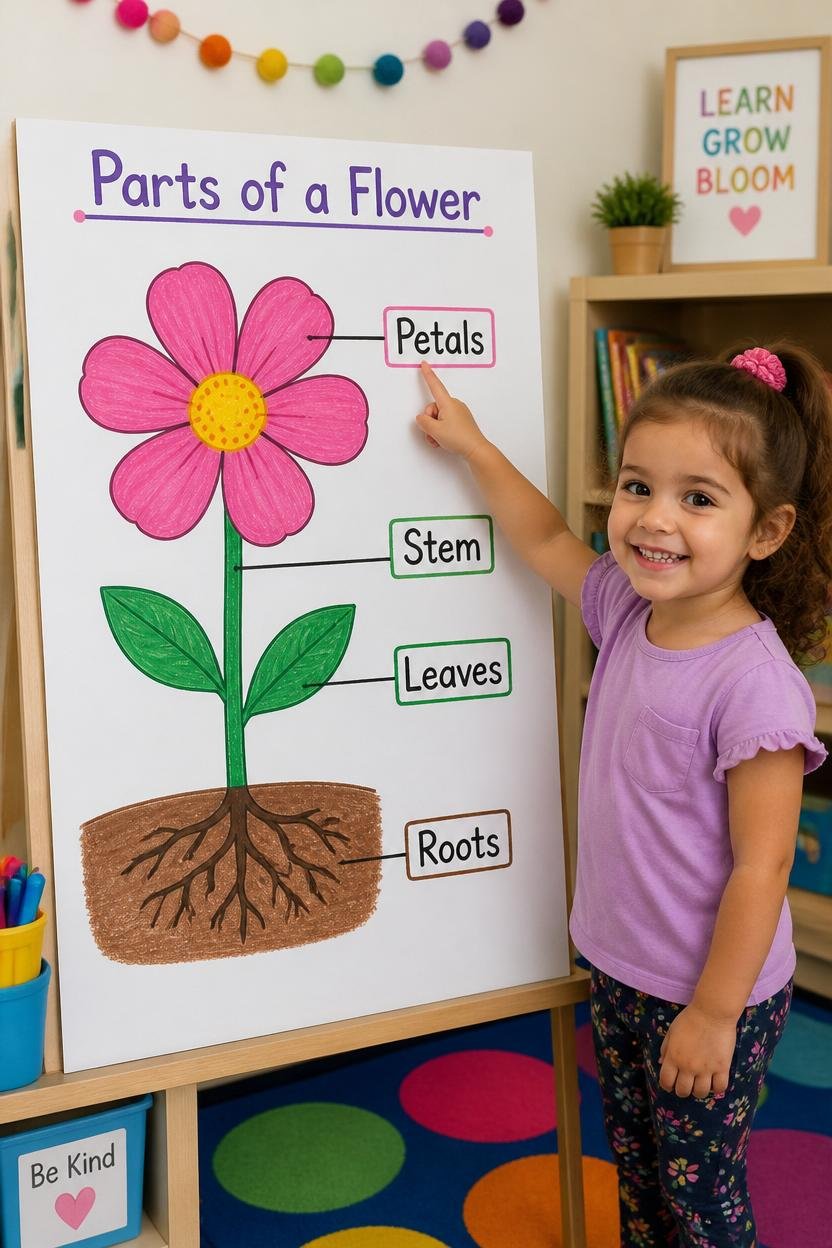
You don’t need a science lab to teach flower anatomy to a preschooler — just a real flower and some curiosity. Pull apart a large flower like a tulip or lily together and name each part: petals, stem, leaves, roots, and the center. Make it hands-on by letting kids touch and smell each section. This turns a regular flower into a full-on science exploration moment that kids actually remember because they experienced it, not just saw it on a screen.
Pair the exploration with a simple labeled diagram they can color in — just five parts, big shapes, and bold labels. Preschoolers love feeling like they know something official, and saying ‘that’s the pistil’ with total confidence at age four is genuinely hilarious and heartwarming all at once. You can also use a sunflower for this — the seed center alone sparks a dozen questions about where seeds come from. Follow the curiosity wherever it goes.
10. Flower Tissue Paper Craft

Tissue paper flowers are ridiculously satisfying to make and nearly impossible to mess up — which makes them perfect for preschoolers. Draw or print a simple flower outline on cardboard, then let kids scrunch up small pieces of tissue paper and glue them inside the shape. The scrunching motion builds hand strength, the color choices build decision-making skills, and the finished product looks like a real masterpiece hanging on the fridge.
You can adapt this for different occasions by changing the color palette — pastels for spring, warm tones for fall, red and pink for Valentine’s Day. Let kids mix colors within petals or give each petal a different shade. There’s no right or wrong way to fill in the flower, which takes the pressure off and keeps the experience purely joyful. This is one of those go-to activities you’ll return to again and again because setup is easy and the payoff is huge.
11. Flower Arranging Play

Set up a tiny flower arranging station and watch your preschooler become the most serious florist you’ve ever seen. Use a mix of real and artificial flowers, a few small vases or cups with water, and maybe some ribbon for wrapping. Flower arranging builds spatial thinking — kids figure out what looks balanced, what colors go together, and how tall each stem needs to be. It also triggers imaginative play, which tends to turn into a whole flower shop situation very quickly.
This activity works brilliantly as a pretend play extension — add a cash register toy, price tags, and some wrapping paper, and you’ve got a full flower shop setup that keeps kids engaged for ages. It’s also a natural vocabulary builder: tall, short, wide, narrow, fragrant, colorful. Real flowers add a sensory dimension that fake ones can’t replicate, but both work for the core skill-building. Either way, expect to receive several ‘bouquets’ as gifts throughout the activity. Accept them graciously.
12. Flower Themed Story Time

Pairing flower activities for preschoolers with a good book makes the whole experience richer and more meaningful. Pick a story centered on flowers or gardens — ‘The Tiny Seed’ by Eric Carle is a classic for good reason — and read it together before or after the craft. Story time activates language development, builds vocabulary around nature themes, and gives context to the hands-on activities you’re doing. It bridges imagination and real-world learning in a way that sticks.
After reading, ask a few open-ended questions: ‘What was your favorite flower in the story? Why do you think the seed grew?’ These questions aren’t quizzes — they’re conversation starters that build critical thinking. Kids who regularly pair reading with hands-on exploration develop stronger comprehension skills over time. You can also create a simple flower-themed bookshelf display using pressed flowers or drawings from your other activities. It turns storytime into part of a bigger, connected flower world.
13. Flower Bubble Printing
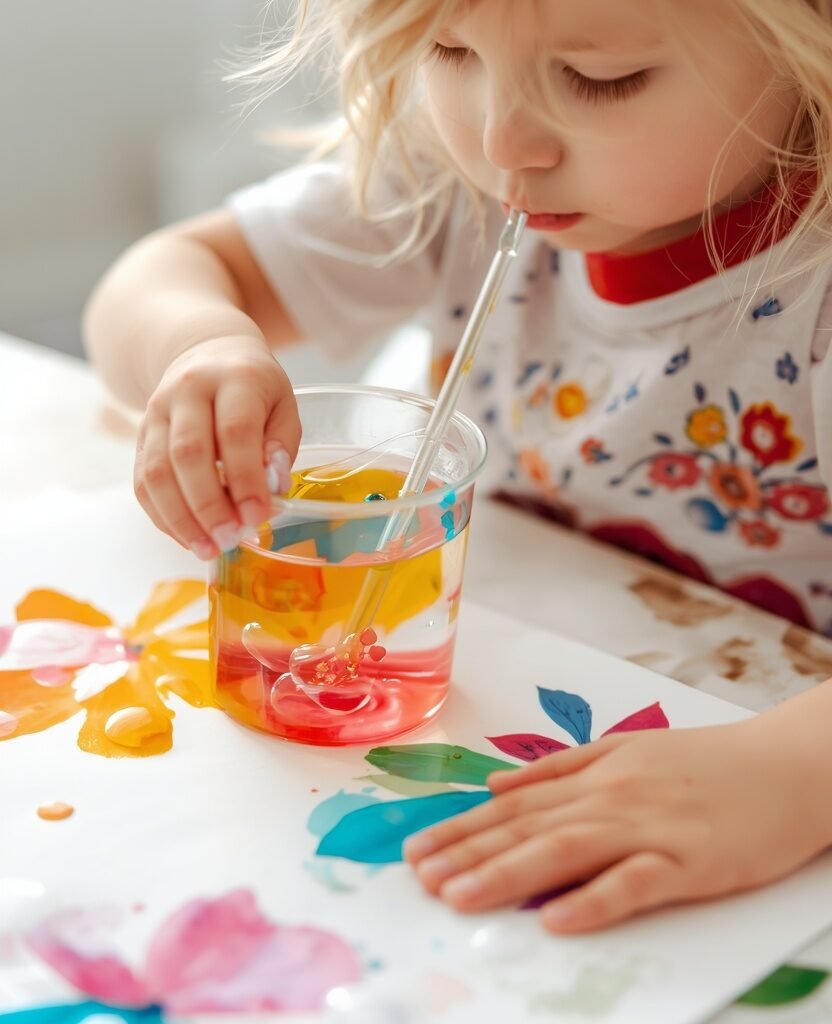
Flower bubble printing is one of those activities that sounds too good to be true and then absolutely delivers. Mix water, dish soap, and food coloring in a cup. Let kids blow through a straw until bubbles overflow over the rim (remind them to blow, not suck — important caveat). Then press paper on top of the bubbles to capture the circular patterns. With a little trimming and layering, those bubble prints become stunning flower art that looks genuinely professional.
This activity sneaks in some early science — kids observe how bubbles form, why they pop, and what happens when colors mix. The blowing also builds breath control, which is great for speech development. Use multiple colors for the most vibrant results. Tip: Use deeper cups to reduce splashing and keep the workspace slightly less chaotic. Only slightly. This one gets messy, and that’s part of the fun — embrace it and just lay down some newspaper first.
14. Flower Themed Playdough

Flower-themed playdough play is a sensory goldmine that hits almost every developmental target in one sitting. Make or buy playdough in flower-inspired colors — pink, yellow, lavender, white — and add flower cookie cutters, rolling pins, and real or plastic leaves for pressing patterns. Kids build hand strength through rolling and squeezing while developing creativity through open-ended making. Adding a little lavender essential oil to the dough makes it smell incredible, which is a bonus for sensory-seeking kids.
You can extend the activity by setting up a flower bakery — kids ‘bake flower cookies, arrange them on a tray, and serve them to stuffed animals. The imaginative play layer multiplies engagement and keeps kids at the table longer. Homemade playdough with natural coloring is also a good choice if you’re avoiding artificial dyes — beet juice for pink, turmeric for yellow. Either way, expect flower-shaped ‘cakes’ to be presented to you with great ceremony, and you should act appropriately impressed.
15. Flower Nature Walk and Collection

Sometimes the best flower activity for preschoolers is just going outside and looking. A simple nature walk with a collection bag turns the neighborhood or park into a living classroom. Give kids a paper bag and ask them to collect fallen petals, leaves, and seed pods — not to pick whole plants, but to gather what’s already on the ground. This teaches environmental respect while fueling curiosity about the natural world around them.
Back home, spread out the collection and explore it together. Sort by color, size, or texture. Use a magnifying glass to look at petal veins or seed shapes up close. You can press the best finds or use them in another craft activity. This kind of nature-based learning is backed by research as one of the best ways to develop attention spans and reduce anxiety in young children. Plus, it costs absolutely nothing, which — as a parent — you always appreciate.
Nature walks pair amazingly well with recycling activities for kids — you can collect and repurpose natural materials on the same outing.
16. Flower Threading Activity

Flower threading is a classic fine motor activity dressed up in the prettiest packaging. Cut out large flower shapes from cardstock, punch a hole in the center of each, and let kids thread them onto a piece of thick yarn or string. It sounds simple, but for small hands, lining up the hole and pushing the yarn through requires real concentration and coordination. This directly builds the pre-writing hand skills preschoolers need for kindergarten readiness.
You can color-code the flowers and give threading instructions — ‘put a red flower, then a yellow flower, then a pink flower’ — turning it into a pattern recognition game at the same time. The finished garland makes gorgeous room decor and gives kids a huge sense of accomplishment. For extra sensory input, add real dried flowers alongside the paper ones so kids experience the texture difference. Hang the completed garlands in their bedroom window where the light catches the colors beautifully.
17. Flower Color Mixing Experiment
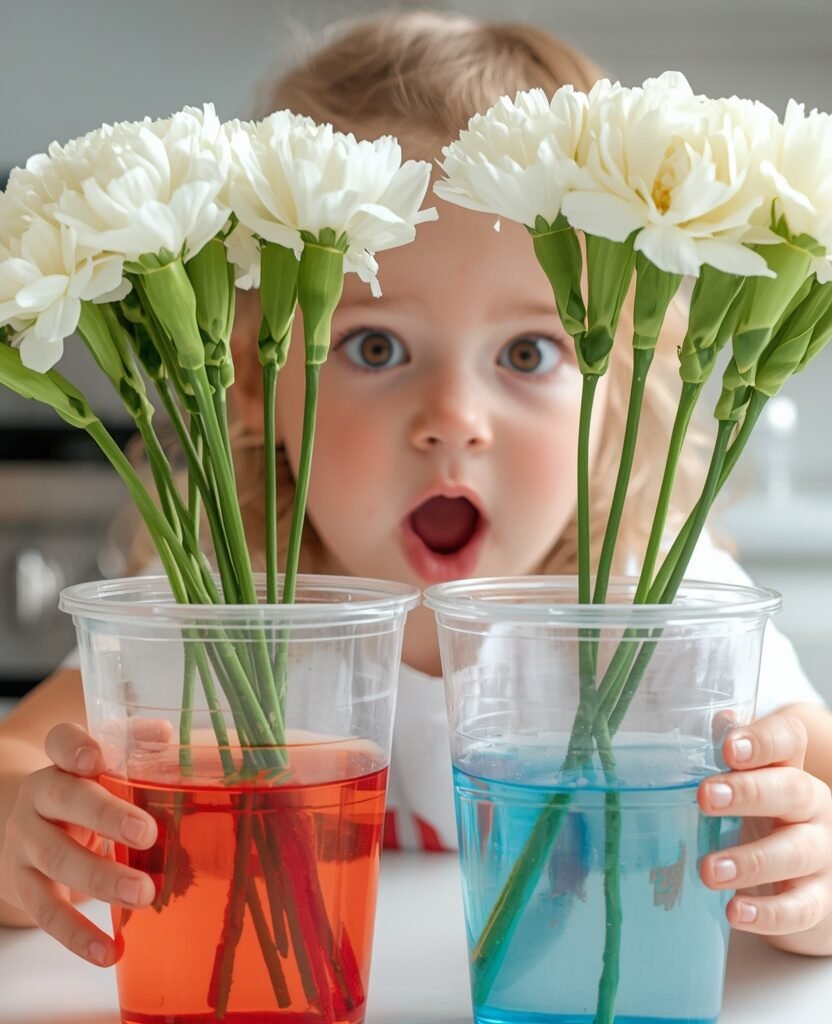
The flower color-changing experiment with white carnations is genuinely one of the coolest things you can show a preschooler. Split a carnation stem in half and place each end in different colors of dyed water. Over a day or two, the petals slowly absorb both colors and turn into a two-toned flower. Watching kids’ faces when they come back to check on it each morning is absolutely priceless. This is hands-on science at its most magical.
This experiment teaches how plants drink water through their stems — a concept that actually sticks because they see it happening in real time. Add food coloring to the water in multiple cups and run several carnations at once for a rainbow of results. Keep a simple observation journal where kids draw what they see each day — even scribbles count. It builds early scientific thinking habits: observe, predict, and record. And it’s just genuinely wonderful to watch. Don’t skip this one.
18. Flower Craft with Coffee Filters

Coffee filter flowers are one of those craft activities where the transformation moment is genuinely exciting. Color a flattened coffee filter with washable markers, then lightly spray or drip water on it. Watch the colors bleed and blend into stunning tie-dye flower patterns almost instantly. Fold and pinch the center once dry, twist a pipe cleaner around it for a stem, and you’ve got a gorgeous paper flower bouquet. It’s satisfying every single time.
This activity teaches color mixing in a super visual and immediate way — red and blue blending into purple right before their eyes creates real wonder. The spray bottle itself is great for hand strength too, which is why occupational therapists recommend it as a tool for fine motor development. Make a whole bunch and arrange them in a vase for a lasting display that doesn’t wilt. Coffee filter flowers also make great gifts — especially when a preschooler proudly announces they made it themselves.
19. Flower Yoga Poses

Flower yoga for preschoolers is exactly as adorable as it sounds, and it’s also genuinely beneficial. Poses like the lotus, the sunflower stretch (arms reaching overhead and swaying), and the ‘seed growing into a flower’ sequence from curled up to standing tall teach body awareness and balance in a fun, imaginative way. Kids connect movement to nature metaphors, which makes the poses memorable and the transitions between them smooth and giggly.
This works beautifully as a calm-down activity or a morning energizer, depending on the pace you set. Add some soft nature sounds in the background, and you’ve created a fully immersive experience that even the wiggliest preschooler can get behind. Flower yoga also builds mindfulness — slow breathing, focused movement, and moment-to-moment awareness. It’s the kind of activity that parents end up doing alongside their kids and honestly feel better for it. Highly recommend making it a weekly thing.
20. Flower Themed Puzzle Making

Making a flower puzzle is easier than it sounds. Print or draw a bold flower image, glue it to cardstock, laminate it, and cut it into large, simple pieces. Preschoolers solve it, and the process builds spatial reasoning and problem-solving in a hands-on, satisfying way. Commercial flower-themed puzzles work just as well — look for large piece options with vibrant illustrations that keep kids engaged and give them visual cues for placing each piece.
Puzzle-solving is one of the most underrated cognitive development activities for this age group. It builds persistence — kids have to keep trying when pieces don’t fit — as well as fine motor control and shape recognition. Do the puzzle together first to model the thinking process, then let them try solo. Time them (gently, without pressure) over multiple attempts and celebrate when they beat their record. That positive reinforcement builds a growth mindset that extends way beyond puzzle time.
21. Flower Themed Cooking Activity

Flower-shaped cooking activities combine two things preschoolers love: making stuff and eating it. Use flower cookie cutters to cut sandwiches, pancakes, or sugar cookies. Let kids press the cutters into dough or bread themselves — they love that part. For a more botanical angle, look up edible flowers safe for kids (like pansies and nasturtiums) and let kids sprinkle them on yogurt or salads. Suddenly, a snack is an experience.
Cooking with preschoolers builds math and science skills naturally — measuring cups teach quantity, mixing teaches cause and effect, and watching dough rise or batter cook is pure chemistry in action. It also builds independence and confidence because they genuinely contributed to something the whole family eats. Keep tasks age-appropriate: stirring, pressing, sprinkling, and decorating are perfect for small hands. And yes, expect more tasting than cooking, which is fine. That’s basically the whole point.
22. Flower Shadow Drawing

Flower shadow drawing is one of those simple activities that produces beautiful results and sparks a lot of questions. Place a real flower or branch on white paper in direct sunlight and have kids trace the shadow it casts. As the sun moves, the shadow shifts — so you can explore why that happens in very simple terms. This is art and science blended in the most natural, low-prep way possible. No special materials needed beyond paper and a pencil.
Kids develop observational skills doing this — they have to look closely, follow the edges of the shadow carefully, and trace slowly. After tracing, they can color the outlined flower however they like, which adds a creative layer. Compare shadows at different times of day to see how the angle changes, which is a gentle introduction to earth science concepts like the movement of the sun. It’s a genuinely surprising activity that makes even simple shapes feel like a discovery.
23. Flower Matching Memory Game

A flower matching memory game is easy to make and incredibly effective for building concentration in preschoolers. Print or draw pairs of flower cards — roses, sunflowers, tulips, daisies — laminate them, and lay them face down for a classic memory flip game. Matching identical flowers builds visual discrimination, while remembering where cards are placed builds working memory. Both skills transfer directly to early reading and math readiness.
You can start with just 4–6 pairs for younger preschoolers and work up to 12–15 as their memory sharpens. Add a simple flower name label to each card, and you’ve built in vocabulary development, too. Play together at first so you can model the strategy of remembering card locations. Then step back and let them beat you — and they will beat you, with suspicious frequency. Their memory at this age is genuinely impressive and slightly humbling.
24. Flower Themed Dramatic Play

Flower-themed dramatic play wraps up every skill from this entire list and ties it in a bow. Set up a flower garden corner in your living room or backyard with tools, watering cans, fake or real flowers, and a few costumes — a butterfly, a bumble bee, a gardener. Let kids create their own narrative. This kind of open-ended imaginative play builds language, social skills, creativity, and emotional regulation all at once, without anyone calling it educational.
Dramatic play is actually where preschoolers process the world around them, work out social roles, and practice real-life scenarios in a safe space. Add a flower shop, a botanical garden tour guide setup, or a flower delivery service for extra narrative depth. The beauty of dramatic play is that kids direct it entirely — your job is just to set the stage. Sit back, watch what they create, and try not to interrupt unless you’re invited to be a customer at the flower shop. That honor is worth waiting for.
Wrapping It Up: Let the Flowers Do the Teaching
There you have it — 24 flower activities for preschoolers that cover every developmental base without ever feeling like a lesson. The magic of flower-themed play is that kids are genuinely having fun while their brains, hands, and imaginations are working overtime.
Start with one or two activities that match what you have on hand. A few petals, some paint, and a curious preschooler are honestly all you need. The mess washes out. The memories — and the skills they build — absolutely don’t. 🙂
Pin this list, bookmark it, and come back to it all spring long. Your preschooler’s flower journey is just getting started.