
25 Preschool Art Activities for 2026
Let’s be real — “preschool art time” can mean anything from a serene creative session to a situation where there’s paint on the ceiling and no one can explain how it got there. Been there. Both versions are valid, and both are genuinely good for your kid. Art in the early years does something that no flashcard or app can replicate: it builds creativity, develops fine motor skills, fosters confidence, and provides children with a way to express what they can’t yet put into words. The 25 activities below are tried and tested, low-fuss (mostly), and genuinely fun for the whole age range. Let’s get into it.
1. Finger Painting Rainbows

Finger painting is basically the OG preschool art experience, and honestly? It never gets old. Kids absolutely love squishing paint between their fingers, and while yes, your dining table might pay the price, the joy on their faces makes every scrub-down worth it. Set out a few non-toxic washable paints in the classic rainbow order — red, orange, yellow, green, blue, violet — and let little hands go wild. No brushes needed; that’s kind of the whole point.
This activity does more than just make a pretty picture. Finger painting builds sensory awareness and strengthens the small muscles in tiny hands — the same muscles kids need for writing later on. IMO, it’s one of those rare activities that feels like pure play but secretly packs a developmental punch. Spread out some newspaper, roll up those sleeves, and prepare yourself for a genuinely colourful afternoon. Check out our fine motor activities for preschoolers for more hands-on fun ideas.
2. Torn Paper Collage

Who knew ripping paper could be an art form? Torn paper collages are a fantastic low-prep activity that preschoolers go absolutely nuts for. Grab a stack of old magazines, wrapping paper scraps, or coloured paper and let kids tear away. The irregular edges they create actually make the finished piece look more textured and interesting than anything cut with scissors. Pair it with a glue stick and a sturdy sheet of cardstock, and you’ve got yourself an art session.
Beyond the fun factor, tearing paper strengthens finger dexterity and gives kids a satisfying hands-on sensory experience. You can theme the collage — ocean creatures, a garden, a city — or just let it be gloriously abstract. Either way, the process matters more than the product at this age. Set out a tray of torn pieces in advance if you want a slightly less chaotic session, though honestly, half the fun is in the tearing. Trust the mess.
3. Watercolour Resist Art

Here’s a little magic trick that preschoolers absolutely cannot get enough of: watercolour resist art. You draw a design — or let the kids draw their own — using a white crayon on white paper. It looks like nothing. Then they brush watercolours over the top, and suddenly the hidden picture appears. Cue the gasps and giggles. It’s one of those activities that feels genuinely exciting every single time, no matter how many times you repeat it.
The science behind resist art is simple — wax repels water — but explaining that to a four-year-old is optional. What’s not optional is having plenty of cheap watercolour sets on hand, because kids will want to repeat this one immediately. You can use the white crayon technique for holiday cards, birthday decorations, or just because it’s a Tuesday and you need something fun. Bold, simple shapes like stars, hearts, and animals work best for young artists just getting started.
4. Nature Leaf Printing

Take the art session outside — or at least bring the outside in — with nature leaf printing. Head outdoors and collect a bunch of leaves with interesting shapes and textures: big maple leaves, feathery fern fronds, oak leaves with their chunky lobes. Back at the table, brush a thin layer of paint onto the leaf’s underside (where the veins are most raised), press it firmly onto paper, peel it back, and voilà — a gorgeous botanical print that looks way more sophisticated than anything a three-year-old should be able to make.
Leaf printing teaches kids to notice nature’s details — the patterns of veins, the differences between leaf shapes — in a way that a worksheet never could. It’s also a sneaky introduction to the concept of texture and pattern. Layer multiple leaves in different colours for a stunning effect. FYI, thicker paints like tempera work better than watery acrylics here. And if you want to extend the activity into a full nature lesson, pair it with our flower activities for preschoolers for a whole outdoor art day.
5. Salt and Watercolour Painting

This one is pure sensory delight with a science-meets-art twist. Paint a wash of watercolour onto wet paper, then sprinkle table salt over the wet paint and watch what happens. The salt crystals absorb the pigment and create these incredible starburst and feather-like patterns that look like something out of a science textbook. It’s genuinely mesmerising to watch, and preschoolers will be completely transfixed. The waiting is actually part of the experience — teach them patience while they watch the magic unfold.
Once the paint dries, brush the salt off gently to reveal the finished texture. No two pieces ever look the same, which is what makes this activity so endlessly repeatable. Winter snowflakes, night skies, and ocean textures all translate beautifully with this technique. Keep your expectations realistic, though — the results depend a lot on how wet the paint is and how quickly you add the salt. It’s not an exact science, but that’s kind of the point. Embrace the happy accidents.
6. Bubble Wrap Printing

If you think bubble wrap is just for popping (and honestly, who doesn’t?), wait until you try bubble wrap printing. Brush paint over a sheet of bubble wrap, press it face-down onto paper, peel it back, and you’ve got an instantly textured print that looks like fish scales, reptile skin, or an abstract cityscape, depending on how imaginative you’re feeling. It’s one of those beautifully simple activities that produces impressive-looking results with almost zero skill required.
Bubble wrap printing is brilliant for mixed-media projects, too. Use it as a background layer for a collage, or cut the prints into animal shapes once dry. Kids can experiment with how hard they press for more or less definition in the circles. Different sizes of bubble wrap produce different effects — standard small bubbles give a fine texture, while the large-bubble kind makes bolder patterns. Stock up on bubble wrap from any online order, and you’ve got art supplies sorted for weeks. 🙂
7. Dot Art with Cotton Buds

Dot art is the preschool activity that doubles as a sneaky fine motor workout. All you need is a sheet of paper, some paint, and a handful of cotton buds (Q-tips for our American readers). Kids dip the tip into paint and dab it onto paper — simple as that. The repetitive motion of dipping and dotting actually builds incredible pencil-grip strength and hand-eye coordination, even though it feels like pure play. You can freeform it or give them a simple dot-to-dot outline to fill in.
The results are genuinely beautiful too. Pointillist-style dot paintings made by preschoolers have this wonderful naive quality that honestly looks great framed on a wall. Try it on black paper with neon or metallic paints for a really striking effect. Provide a few colours and let kids discover what happens when dots overlap — hello, colour mixing lesson! And the cleanup? Easy. Cotton buds straight in the bin, paper plates rinsed, done. This is one of those rare activities that’s fun AND low-mess. Practically a miracle.
8. Stamping with Everyday Objects
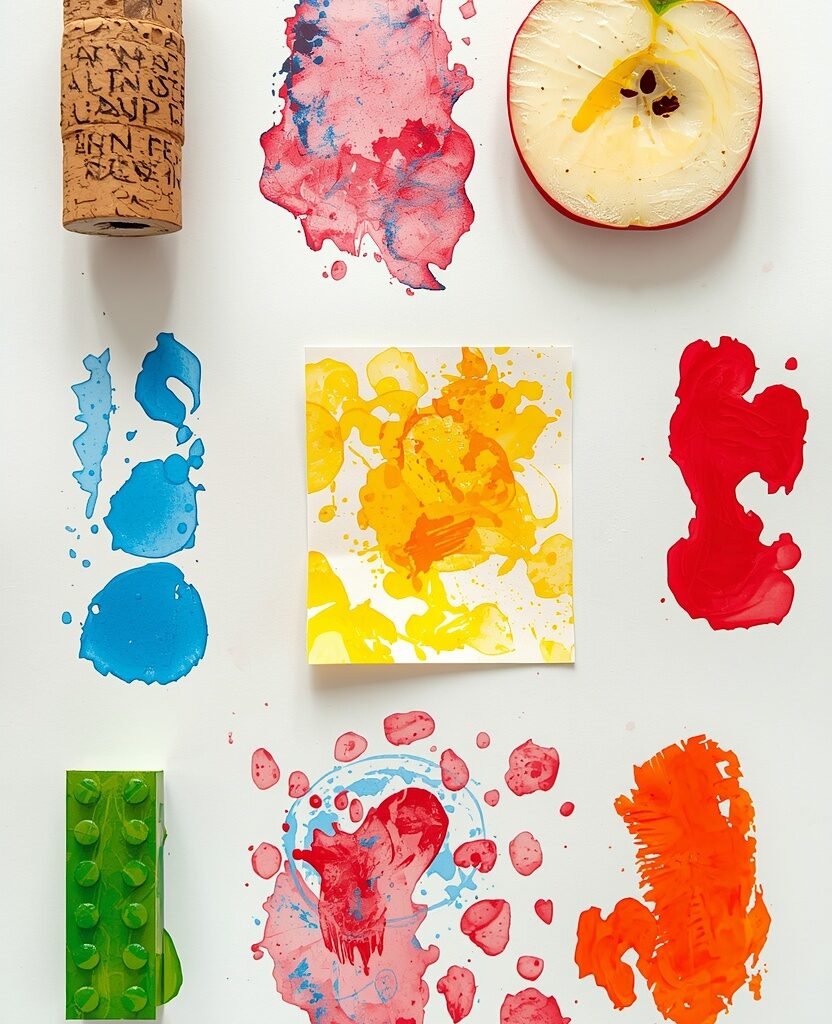
You don’t need to spend a cent on fancy stamps when your kitchen drawers are full of natural printmaking tools. The cut end of a celery stalk makes a perfect rose shape. Half an apple creates a stunning butterfly. A toilet roll tube makes circles. A Lego brick stamps a satisfying grid of dots. Cork, potato masher, fork — almost anything with an interesting texture or shape can become a stamp, and discovering which objects work best is half the adventure for curious preschoolers.
This activity is a brilliant way to introduce concepts like pattern, repetition, and symmetry without anything resembling a formal lesson. Set up a few containers of paint and a big roll of paper, and let kids go to town creating repeating patterns. The bonus? You’ve just turned household recycling into art supplies, which feels very clever and resourceful. Store the best stamps in a ziplock bag for next time — some of them, like the celery stalk, genuinely do keep their shape for a few sessions.
9. Spin Art

Spin art is one of those activities that sounds messy and chaotic — because it is — but the results are so spectacular that it’s completely worth it. The basic setup: a salad spinner with a circle of paper inside. Squeeze drops of different coloured paint onto the paper, snap the lid on, and spin. Open it to reveal a gorgeous swirling abstract design that kids feel genuinely proud of. Every single one looks different and frankly looks like something you’d pay for at an art fair.
The physics at work here are centrifugal force, but you don’t need to explain that to enjoy it. Just watch little faces light up when they open the lid. Use a cheap, dedicated salad spinner from a dollar store because, yes, it will have paint in it forever after this. Keep paint colours complementary to avoid muddy brown results — blues and greens work beautifully together, as do reds and oranges. Run a few test spins before committing to paper to figure out the best spin duration for your specific setup. :/
10. Playdough Sculpting

Playdough sculpting might be the most versatile preschool art activity in existence. It’s three-dimensional, open-ended, endlessly reusable, and kids never — genuinely never — get bored with it. Whether they’re rolling snakes, pressing in textures with forks and combs, or building an elaborate imaginary food spread, the creative possibilities are limitless. Homemade playdough is easy to make and lasts weeks in an airtight container, so the upfront investment is minimal.
The developmental benefits are staggering for such a simple material. Kneading, rolling, pinching, and sculpting all build the hand strength that preschoolers need for writing, cutting, and other fine motor tasks. You can theme the playdough session to match current interests — dinosaurs, cooking, garden — or just let imaginations run free. Add loose parts like googly eyes, buttons, or craft sticks to take the play even deeper. This is one activity where less structure genuinely produces more creativity.
11. Marble Painting

Marble painting is one of those brilliant activities where the process is as entertaining as the result. Drop a marble into a small tray of paint, place a sheet of paper in a shoebox or baking tray, then roll the marble around by tilting the container. The marble leaves trails of paint across the paper in organic, unpredictable lines that look genuinely artistic. Kids love the element of control — they’re directing the marble — but the results are always gloriously surprising.
This is a great activity for teaching cause and effect in a really tangible, hands-on way. Tilt faster, get wilder lines. Use two marbles at once for an intersecting trail effect. Try it with golf balls for bolder strokes. Multiple colours in the same session produce either gorgeous layered effects or a muddy brown mess, depending on how many kids are taking turns — so choose your palette wisely. It’s the kind of activity that preschoolers ask to repeat immediately, and honestly, setting it up a second time takes about thirty seconds.
12. Footprint Art

Footprint and handprint art occupies a special category: it’s genuinely fun to make AND it creates keepsakes that parents actually want to keep forever. Press a painted foot onto paper for butterfly wings, add a body and antennae, and suddenly you’ve got an adorable piece of framed art. Handprints become turkeys, trees, peacocks, flowers — the possibilities are almost embarrassingly extensive once you start looking up ideas. And those tiny prints? They will melt your heart years from now.
The practical tip here: use a foam pad or folded cloth as your paint applicator to get an even coat on the foot or hand without too much mess. A shallow tray of paint works too, but be ready for some very enthusiastic foot-stomping that goes well beyond the paper. Washable paint is non-negotiable. Set up a washing station nearby — a plastic tub of warm soapy water — before you even open the paint. Date the artwork on the back; in the future, you will be very grateful for that small detail.
13. Wax Resist with Watercolour

Similar to the watercolour resist trick from earlier, but with a different approach: this time you draw intentionally with oil pastels or wax crayons, creating a detailed picture before any paint touches the page. The crayon marks resist the watercolour wash beautifully, leaving the drawing visible underneath a translucent layer of colour. It produces a stained-glass effect that looks absolutely stunning, especially with bright, saturated watercolours.
Oil pastels work even better than crayons for this technique because they contain more wax and create a stronger resist. Encourage kids to press hard with their crayons to get a good wax layer down. Simple designs — houses, suns, flowers, animals — translate the best since fine details can get lost under the watercolour wash. This is a nice step up from basic finger painting for preschoolers who are starting to draw recognisable shapes. Let the finished pieces dry flat to prevent curling.
14. Tissue Paper Suncatchers

Tissue paper suncatchers are possibly the most rewarding preschool art project in terms of the wow factor relative to the effort involved. Cut or tear small squares of coloured tissue paper, then layer them between two sheets of clear adhesive contact paper. Peel the backing off one sheet, let kids stick tissue paper pieces all over it, then press the second sheet on top. Trim into a shape, punch a hole, and hang in a window. When the sunlight hits them, the results are genuinely breathtaking.
The colour mixing happens naturally as overlapping tissue paper creates secondary and tertiary colours — a built-in colour theory lesson that preschoolers absorb without realising they’re learning anything. No paint, no brushes, minimal mess — this activity is a genuine gift to parents everywhere. Try cutting the final suncatcher into seasonal shapes: leaves in autumn, snowflakes in winter, flowers in spring. For an extra challenge, encourage kids to create seashell crafts alongside for a full ocean-themed art afternoon.
15. Shaving Cream Marbling

Shaving cream marbling is one of those activities that adults secretly enjoy as much as the kids. Spread a layer of cheap shaving foam in a flat tray, drop food colouring or liquid watercolour on top, and swirl with a toothpick or skewer. Press a sheet of paper face-down onto the swirled surface, lift it off, and use a squeegee or ruler to scrape the cream away — revealing a stunning marble effect underneath. It sounds complicated. It’s really not.
The marbled prints look genuinely professional, and kids feel enormously proud of them. They make gorgeous gift wrap, book covers, or framed art pieces. The key to clean results is not over-swirling — two or three passes with the toothpick is plenty. You and you’ll get a muddy purple-grey situation, which, while not pretty, is still kind of fascinating. Use different colour combinations for different effects: classic black and white, warm sunset tones, or rainbow brights. Each one is unique and honestly stunning.
16. Pipe Cleaner Sculptures

Pipe cleaner sculpting is three-dimensional art that doesn’t require paint, drying time, or cleanup — which makes it practically perfect. Grab a big bag of assorted coloured pipe cleaners and let kids bend, twist, loop, and connect them into whatever their imaginations produce. Simple creatures emerge naturally: a caterpillar is just a zigzag, a spider just needs eight bent legs, and a flower is a twisted stem with a looped top. The material is forgiving; if it doesn’t look right, bend it differently.
The twisting and bending motions are excellent for building hand strength and bilateral coordination — both hands working together is an important developmental milestone. For older preschoolers, challenge them to make something specific, like their favourite animal or a person. You can also combine pipe cleaners with other materials: thread beads onto them, wrap them around a pencil to make coils, or use them as the frame for a tissue paper butterfly. Pipe cleaners are one of those endlessly versatile craft supplies worth keeping stocked.
17. Vegetable Stamping

Vegetable stamping is the original zero-cost art activity, and it absolutely holds up in 2026. Cut a potato in half, carve a simple shape into the flat surface if you’re feeling ambitious (a star or heart works well), dip it in paint, and stamp away. Bell pepper cross-sections make gorgeous flower shapes. The bottom of a celery bunch produces something remarkably like a rose. Broccoli florets create brilliant tree textures. Your produce drawer is basically an art supply cabinet in disguise.
This activity is a perfect bridge between art and early science — kids start to notice the internal structures of vegetables they’d normally ignore at the dinner table. Which one will make the most interesting print? Only one way to find out. Set up a few paint colours and a large sheet of paper, and let the experimentation begin. Bonus: if you repeat the vegetable stamping in a pattern — same colour, same shape, evenly spaced — you’ve just introduced early maths concepts like sequence and pattern into the art session.
18. Glitter Glue Creations

Yes, glitter is the bane of every parent’s existence. Yes, it ends up everywhere, on everything, for approximately the rest of your natural life. And yes, glitter glue creations are absolutely still worth it because kids lose their minds with joy over anything sparkly. The beauty of glitter glue tubes over loose glitter is containment — most of the sparkle stays in the glue. Kids squeeze directly from the tube onto dark paper to create lines, swirls, and shapes that catch the light magnificently when dry.
The fine motor control required to squeeze a glitter glue tube is actually a solid workout for small hand muscles — more effort than painting, which means more developmental benefit, which means you can feel virtuous about the inevitable glitter embedded in your carpet. Wait for complete drying before handling (at least an hour, ideally overnight), or everything smudges into a glittery disaster. Black, navy, or dark purple paper makes the colours pop most dramatically. Pair glitter glue with foam shapes and craft gems for an extra-special creation.
19. Blow Painting

Blow painting is the kind of activity that looks like pure chaos and produces surprisingly beautiful results. Drop a small blob of watered-down paint onto paper, then use a straw to blow air across it. The paint spreads in organic, branching patterns that look like trees, fireworks, neural networks, or something straight out of a science documentary. No two pieces are ever the same, and the unpredictability of where the paint travels is half the excitement.
This activity also secretly develops oral motor strength and breath control, which supports speech and language development — something occupational therapists and speech therapists often recommend. Use a short straw so kids don’t have to work too hard, and thin the paint with water to a milky consistency for the best spreading effect. Add a second or third colour once the first has spread for a multi-layered result. Blow painting autumn trees is particularly gorgeous: brown trunk on the bottom, orange and red blobs blown upward into branches.
20. Chalk Pastel Drawing

Chalk pastels are criminally underused in preschool art, and that’s a shame because they’re one of the most forgiving and beautiful media you can hand a young child. The colours are vivid, blending is as simple as smudging with a finger, and mistakes are easily smoothed away. Set kids up on black or dark-coloured paper for the most dramatic results — the contrast makes chalk pastels absolutely glow. Sunsets, night skies, rainbows, and abstract colour fields are all natural starting points.
The sensory experience of chalk pastels — the softness, the way colour transfers instantly, the chalky dust — is something preschoolers find genuinely satisfying. It’s also a rare art medium where the blending technique is literally just using your fingers, which immediately levels the playing field for kids who find holding brushes tricky. When you’re done, spray the finished piece with cheap hairspray to fix the pastel and prevent smudging. Soft pastels from an art supply store are significantly better quality than kids’ versions and worth the small extra investment.
21. Sponge Painting

Sponge painting gives you texture and coverage that brushes simply can’t match, and it’s incredibly easy for small hands to manage. Cut kitchen sponges into simple shapes — circles, squares, triangles — or use sea sponges for organic texture. Dip lightly into paint (too much paint = a blobby mess, FYI) and press onto paper with a gentle dabbing motion. Layer colours for a beautiful, dimensional effect, or use a single colour for a clean, graphic look. Either way, the texture sponges add is unique.
Sponge painting is brilliant for process-focused art because the outcome is almost always good regardless of what the child does, which builds confidence. Use large sheets of paper and encourage kids to fill the whole space rather than clustering in one corner. This is also a great technique for backgrounds — sponge a blue and green landscape, let it dry, then add details with paint or collage on top. Sea sponges in particular create the most gorgeous, organic texture and are worth picking up if you spot them at a craft store.
22. Mondrian-Style Grid Art
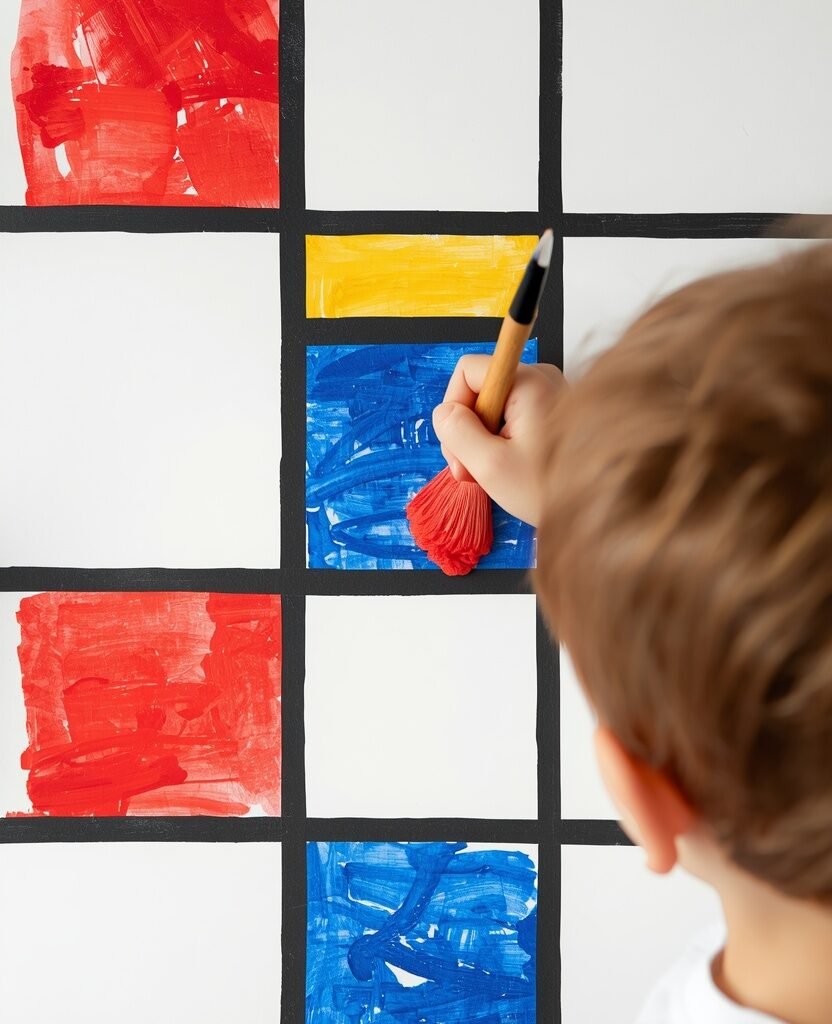
Mondrian-style grid art is one of those genius activities that introduces a famous artist while producing something genuinely beautiful that looks intentional rather than accidental. Use black electrical tape to create a grid of rectangles on white watercolour paper, then let kids paint each rectangle in primary colours — red, yellow, or blue — with white spaces left unpainted. When the paint is dry, peel off the tape to reveal crisp white lines. The result looks astonishingly professional.
This is a perfect opportunity to talk about primary colours and the work of Piet Mondrian in a completely accessible way. Show kids a Mondrian image, point out the colours and lines, and let them make the connection between the famous painting and their own work. The sense of pride when they see the finished piece is wonderful. Painter’s tape works better than electrical tape if you want slightly softer edges, but electrical tape gives you that bold, graphic Mondrian look. Either way, the results are striking.
23. Straw and String Art
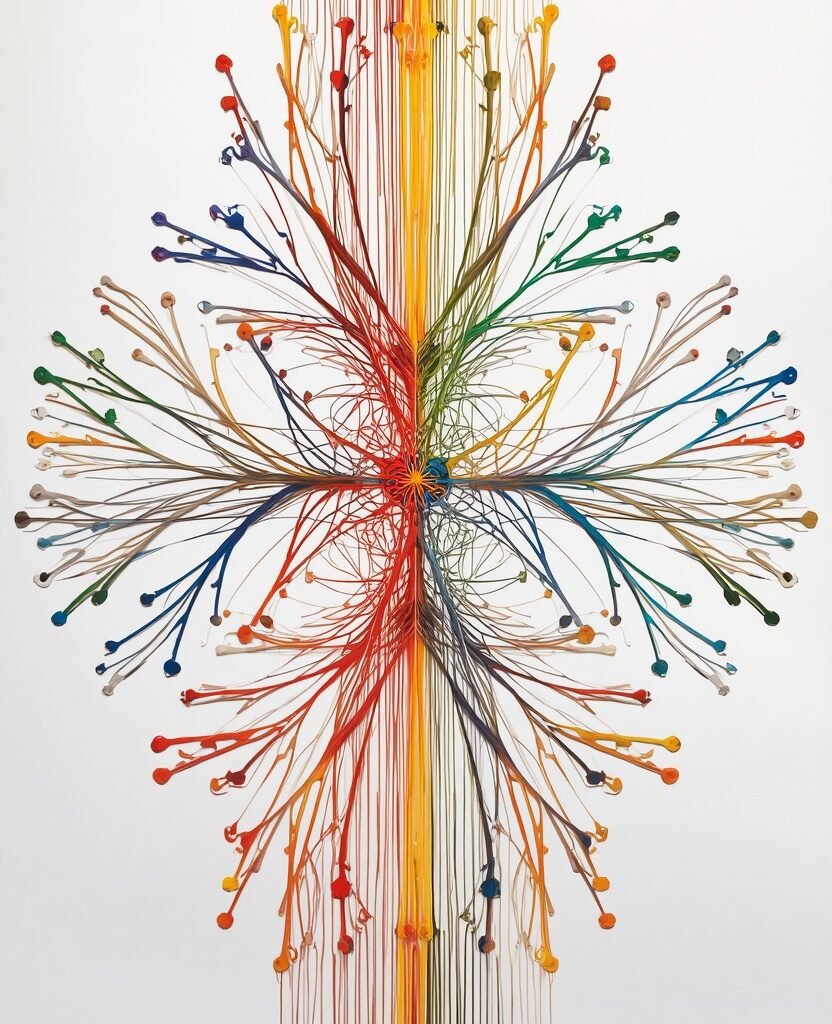
String art — specifically the fold-and-pull variety — is genuinely magical and produces results that preschoolers find completely baffling in the best possible way. Dip a piece of string in paint, lay it on one half of a folded sheet of paper with the end hanging out, fold the paper over, press down firmly, then pull the string out while keeping the paper pressed. Open the paper to reveal a perfectly symmetrical abstract design. It looks like something that required tremendous skill. It required none.
The symmetry produced by this technique is a great conversation starter: both halves look the same! Point to the fold line and explain that it’s like a mirror. Use multiple strings in different colours for a layered, complex design. Thicker, rougher string holds more paint than smooth cotton twine, giving bolder results. This activity is also surprisingly quick — each piece takes about two minutes from setup to reveal, which means you can make ten pieces in a sitting and use them as gift wrap, cards, or a gallery wall of stunning abstract art.
24. Potato Head Collage

Collage face-making is a preschool classic for excellent reasons: it’s open-ended, endlessly creative, and always produces something hilariously expressive. Provide paper plates as the base face, then offer a tray of collage materials — googly eyes in various sizes, yarn for hair, fabric scraps, foam shapes, cut paper, buttons, tissue paper. Kids assemble their face however they see fit, and the results range from portrait-realistic to completely abstract monster-being, with equal amounts of pride either way.
This activity gently introduces concepts of facial features and their placement — though don’t be surprised when eyes end up on the chin, or a mouth appears on the forehead. That’s the beauty of preschool art: there are no rules. Glue sticks work better than liquid glue for most collage materials, though a dot of PVA is necessary for heavier items. Make it a family activity: parents make their own collage face alongside the kids, and suddenly it’s a hilarious shared experience rather than a supervised project. The kids’ versions are always better, just so you know.
25. Colour Mixing Experiments

Save the best for last: colour mixing experiments are the activity that manages to feel like science, art, and magic all at once. Set out red, yellow, and blue paint — just the three primary colours — plus some white paper or an ice cube tray for mixing. Challenge kids to find orange, green, and purple using only what’s in front of them. Watch the exact moment they mix red and yellow, and orange appears — that expression of total delight is something you won’t forget.
Colour mixing builds early scientific thinking: prediction, experimentation, observation, and conclusion, all wrapped up in something joyful. Keep a colour mixing chart nearby so kids can record their discoveries — even simple drawings work. Add white to any colour to explore tints, or layer colours on wet paper for a watercolour version. The whole activity costs almost nothing and delivers enormous learning value. For even more hands-on activities to keep little ones busy and growing, check out our full guide to indoor activities for kids in 2026.
Wrapping It All Up
There you have it — 25 preschool art activities that cover everything from low-mess wonders to full-commitment paint explosions. The beauty of art at this age is that the process genuinely matters more than the product, so resist the urge to make it look Pinterest-perfect and just let kids lead. Try one activity this week, watch what happens, and let their reaction tell you which ones to repeat. If the kids are covered in paint and grinning? You nailed it.
Don’t miss our fine motor activities for preschoolers roundup for more skill-building fun. Now go make some art — and maybe put down a tarp first.

One Comment