22 Funny Fairy Tale Poems Kids Will Love
Let me be real with you — fairy tales are already kind of wild if you think about them. A girl falls asleep because she ate a random apple from a stranger? Totally normal. A wolf huffs and puffs at houses? Sure, why not? These 22 funny fairy tale poems lean all the way into that chaos and make it even more ridiculous — in the best possible way. Kids absolutely eat this stuff up, and honestly? Adults do too. FYI, I may or may not have laughed out loud while writing several of these. Each poem below comes with an image prompt you can use with any AI image generator (size 2:3), plus two paragraphs of content per poem. These are perfect for printing, classroom bulletin boards, or just having around for story time. Ready? Let’s meet some very unhappy fairy tale characters
Cinderella’s Shoe Complaint
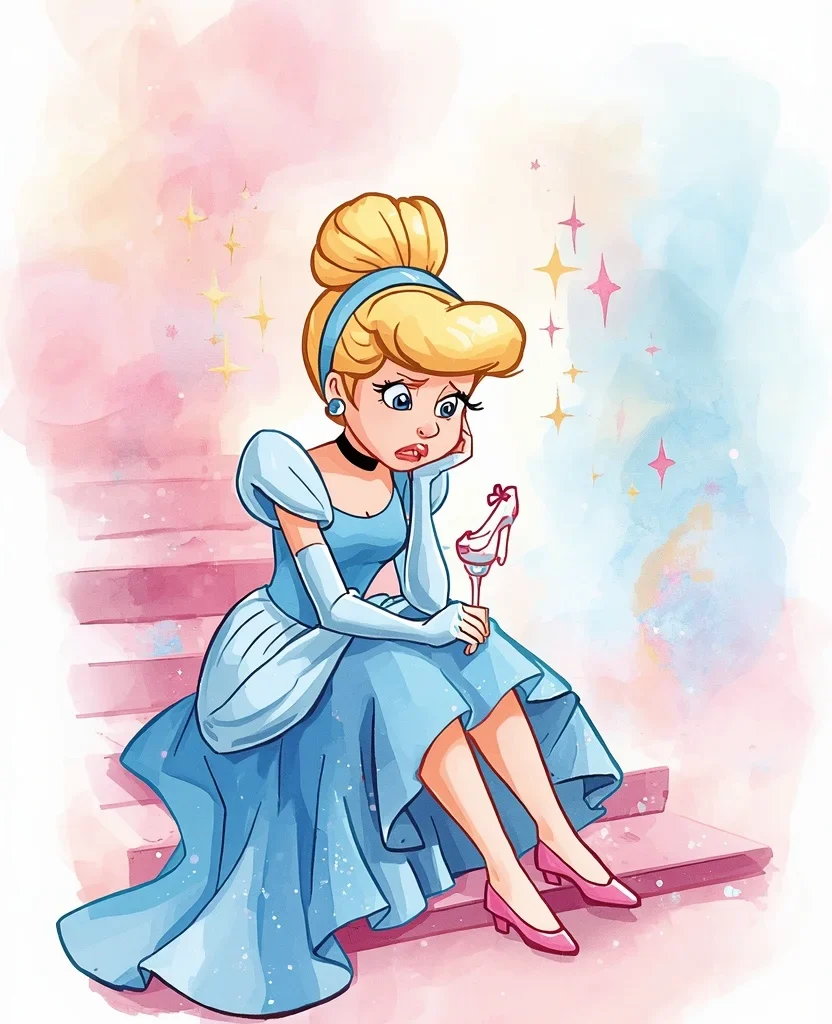
| A glass slipper sounds dreamy, it really sounds great, until you realize yours is a size twenty-eight. The prince brought it over, all sparkly and small — My foot tried to enter. My foot hit the wall. He smiled very sweetly and said, ‘Give it a go!’ I yanked, and I tugged, but my toe said, ‘No.’ So here’s my advice if a prince comes your way — Just wear normal sneakers. They fit every day. |
Ever wonder why nobody in the story questioned a glass shoe? Like, who thought that was comfortable? This poem takes Cinderella’s famous slipper moment and gives it the reality check it deserves. Kids will instantly relate to the frustration of shoes that just won’t cooperate — and the punchline about sneakers never fails to get a giggle. It’s a great one to act out dramatically at storytime.
The poem uses simple rhyming couplets that kids aged 5–9 can follow easily, making it perfect for read-alouds or early readers practicing fluency. The humor is physical and relatable — everyone has wrestled with a too-tight shoe. The final twist (‘just wear normal sneakers’) gives it a satisfying, funny conclusion that lands every single time. It pairs beautifully with any Cinderella craft or activity unit.
The Big Bad Wolf’s Bad Day
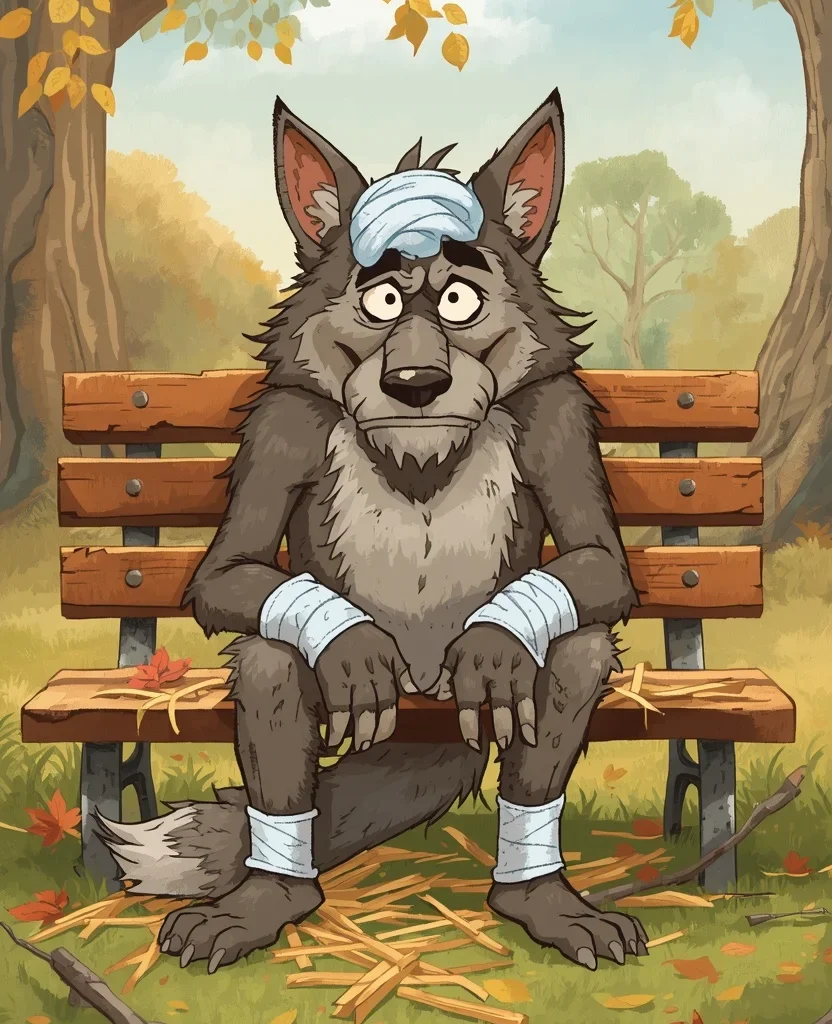
| I huffed, and I puffed at the house made of straw — It fell in one breath. I was pleased with my jaw. Then sticks came along, and I huffed just the same. That one took three blows. My lungs aren’t to blame. But bricks? Oh, those bricks. Those ridiculous bricks. I blew till I turned every shade in the mix. My back gave out somewhere around try number ten — I’m done with this huffing. I’m going home. Amen. |
IMO, the Big Bad Wolf is honestly the most relatable fairy tale character. He had a goal, he committed, and the universe just kept throwing harder challenges at him. This poem reframes the Three Little Pigs story entirely from the wolf’s defeated perspective — and it’s hilarious because kids immediately recognize the story beats told in reverse. The ‘my back gave out’ line always gets the loudest reaction from parents in the room.
What makes this poem work so well for kids is that it flips the power dynamic. The villain becomes the underdog, and suddenly, children feel a funny kind of sympathy for him. It’s a sneaky way to teach perspective-taking through humor, which makes it a fantastic classroom poem. The escalating frustration (straw → sticks → bricks) mirrors the original story’s structure, so kids who know the tale get an extra layer of comedy from recognizing the pattern.
Sleeping Beauty Can’t Wake Up
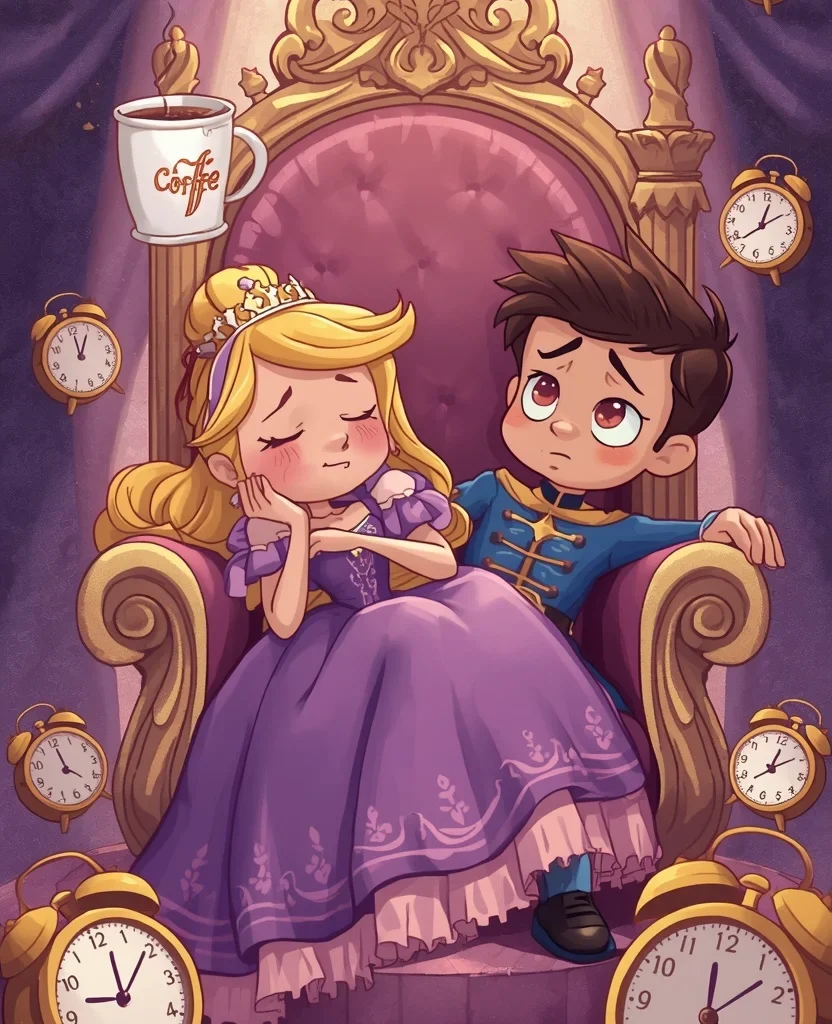
| A hundred years sleeping? I call that a treat. No homework, no chores, and no rushing to eat. The prince came and kissed me — I sighed, and I stirred, then pulled up my blanket without saying a word. ‘She’s waking!’ they cheered from the left and the right. I cracked open one eye, and I said, ‘Not tonight.’ The moral is simple, the lesson is clear — Some people just need about five more years. |
Anyone who’s ever hit snooze four times will feel this poem deep in their soul. Sleeping Beauty’s famous waking moment gets completely undermined here — and kids find it absolutely delightful because they understand the struggle of not wanting to get up. The poem takes a classic romantic moment and turns it into something every child (and every tired parent) can relate to on a personal level. It’s one of those ‘this is too real’ funny poems.
The poem works especially well as a read-aloud because the final two lines are a perfect comedic pause moment. Read the last two lines slowly and deadpan for maximum effect — kids will lose it every time. It also opens up a fun discussion about why Sleeping Beauty might actually have preferred staying asleep, which turns into a surprisingly creative conversation about the fairy tale itself.
Goldilocks and the Three Bears’ Yelp Review
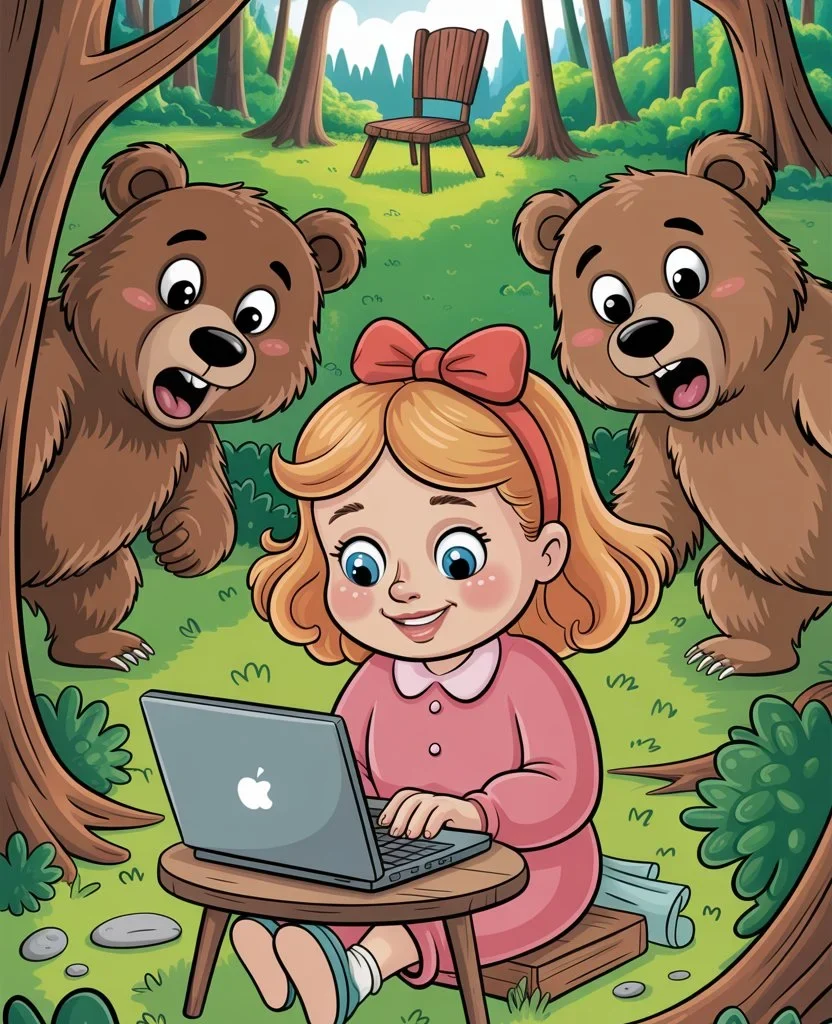
| One star. Would not visit. The porridge was fine, but tepid at first, then too hot, then divine. The chairs were all wrong — one collapsed under me. The beds? Don’t get started. I just needed three. The owners came back while I napped in their space — Extremely unprofessional. Alarming place. Zero advance notice that they’d be coming back home. Two stars on reflection. Deducting for gnome. |
Goldilocks as a Yelp reviewer is exactly the kind of absurd modern spin that kids and parents both find hilarious. This poem brilliantly captures the entitlement of the original story character and reframes it through the lens of a completely unreasonable online reviewer. It works as a fun introduction to the concept of perspective and fairness — Goldilocks was the one who broke in, after all! Kids aged 7 and up especially enjoy the satirical tone.
The ‘deducting for gnome’ ending is deliberately nonsensical — and that randomness is exactly why kids love it. Absurdist humor is genuinely funny to children, and throwing in something completely unexpected at the end of a poem is a great comedy technique to teach young writers. This poem also serves as a perfect springboard for a classroom activity where students write their own ‘Yelp reviews’ for fairy tale locations.
Rapunzel’s Hair Drama
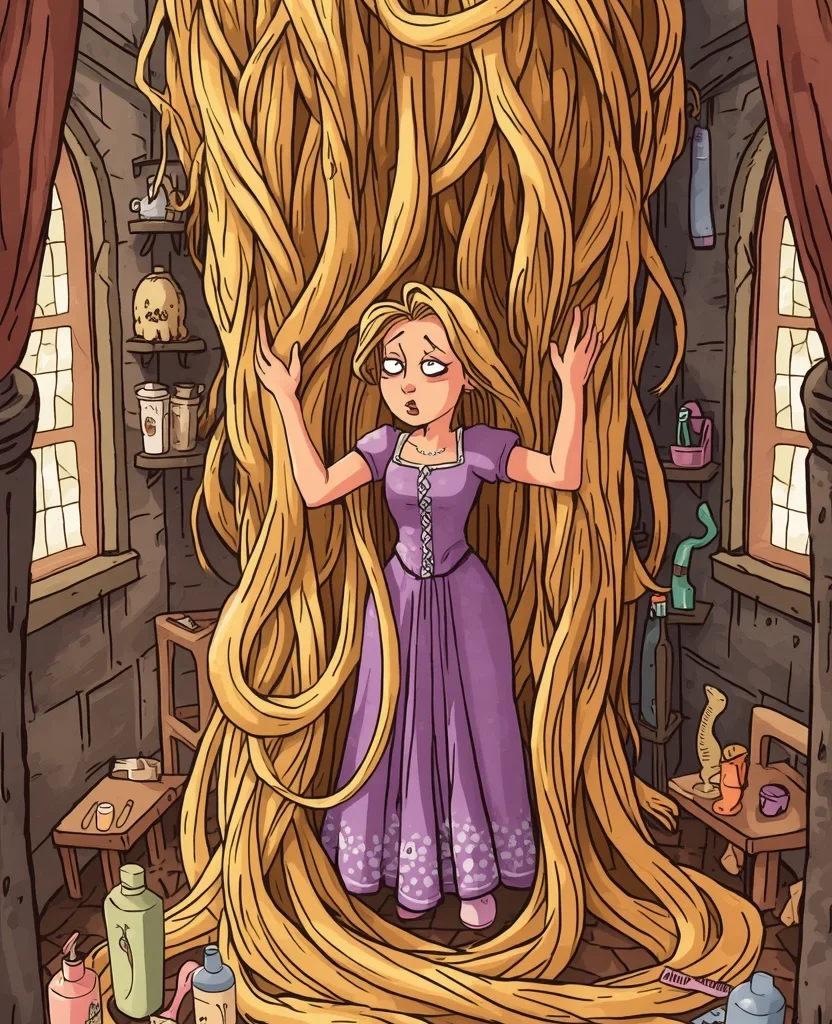
| My hair has been used as a ladder by two — A witch and a prince, and their ridiculous shoes. The frizz from the rain is completely absurd, and split ends? I’ve got more than letters and words. I’ve used all the conditioner, every last drop. The detangling sessions? They never quite stop. If someone asks nicely, I’ll let down my hair — But bring your own serum. I will not share. |
Rapunzel’s hair is iconic — but nobody ever talks about the maintenance. This poem gives a voice to the real suffering of having hair long enough to be a structural support system. Any child who’s ever had a painful detangling session will immediately feel solidarity with Rapunzel here. The ‘bring your own serum’ ending is particularly sharp and always gets a knowing laugh from parents in the audience. 🙂
From a poetry craft perspective, this one does something clever — it uses hair care as an extended metaphor for the absurdity of Rapunzel’s entire situation. She’s been trapped in a tower for years, used as a human elevator, and nobody has ever offered to help with the upkeep. The comedic framing helps kids see the original story from a completely fresh angle while picking up on the humor of the everyday-meets-magical contrast.
Jack’s Terrible Snack Plan
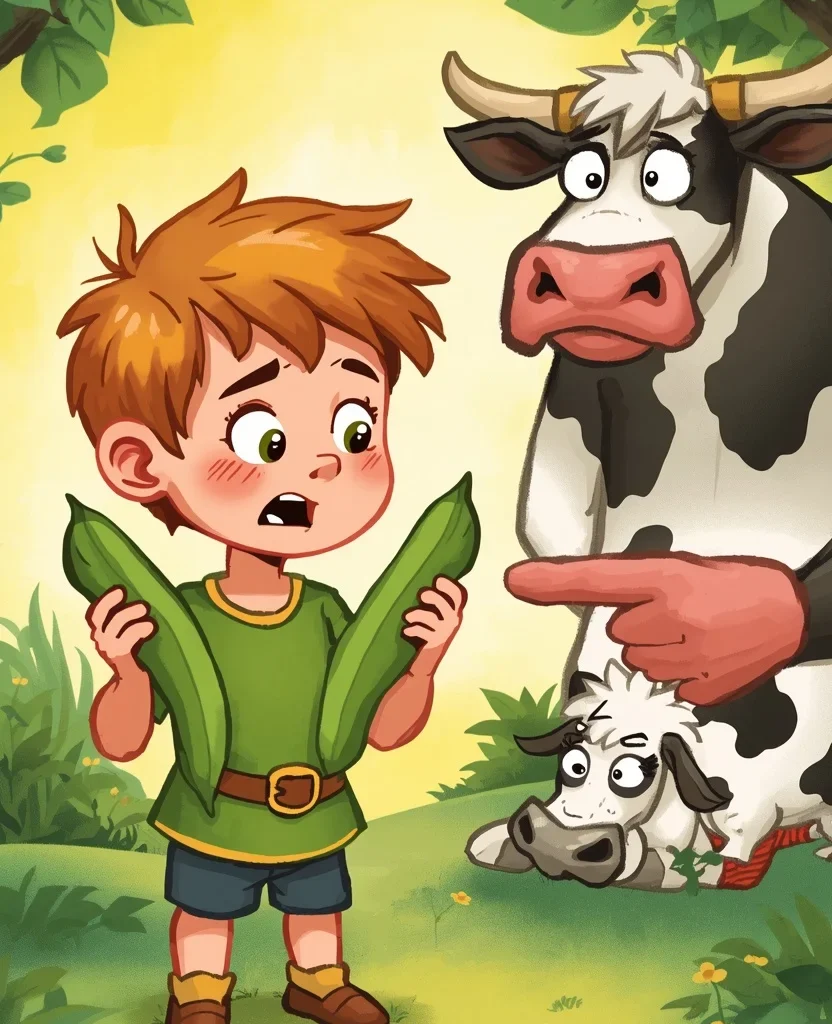
| My mother said, ‘Jack, go and sell us the cow.’ I said, ‘Sure, I’ll do that.’ She said, ‘Do it right now.’ I met a strange man who said, ‘These beans are magic!’ And yes — what came next was completely tragic. She threw them outside and they grew in the night. I climbed to the clouds — it was quite a good height. I stole from a giant and ran for my life. My mom should have sent someone else. Maybe wife. |
Jack’s thought process in the original tale is genuinely questionable, and this poem does not let him off the hook. Trading a whole cow for three beans is objectively terrible decision-making, and kids aged 6+ absolutely understand this — which is why the poem gets such a big reaction. The matter-of-fact tone of Jack narrating his own bad choices makes it even funnier. He’s not sorry. He has zero regrets. He just thinks his mom should have planned better.
The final line — ‘My mom should have sent someone else. Maybe wife’ is intentionally awkward and grammatically funny, which is a great device for young readers learning about language and wordplay. Kids love it when poems play with sentence structure unexpectedly. This poem is also a fantastic lead-in to discussions about consequences, decision-making, and why you shouldn’t trade your family cow for beans from a stranger on the road.
Snow White’s Questionable Decisions
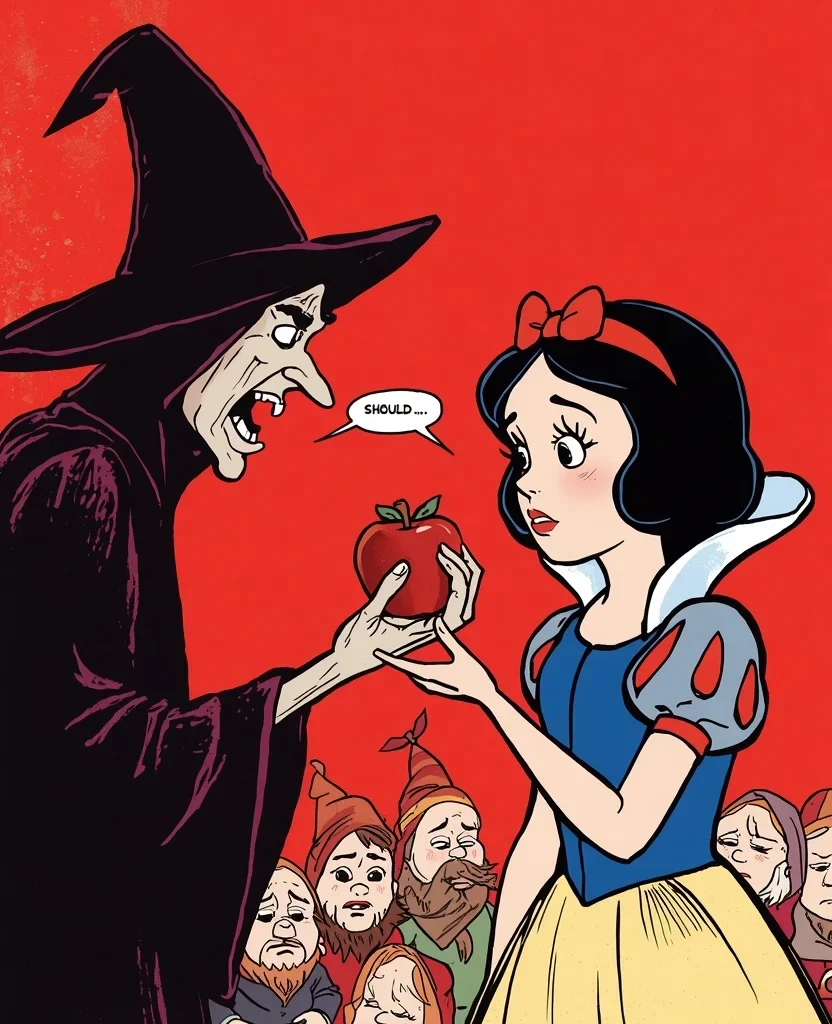
| The dwarfs said, ‘Don’t open the door to a stranger.’ I said, ‘Sure, no problem.’ They said, ‘There is danger.’ A stranger appeared — she had apples for free! I thought, Well, it’s rude not to accept things with glee. The apple was crunchy. The apple tasted fine. Then everything got a bit blurry and… I’m fine. The moral I offer to all of you here: Don’t take snacks from strangers. The dwarfs made it clear. |
Snow White has been warned. Multiple times. By seven very small but very wise friends. And yet. This poem captures the universal kid experience of being told something is a bad idea and doing it anyway — which is exactly why children absolutely love it. The ‘she had apples for free!’ line gets big laughs because it perfectly captures how Snow White’s logic works: it would be rude not to accept. Obviously. Can’t argue with that. The poem cleverly uses dramatic irony — kids know what’s coming with the apple, but they love watching it happen anyway. That gap between what the reader knows and what the character does is comedy gold. It also carries a genuine safety lesson (don’t take food from strangers) wrapped in such silly packaging that kids absorb it without feeling lectured at.
Hansel and Gretel’s GPS Failure
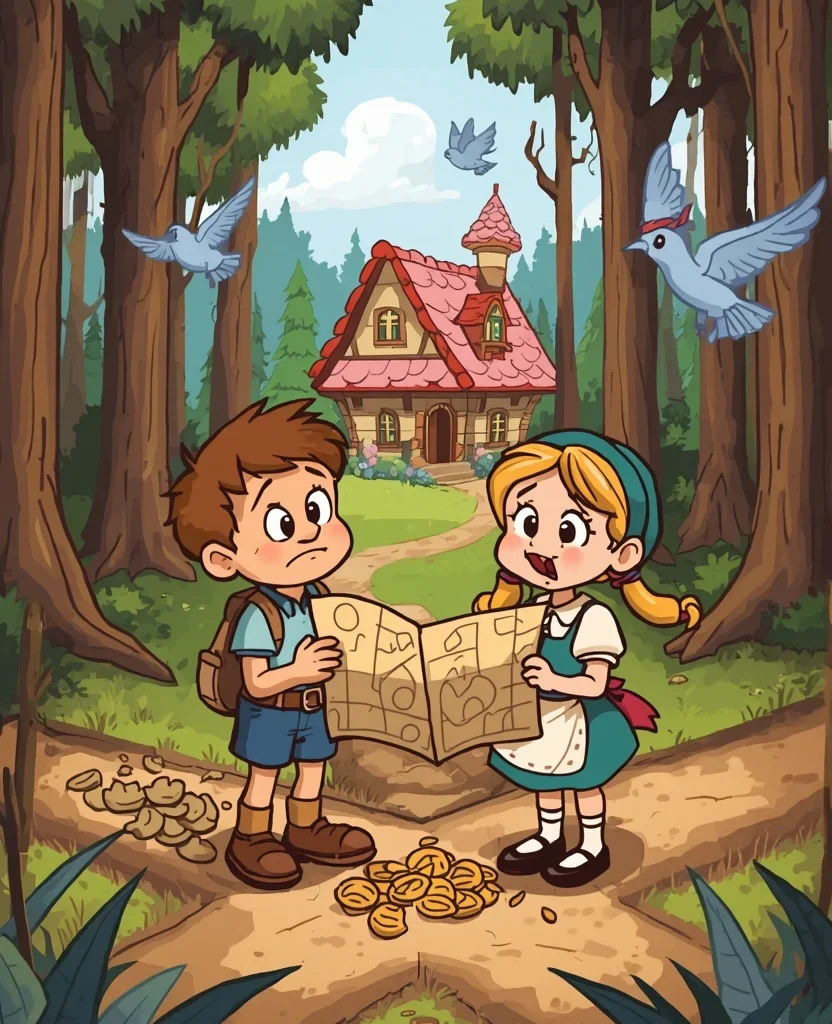
| We left a trail of breadcrumbs to find our way back. The birds ate the breadcrumbs. That’s on us — our bad. We wandered and wandered and found a cute place made entirely of gingerbread, cookies, and grace. We ate the front door. We ate half of the roof. A witch came outside. That was more than enough proof that eating a stranger’s house isn’t polite. Also, maybe pack snacks. You’d be fine. You’d be right. |
The breadcrumb plan is one of the most famous failed navigation strategies in all of literature, and this poem wastes no time calling it out. ‘That’s on us — our bad’ is peak self-aware comedy and gets a massive reaction from kids who immediately recognize the problem with the plan. The poem bounces between self-deprecation and genuine story recap in a way that keeps readers engaged all the way to the punchline.
What’s brilliant about this poem for classroom use is that it touches on so many real skills — navigation, planning ahead, the concept of consequences, and yes, not eating strangers’ houses. The poem treats kids as smart enough to understand the humor without having it explained, which is something children respond really well to. The final advice (‘maybe pack snacks’) is both practical and absurd at the same time — exactly the sweet spot for kids’ humor.
The Frog Prince’s Complaint
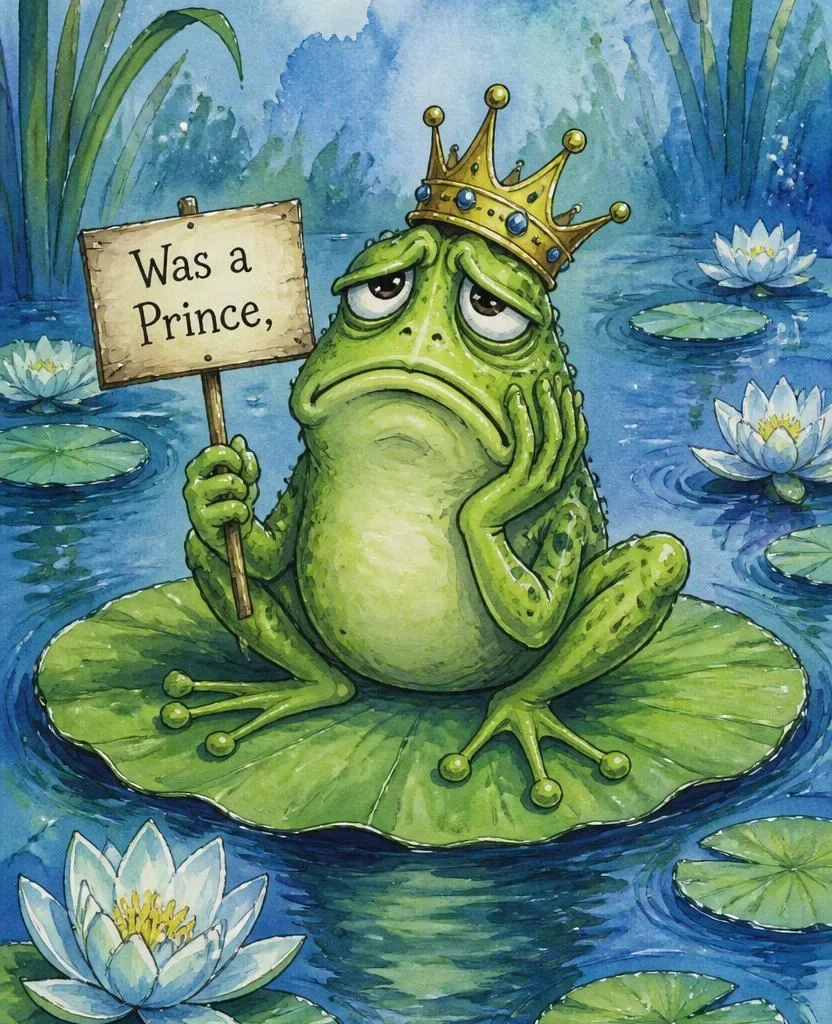
| I used to have a castle. I used to have hair. I had quite a wardrobe — capes everywhere. Then one grumpy witch with a grudge and some flair turned me into a frog. That was frankly unfair. A princess once kissed me. I thought, ‘Here we go!’ She screamed, and she dropped me. The lily pad, though — It caught me quite softly. I’m fine. Don’t you fret. But I had a castle! Does nobody care yet?! |
The Frog Prince is genuinely hard done by, and this poem fully commits to his righteous indignation. The dramatic escalation to ‘Does nobody care yet?!’ is peak comedic frustration and lands every single time with both kids and adults. The detail about capes is a small but perfect touch — of course, a prince would be upset about losing his wardrobe. Kids love the idea of a frog being dramatically offended about something so specific and royal.
This poem teaches kids about dramatic monologue as a comic device without using that term at all — the character just vents, and it’s hilarious. Reading this one with full theatrical outrage makes it ten times funnier in a classroom or bedtime setting. Encourage kids to do their best, ‘I am deeply wronged’ voice for the final line. The combination of self-pity and practicality (‘the lily pad caught me softly’) is a great example of comedic contrast.
Pinocchio’s Nose Knows
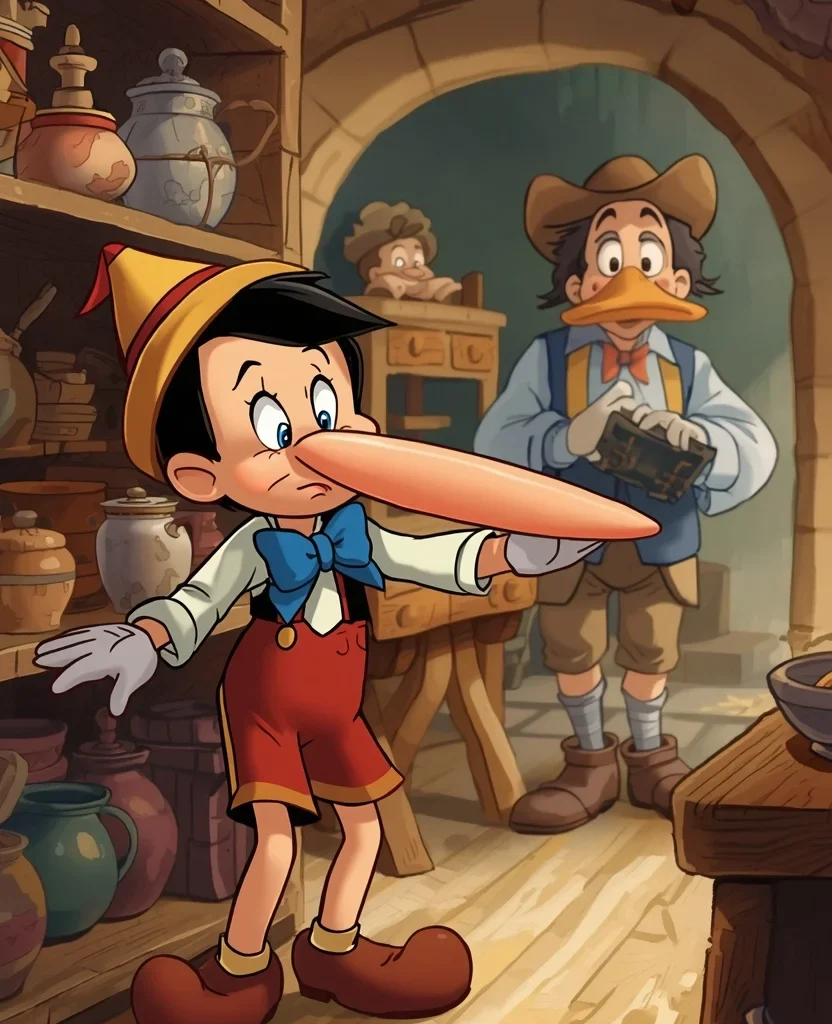
| My nose is a snitch. It tells on me always. I said I ate broccoli — grew three more hallways. I said I’d done homework — knocked over the lamp. I said I felt fine — though my socks were quite damp. The worst lie I told was ‘I’m totally awake!’ My nose grew so long it knocked into the lake. The fish were not happy. Gepetto was done. Lesson learned: truth’s faster. My nose weighs a ton. |
Pinocchio’s nose as a relatable problem for kids is absolutely perfect comedy territory. Every kid has told a small fib about homework or vegetables — and the idea that their nose would immediately grow and knock things over is both delightful and slightly terrifying. The ‘I said I felt fine — though my socks were quite damp’ line is the kind of specific, mundane detail that makes kids feel seen and heard.
This poem works brilliantly as a conversation starter about honesty — but it approaches the topic through humor rather than lectures, so kids actually engage with it. The comedy of increasingly dramatic consequences (lamp → lake → fish chaos) escalates perfectly, mirroring the structure of good joke-telling. It also introduces kids to the idea of cause and effect in a memorable, silly way. ‘My nose weighs a ton’ is a satisfying, groan-worthy ending that kids love to repeat.
Rumpelstiltskin’s Name Tag
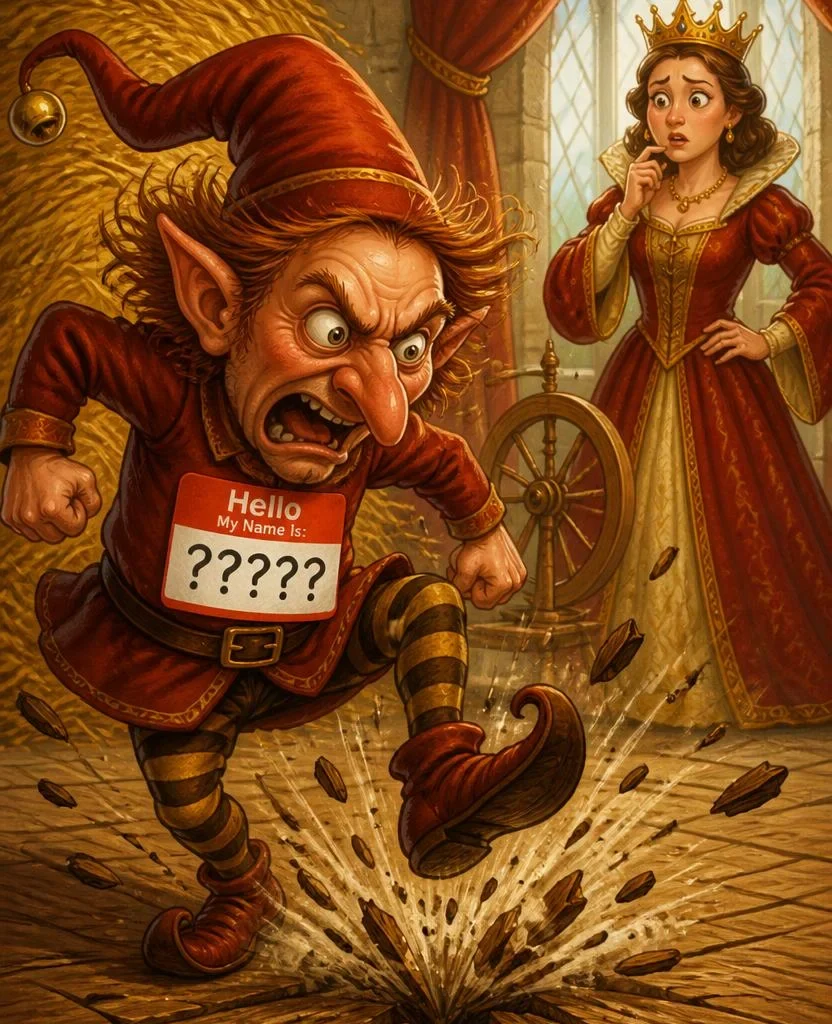
| Nobody could guess it! It’s hard, it’s bizarre! It’s twelve whole syllables! It travels so far! She guessed Tom. She guessed Bob. She guessed Steve and then Greg. I laughed till I cried! I was winning, I’d beg! Then someone heard me singing my name in the woods — She guessed it. She won it. I lost all my goods. My lesson is this and I state it with shame: Don’t wander and sing if you’re hiding your name. |
Rumpelstiltskin is genuinely baffling as a villain because he literally gave the game away by singing his own name in the forest. This poem leans fully into that spectacular own-goal and turns it into pure comedy. Kids love the idea of someone being so confident in their plan that they don’t notice the obvious flaw — it’s a very human kind of mistake, and children find it enormously satisfying to feel smarter than the villain.
From a storytelling perspective, this poem demonstrates the beauty of a self-defeating antagonist — a character who causes their own downfall through overconfidence. Kids intuitively understand this as funny because they know adults who do the same thing. The final moral (‘Don’t wander and sing if you’re hiding your name’) is genuinely sensible advice delivered with perfect deadpan.
Beauty’s First Day at the Castle
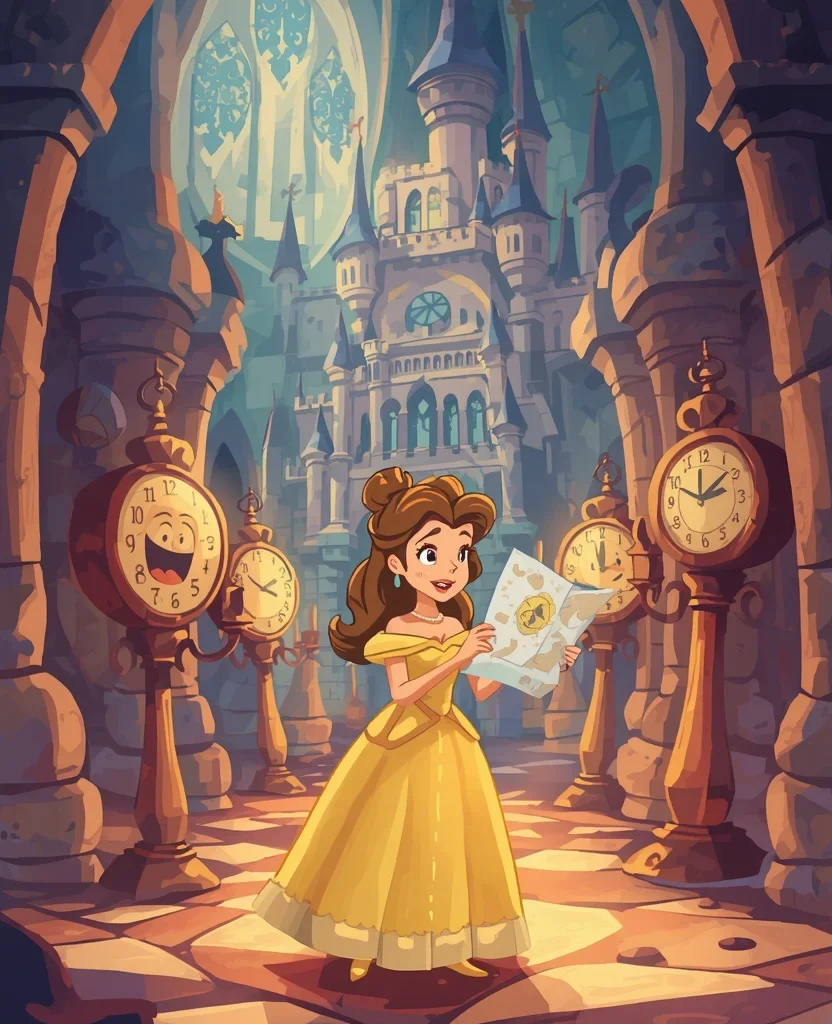
| The castle is massive. The castle is grand. The west wing is off limits — I don’t understand. The candlestick talks. So does literally every dish. The wardrobe is chatty. I had one small wish: A quiet cup of tea and a chapter or two. Instead there are thirty-five songs coming through. The Beast growled. The clock danced. I just wanted to read. Send help. Send earplugs. Send me a library. |
Belle is famously a book lover who ends up in a singing, dancing, talking enchanted castle — and honestly, that does sound exhausting for an introvert. This poem perfectly captures the overstimulation of Belle’s first day from a perspective that kids who love quiet reading time will completely understand. The humor comes from the gap between what Belle wanted (peace and a book) and what she got (non-stop musical furniture).
For kids who identify as bookish or introverted, this poem is especially resonant because it validates that preference in a funny, affirming way. It’s rare for a fairy tale poem to champion the ‘I just want to read’ personality type, which makes this one feel fresh and distinct from most retellings. The final line — ‘Send me a library’ — is both a callback to the story and a genuinely funny twist ending that rewards kids who know the tale.
The Little Mermaid’s Leg Confusion
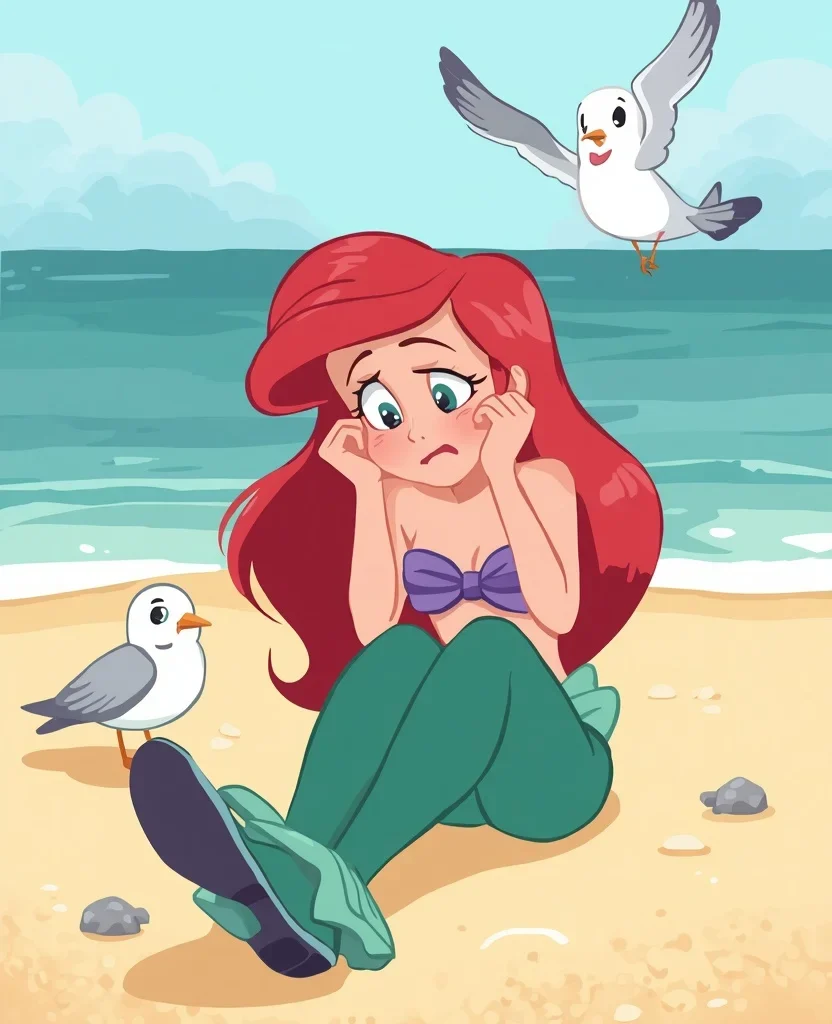
| I traded my voice for some legs and a dream. The legs are confusing — they’re more than they seem. There are two of them. Two! And they both have to go in some kind of sync, or you fall on your toe. The shoes are a nightmare. They’re tight, and they’re strange. The stairs are a puzzle, completely arranged. But worst of all? The carpet — it’s dry, it’s weird, and flat. I miss the ocean. I do not miss the cat. |
The Little Mermaid made a significant trade — her voice for the ability to walk on land — and this poem fully explores just how confusing that transition actually was. Two legs in sync? Shoes? Stairs? These are actually genuinely difficult things if you’ve never done them before, and kids think it’s hilarious that nobody warned Ariel about any of this. The coordination required to walk is something children have actually had to learn themselves, so they feel strangely superior to Ariel here.
The ‘I do not miss the cat’ ending is a perfect absurdist button — it implies a whole backstory of ocean cat drama that’s never explained, and kids love that kind of mysterious callback. Unexplained running gags are a comedy staple that kids pick up on very quickly. This poem is also great for a movement activity — have kids try to walk without bending their knees to simulate what Ariel might have experienced.
Puss in Boots Hates Mondays
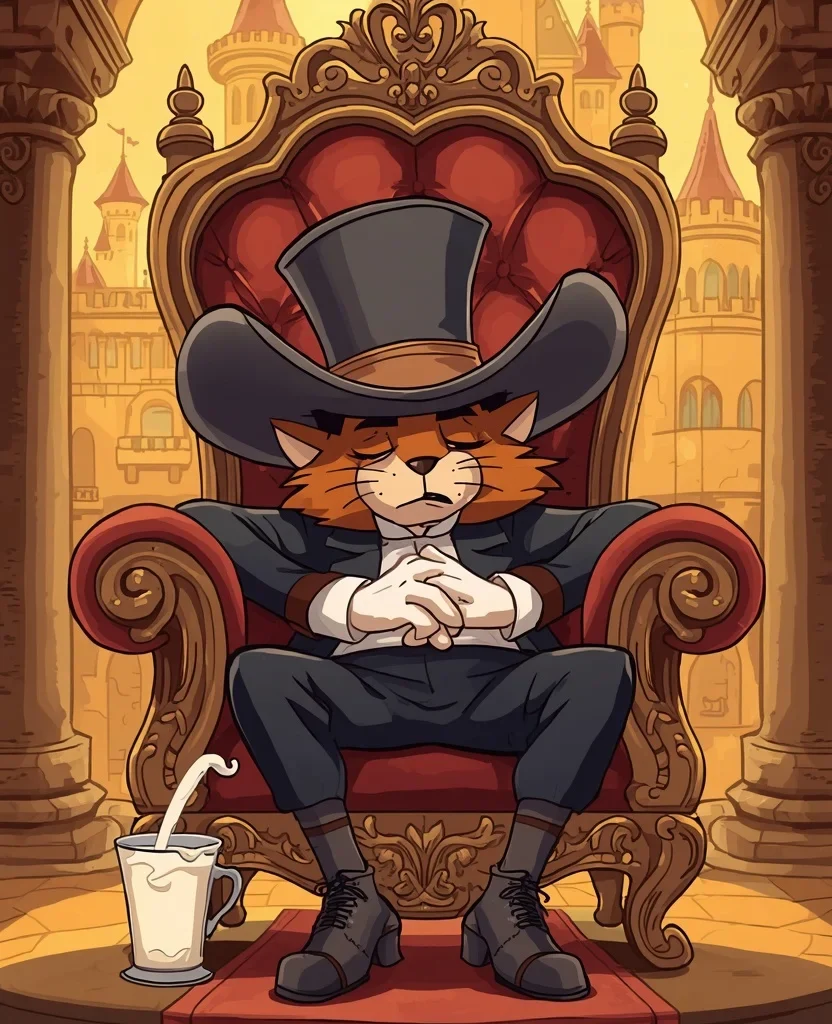
| I’ve conquered the ogre, I’ve charmed the whole court. I’ve outwitted giants of every sort. But Monday at nine when I have to begin? The boots are the problem. They’ve always been thin. I’ve worn them for years — they’ve seen rain and seen sun. I’ve run from the king’s men and laughed on the run. But ask me to fetch you a coffee today? These boots weren’t made for that. No. Not today. |
Puss in Boots is one of the most capable, confident characters in all of fairy tale lore — and even he has days when he just can’t. This poem takes his legendary swaggering competence and applies it to the very relatable scenario of not wanting to adult on a Monday morning. Kids who’ve heard their parents groan about Mondays will immediately recognize the joke.
The poem works as a great character study in comic deflation — taking something grand (conquering ogres, outwitting giants) and bringing it crashing down to something mundane (fetching coffee, worn-out boots). That high-to-low comedic arc is one of the most reliable laugh generators in both adult and children’s humor. It also gives kids a fun discussion point: what kind of tasks would even a legendary swashbuckling cat find too much trouble?
Thumbelina’s Tiny Problems
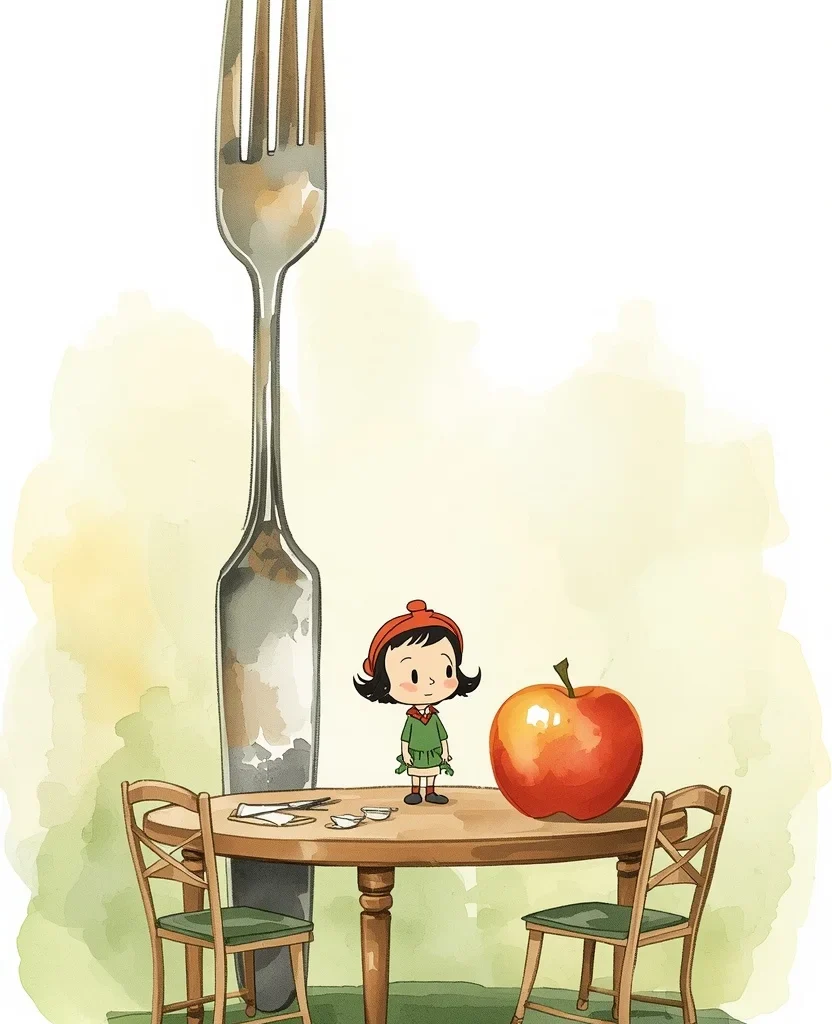
| Everything here is enormously tall. A grape is my boulder. A thimble, my hall. The stairs are a mountain, the doorknob’s a wheel — And don’t even mention the size of a meal. A spoon is a canoe. A cup is a pool. A shoelace is a rope. Every pencil’s a tool. The world is not built for the thumb-sized among us — Someone should fix that. I’ll start a small fuss. |
Thumbelina’s scale problem is actually an incredible creative exercise disguised as a silly poem. Every comparison here asks kids to mentally transform ordinary objects into something fantastical from a tiny perspective — a grape as a boulder, a spoon as a canoe. This is great for developing imaginative thinking and spatial reasoning in young readers. The poem has a cumulative, list-based structure that kids find deeply satisfying and love to continue on their own.
The final couplet — ‘Someone should fix that. I’ll start a small fuss’ — is a genuinely great piece of wordplay. ‘Small fuss’ works on two levels: both her tiny size and the modest nature of her protest. Kids who are old enough to notice the pun feel very clever about it. This poem is also a perfect creative writing springboard — ask kids to write their own ‘tiny world’ comparisons for objects in their classroom.
Red Riding Hood’s Speed Run
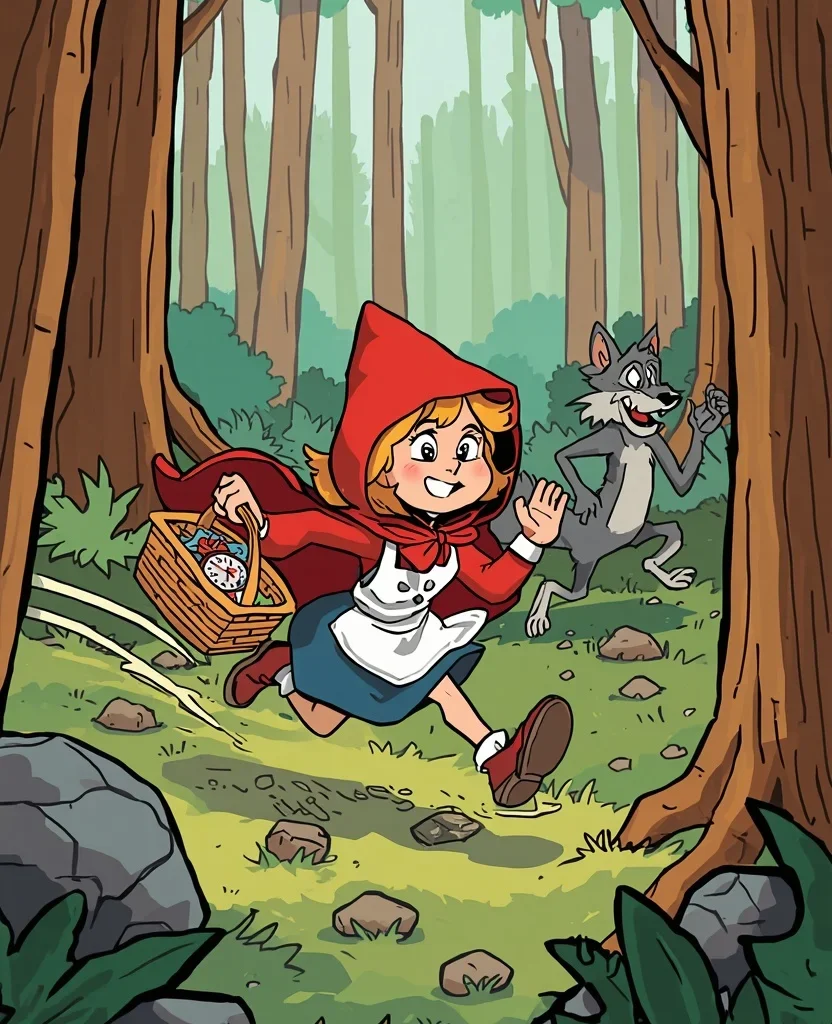
| The wolf said, ‘Let’s chat!’ I said, ‘No, I’m in a rush.’ He said, ‘But the flowers!’ I said, ‘Don’t. Don’t. Shush.’ He said, ‘Take the long path!’ I said, ‘Nope, I’ll not.’ I got to my grandma’s in twelve minutes flat. She said, ‘You were fast!’ I said, ‘Wolf stuff again.’ She said, ‘Not the wolf from the Tuesday forest?’ ‘Yes, him.’ We had cake. We had cookies. The wolf sat outside. Moral: just run fast. Don’t stop. Don’t get sidetracked. Godspeed. |
The entire Little Red Riding Hood saga could have been avoided if Red had simply not stopped to chat. This poem delivers the ultimate no-nonsense, speedrun version of the story — Red has places to be, she knows the threat, and she absolutely refuses to engage. Kids who’ve ever been told to ‘just ignore’ someone will find this deeply satisfying. The running commentary between Red and Grandma is genuinely funny and feels like a real conversation.
The final line — ‘Moral: just run fast. Don’t stop. Don’t get sidetracked. Godspeed.’ — is comic gold because it’s simultaneously real advice and a funny anti-moral. Traditional fairy tale morals tend to be grand and sweeping; this one is practical and breathless. It’s great for teaching kids about the structure of morals and conclusions in storytelling, while also just being an entertaining, punchy ending.
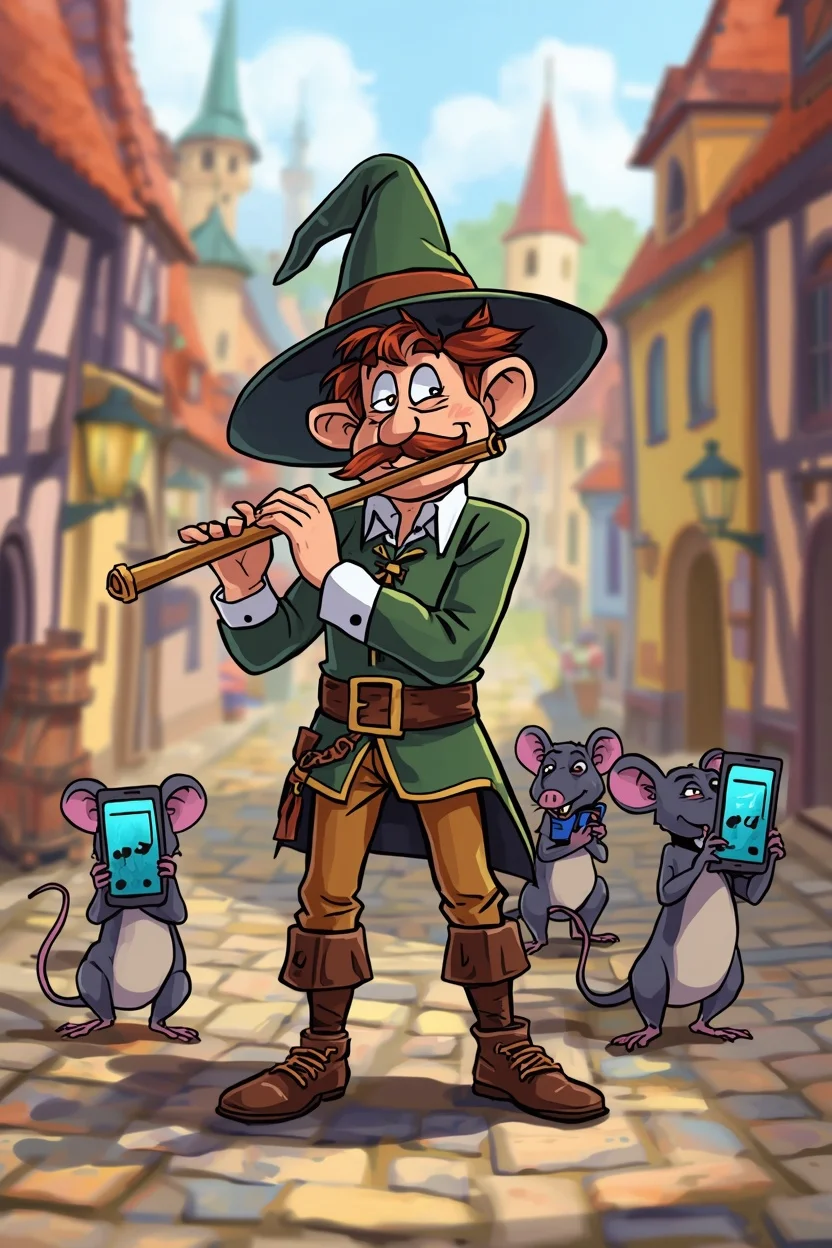
The Pied Piper’s Spotify Playlist
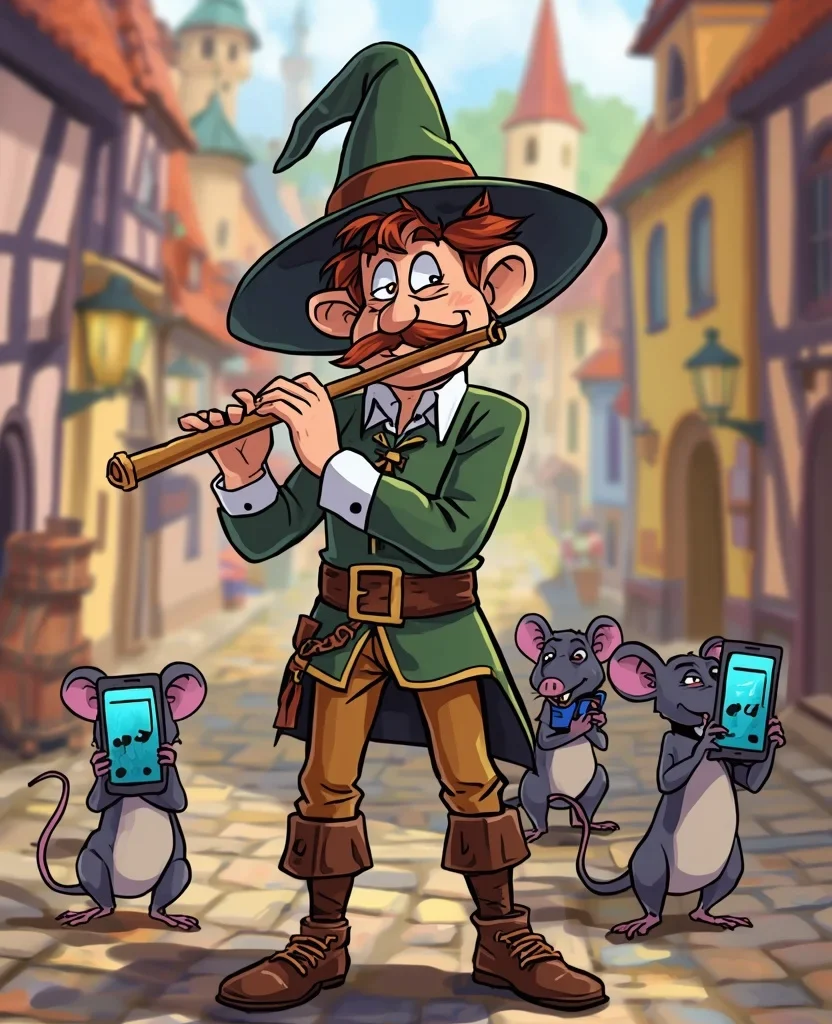
| I play, and they follow — the rats and the rest. My playlist is handcrafted, perfectly blessed. I’ve got ‘Follow That Flute’ and ‘March to the River’, and one ambient track that’s a certified winner. The mayor said, ‘Pay me!’ and I said, ‘Of course.’ He didn’t. He shouldn’t have done that by force. Now children are following, tracking my beat — Should’ve just paid me. The playlist was sweet. |
The Pied Piper story has some genuinely dark undertones, and this poem navigates that by leaning into the modern absurdity of curated playlists and payment disputes. Framing the Piper as a wronged independent artist is surprisingly funny and gives kids a completely fresh angle on the story. The ‘he shouldn’t have done that by force’ line is pitch-perfect deadpan.
The song titles (‘Follow That Flute,’ ‘March to the River’) are the kind of specific joke that rewards attentive readers. Planting small comedy details within a list is a great technique for young writers to learn — it teaches them that jokes don’t always have to be in the main narrative. This poem also offers a good conversation starter about fairness and contracts.
Ali Baba Forgets the Password
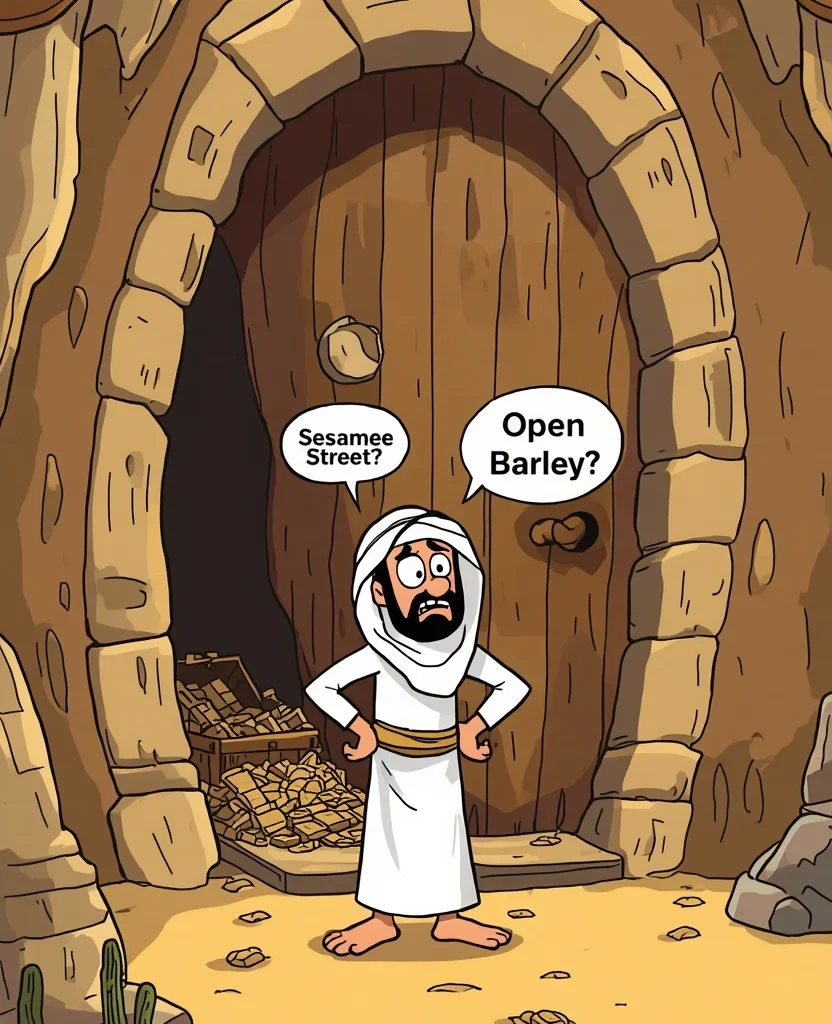
| Open Sesame! Easy! I’ve got this for sure! I’ve said it a hundred times: crisp, clean, and pure. But today — for some reason — the word just won’t come. I’ve said ‘Open Barley’ and ‘Open Whole Sum.’ ‘Open Buckwheat!’ I tried. ‘Open Grain!’ I said next. The cave was unmoved and completely unvexed. My brother forgot it and suffered quite badly — I wrote it on my hand. So I’m fine. Quite glad. |
Everyone has forgotten a password at the worst possible moment — and Ali Baba’s situation is just a more dramatic version of being locked out of your email. This poem takes the iconic ‘Open Sesame’ and plays with the brain’s blank spot of forgetting something you absolutely know you know. Kids find the list of wrong grain-based guesses extremely funny because they escalate perfectly.
The ending — ‘I wrote it on my hand. So I’m fine. Quite glad.’ — is the poem’s best beat. It’s a completely practical solution that totally undercuts the drama, and the cheerful self-satisfaction of Ali Baba is a great example of anticlimactic comedy. It also gives kids a perfectly reasonable takeaway: write things down if they’re important.
Three Little Rabbits vs. the Housing Market
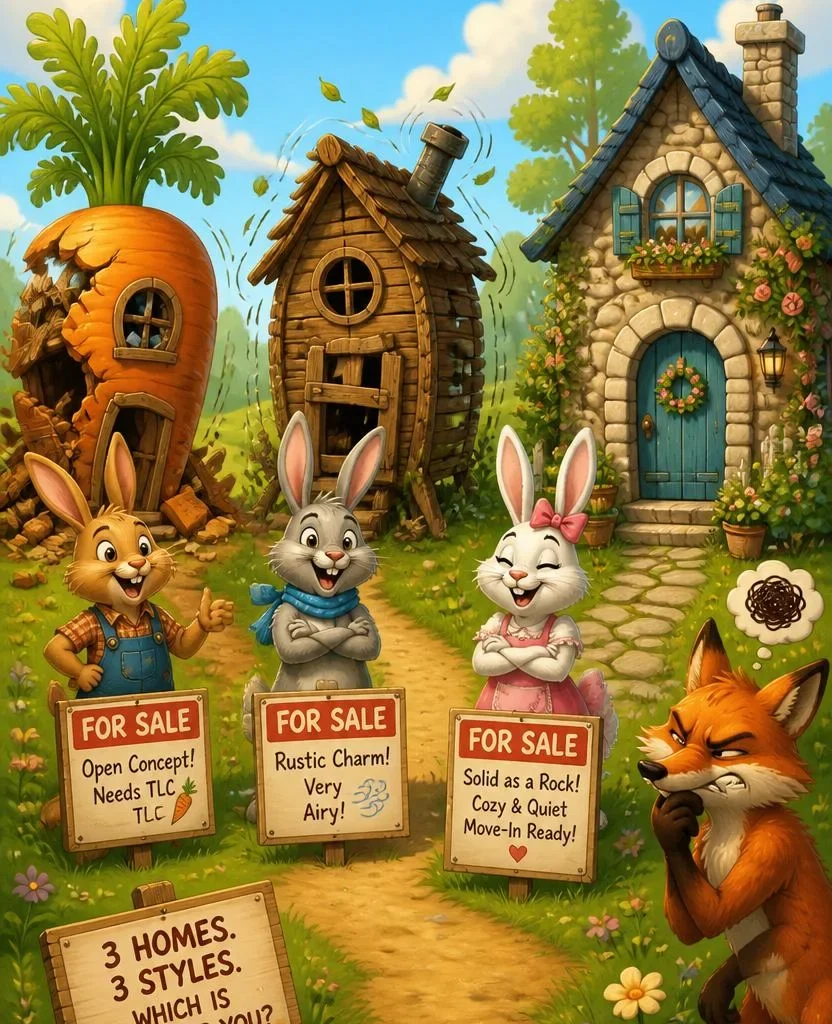
| The first rabbit picked a carrot house because it was fast and cheap, and for one sunny afternoon it looked absolutely perfect. The second rabbit built a wooden burrow with branches and leaves, convinced it had “rustic charm” and would impress everyone nearby. But when a sly fox wandered through the forest, both rabbits discovered that quick building choices do not survive much trouble. One strong gust of wind and one hungry fox later, their dream homes were already falling apart |
The third rabbit spent much longer building a sturdy stone cottage, even while the others laughed at how slow the work seemed. When the fox tried to blow, push, and scratch his way inside, the little stone house stayed perfectly safe. The story turns the classic fairy tale into a funny lesson about smart choices, patience, and planning ahead. Kids laugh at the silly carrot house, but they also remember the message: sometimes the strongest things take the longest time to build.
The Queen’s Invisible Cake (And Zero Shame)
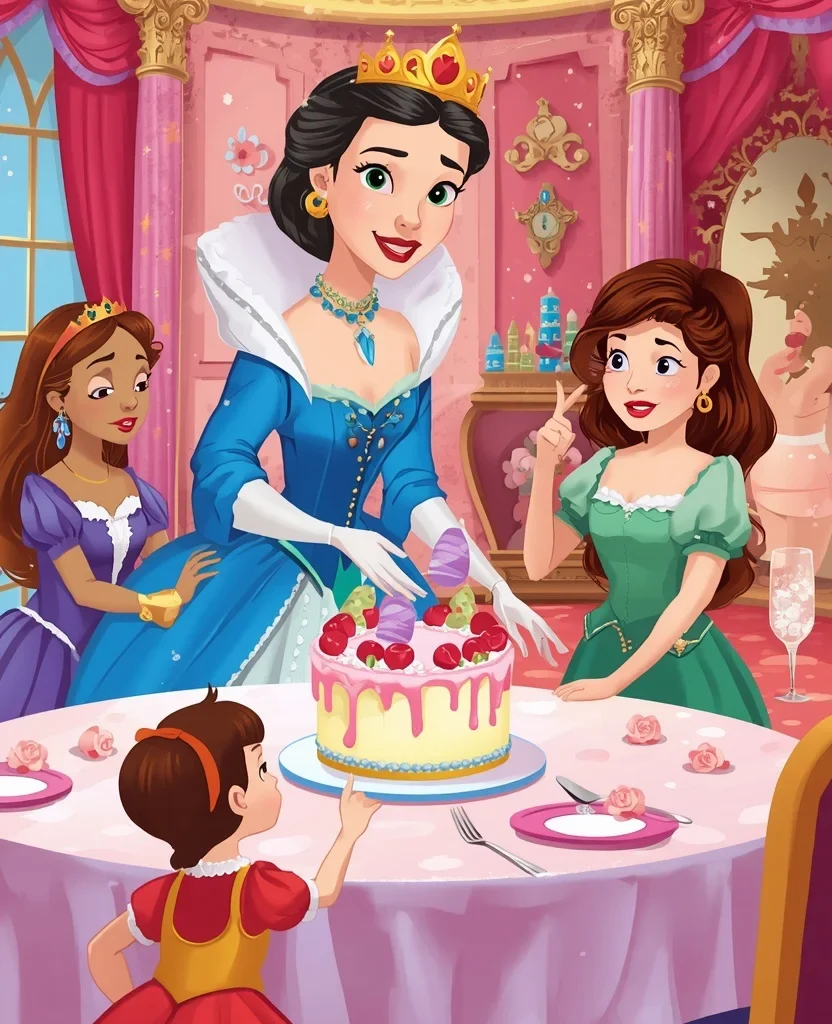
| The royal bakers announced that only truly clever people could see the queen’s magical cake, and suddenly every guest in the castle claimed it looked absolutely delicious. Nobles described layers of chocolate, strawberry frosting, and sparkling candy decorations, even though the silver tray was empty. Nobody wanted to admit they saw nothing, so the entire ballroom nodded politely while pretending to enjoy the “magnificent dessert.” |
Then one small child shouted, “There’s no cake at all!” and the room fell silent for a moment. But instead of feeling embarrassed, the queen simply laughed, grabbed an invisible slice, and declared it the tastiest dessert she had ever served. Soon, everyone started laughing too, and the royal party turned even sillier than before. The story becomes less about being fooled and more about confidence, imagination, and how funny crowds can act when nobody wants to say the obvious thing out loud.
Tinker Bell’s Bad Mood
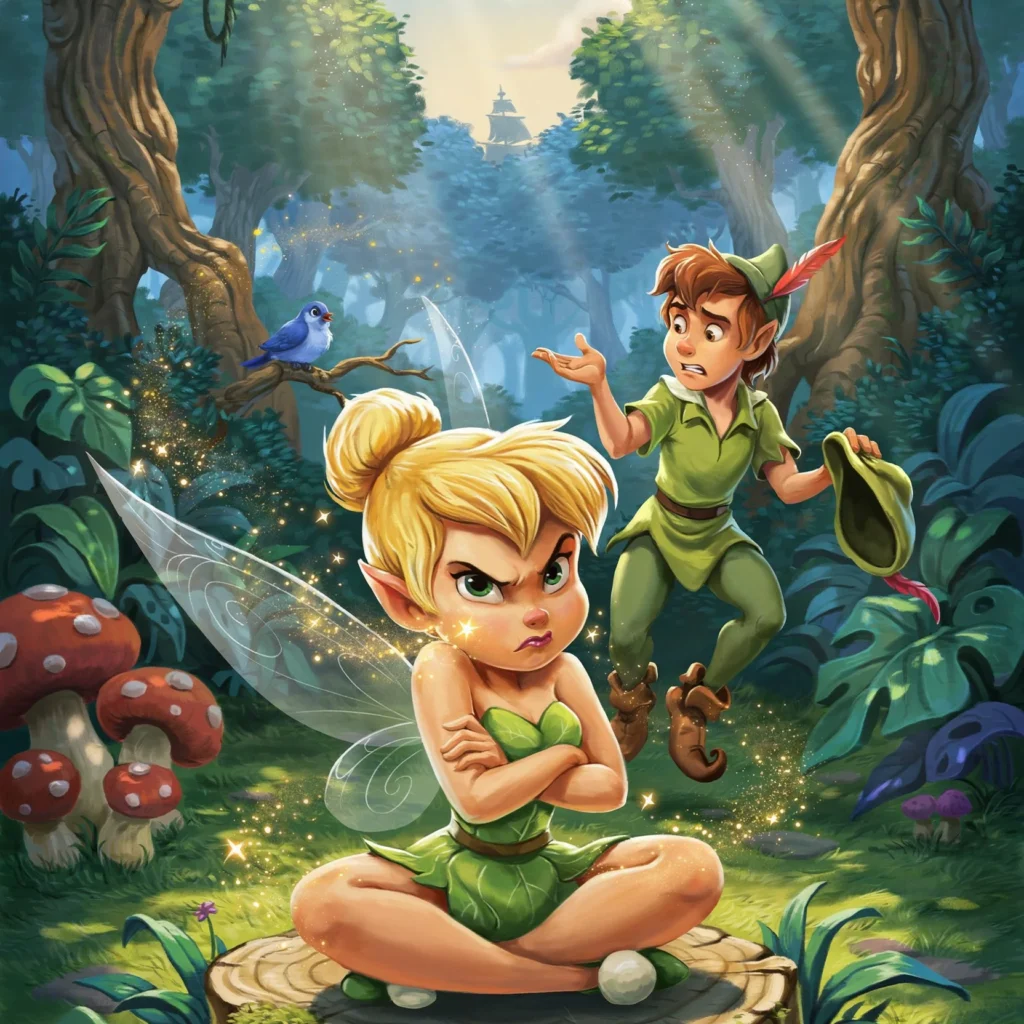
| I’m small, I am bright, and I’m full of some dust. I fly, and I glow, and I sparkle — I must. But today I’m not sprinkling. Today I am done. Peter asked me for three things before breakfast was done. He said, ‘Tink, we need fairy dust — right now, please!’ I said, ‘No, I’m sitting.’ He said, ‘Pretty please?’ I crossed my small arms, and I let out a huff. The dust needs recharging. I’ve had quite enough. |
Tinker Bell has an attitude — the source material is very clear on this — and this poem fully leans into her legendary moodiness. The idea that even magical beings need a break and time to recharge resonates enormously with kids who sometimes feel overwhelmed by being asked for too many things before they’ve had time to wake up properly. There’s something genuinely validating about Tinker Bell refusing to produce fairy dust because she’s simply had enough.
This poem works well as a reading for social-emotional learning discussions about boundaries, rest, and the importance of saying ‘not right now.’ Wrapping those concepts in a funny, fairy-dusted package makes them far easier for kids to absorb and discuss. The ‘dust needs recharging’ line is also a great metaphor for personal energy that kids and teachers can reference in daily conversations about taking breaks.
The Dragon Who Just Wanted Pizza
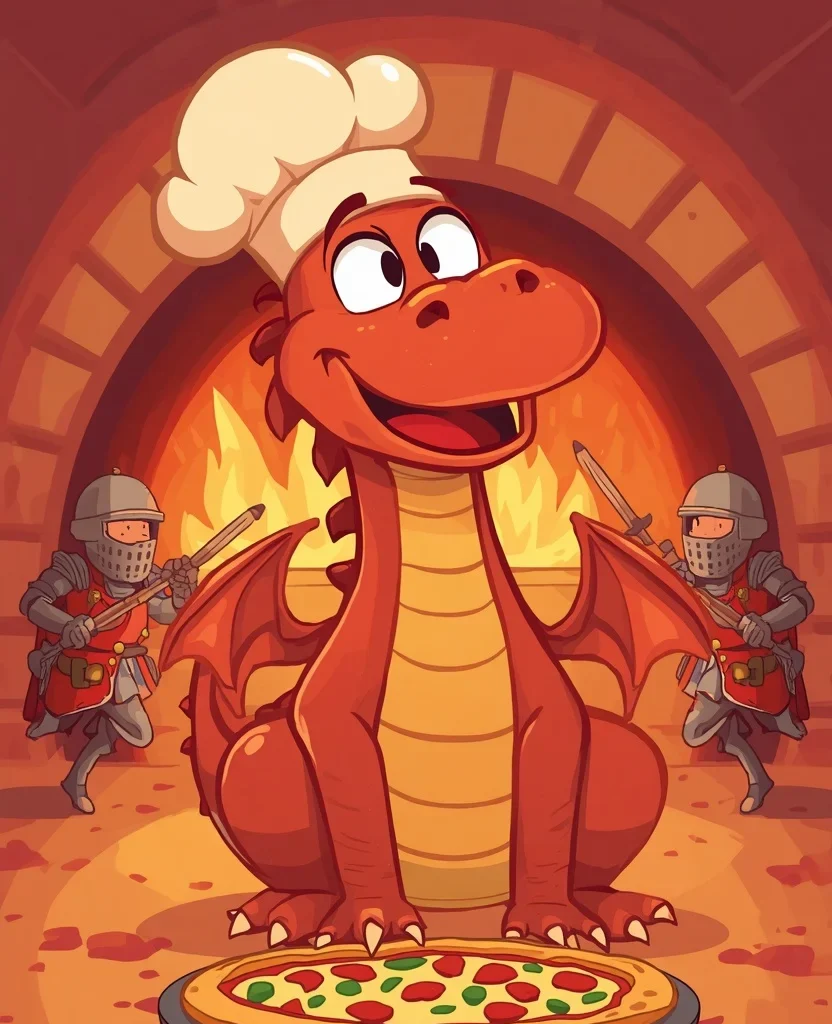
| I’ve got a great cave and a really hot flame. The knights keep on coming — it’s always the same. They shout, ‘Fearsome dragon!’ and charge at my door — But I’m making pizza. I’m not keeping score. The mozzarella from goats I’ve befriended below. The crust is thin, crackly, with just the right glow. A knight once slowed down and smelled what I’d baked — He dropped his whole sword. We both ate. It was great. |
The dragon who just wants to cook pizza is the chaotic good energy this article absolutely had to end on. Subverting the ‘fearsome dragon’ expectation by revealing he’s a culinary enthusiast is one of the most satisfying comedic reversals in the whole collection. Kids adore this kind of twist — the scary thing turns out to be cozy and domestic, which is both funny and weirdly comforting.
The ending — a knight who stopped, smelled the pizza, dropped his sword, and sat down to eat — is just a perfect, warm, joyful conclusion. It suggests that a lot of conflicts could probably be resolved with good food, which is honestly not terrible advice. This poem works great as a final read-aloud in a fairy tale poetry unit because it leaves everyone in a warm, happy, slightly hungry mood. And that’s the exact energy you want.
Final Thought: Go Make Storytime Weird and Wonderful
There you have it — 22 funny fairy tale poems that take everything you thought you knew about classic stories and tip it sideways until something hilarious falls out. From a wolf with back problems to a dragon perfecting his pizza crust, these poems prove that the best way into a story is sometimes through the silliest door.
Print them, perform them, read them at top volume with terrible accents. Use the image prompts to create visuals for bulletin boards, print-and-read packets, or your kids’ activity corner. Each poem has something to offer — a laugh, a lesson, or just a deeply satisfying punchline that your kid will repeat at the dinner table for three weeks.
If you loved this collection, save it, share it, pin it — and come back to FizzyFlare for more creative content that makes ordinary days a little more fun. Now go read something wonderfully weird to a small person who will love you for it!