25 Recycling Activities for Kids That Are Fun
Let’s be real — getting kids excited about recycling can feel like convincing them to eat broccoli. But here’s the thing: recycling activities for kids don’t have to be a lecture or a chore. With the right projects, your little ones will be sneaking into the recycling bin for craft supplies before you can say “cardboard box.” These 25 ideas are hands-on, creative, and — dare I say it — actually fun.
I’ve rounded up activities that work for toddlers all the way to tweens, so you won’t need to hunt down five different articles. Whether it’s a rainy afternoon, a school project, or just a way to burn some energy, these recycled crafts and games have you covered. Ready to turn trash into treasure? Let’s go.
1. Cardboard Box City
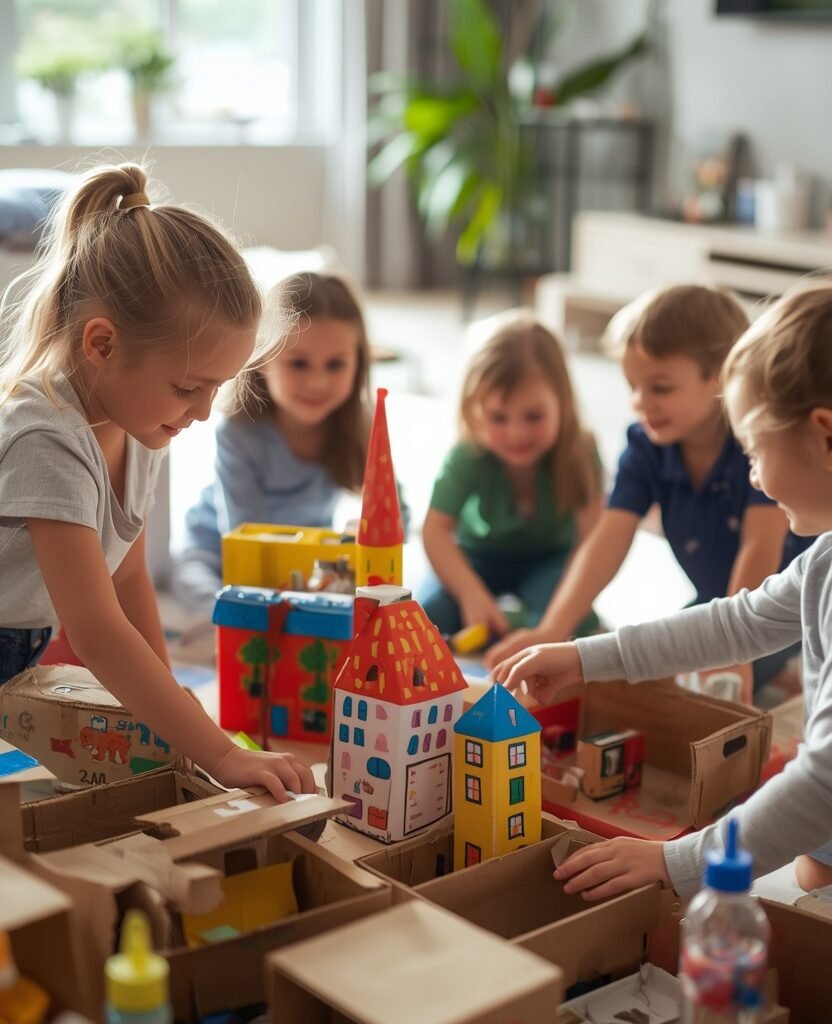
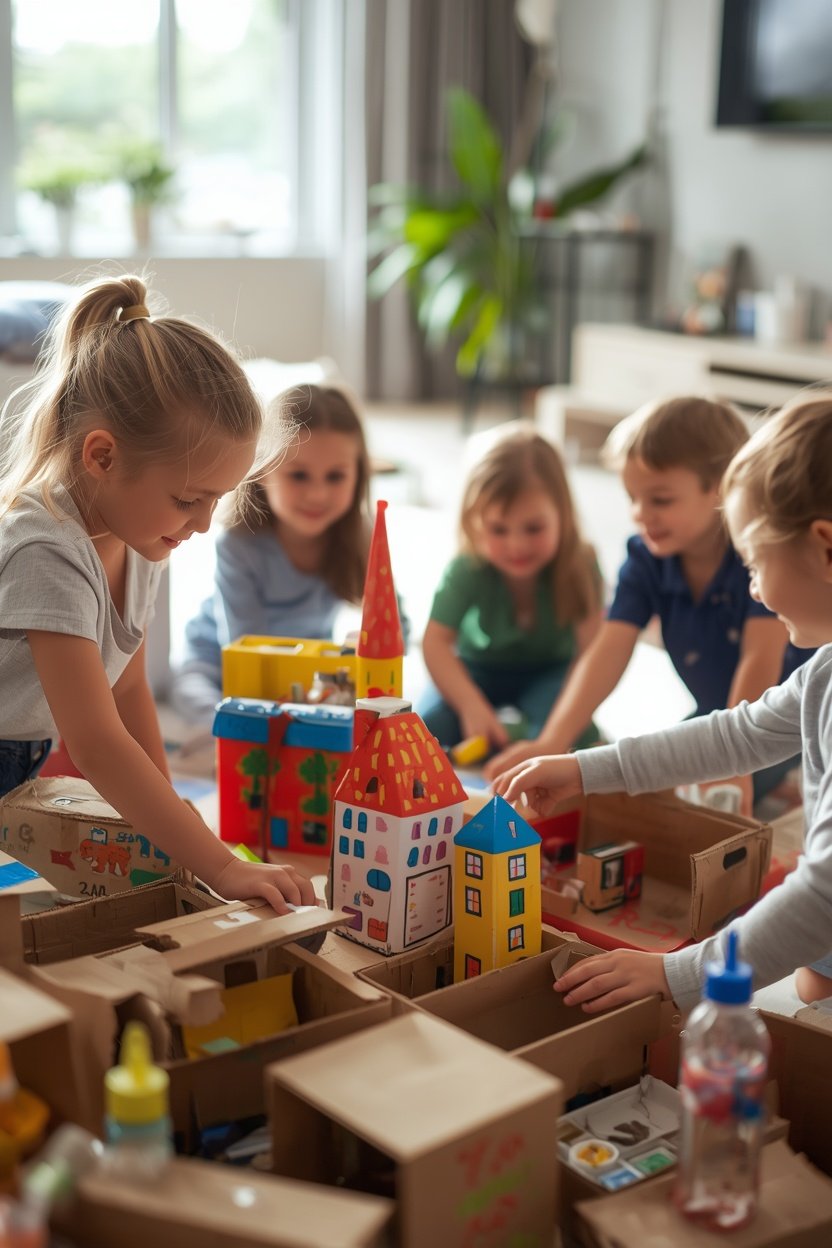
Cardboard box city building is the kind of activity that starts as “just one building” and ends three hours later with a whole downtown district. Grab every cereal box, shoe box, and toilet roll you’ve been hoarding (no judgment), and let kids design their own city. They cut out windows, paint storefronts, and even set up tiny roads with masking tape on the floor. It’s architecture, storytelling, and recycling all rolled into one glorious mess.
The best part? You supply the materials and step back. Kids naturally problem-solve — figuring out how to make a roof stay on or how tall a “skyscraper” can go before it topples. It sharpens fine motor skills, spatial thinking, and creativity without anyone realizing they’re learning. IMO, this one’s a top-tier activity for any age between 4 and 12. Don’t be surprised if you find yourself adding a highway on-ramp at midnight 🙂
2. Egg Carton Caterpillars
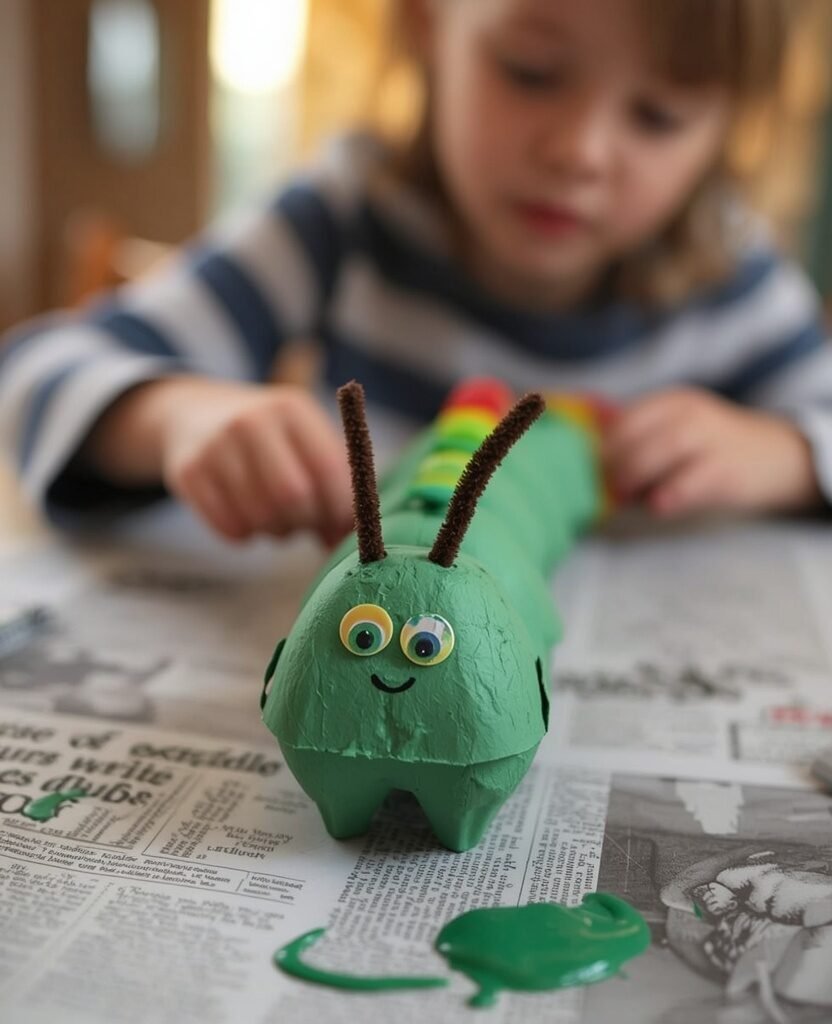
Egg cartons are basically pre-made caterpillar bodies — nature practically did the hard work for us. Cut a carton into a long strip, let kids paint each cup a different color, then add googly eyes, pipe cleaner antennae, and a felt smile. The result is an adorable, squiggly little creature that doubles as a fine motor skills workout for younger kids. Gripping small brushes, gluing tiny details, and threading pipe cleaners all build those little hand muscles.
This activity works beautifully for preschoolers through early elementary age. You can extend it by making a whole bug collection — beetles from bottle caps, butterflies from coffee filters, bees from toilet paper tubes. Suddenly, you’ve got a recycled insect museum on your hands, and nobody spent a dime on craft supplies. If your kid is into bugs, pair this with a trip outside to spot the real thing afterward.
3. Plastic Bottle Bird Feeders
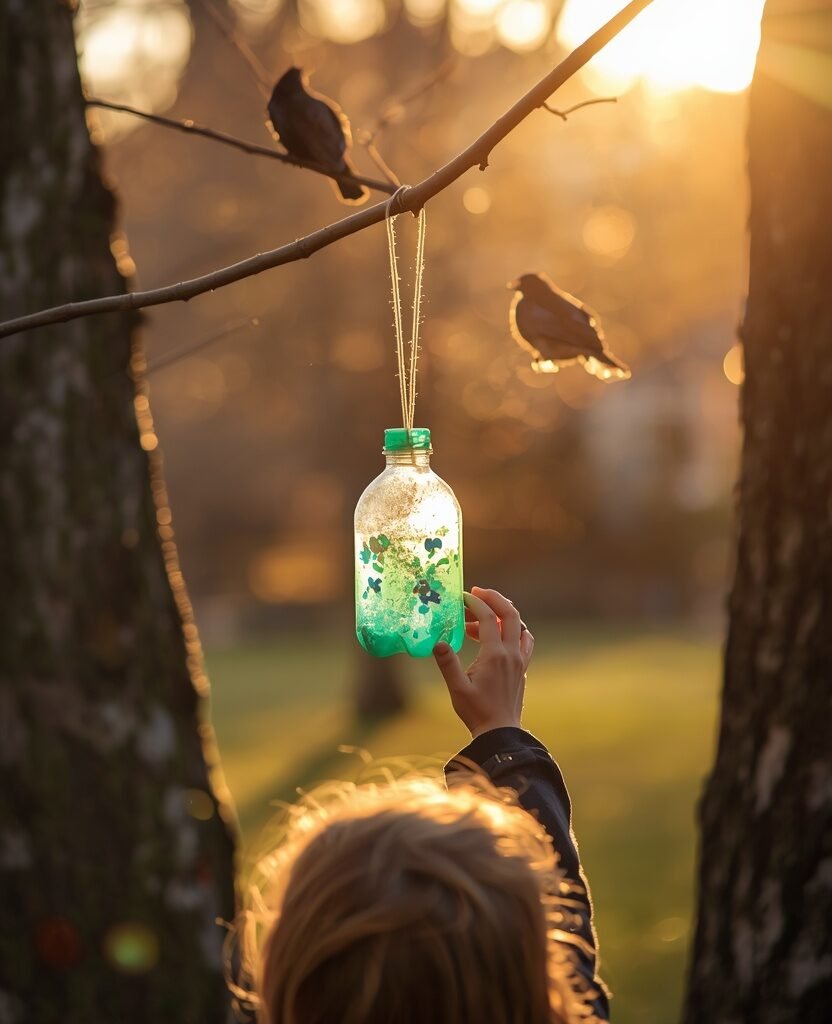
Take an empty plastic bottle, cut a few small holes near the bottom, stick wooden chopsticks or pencils through as perches, fill it with birdseed, and hang it outside. That’s it — you’ve just made a DIY bird feeder that teaches kids about upcycling and local wildlife at the same time. Decorate with permanent markers or outdoor paint to make it personal. Kids absolutely love watching birds actually show up to use something they built.
Beyond the craft itself, bird feeders spark ongoing curiosity. Keep a little notebook nearby so kids can sketch or write down the different birds they spot — that’s science journaling without calling it science journaling. It also builds a sense of environmental responsibility, which is kind of the whole point of recycling education. Plus, once they see a real bird pecking away at their creation, the pride on their face is genuinely priceless.
4. Newspaper Hats
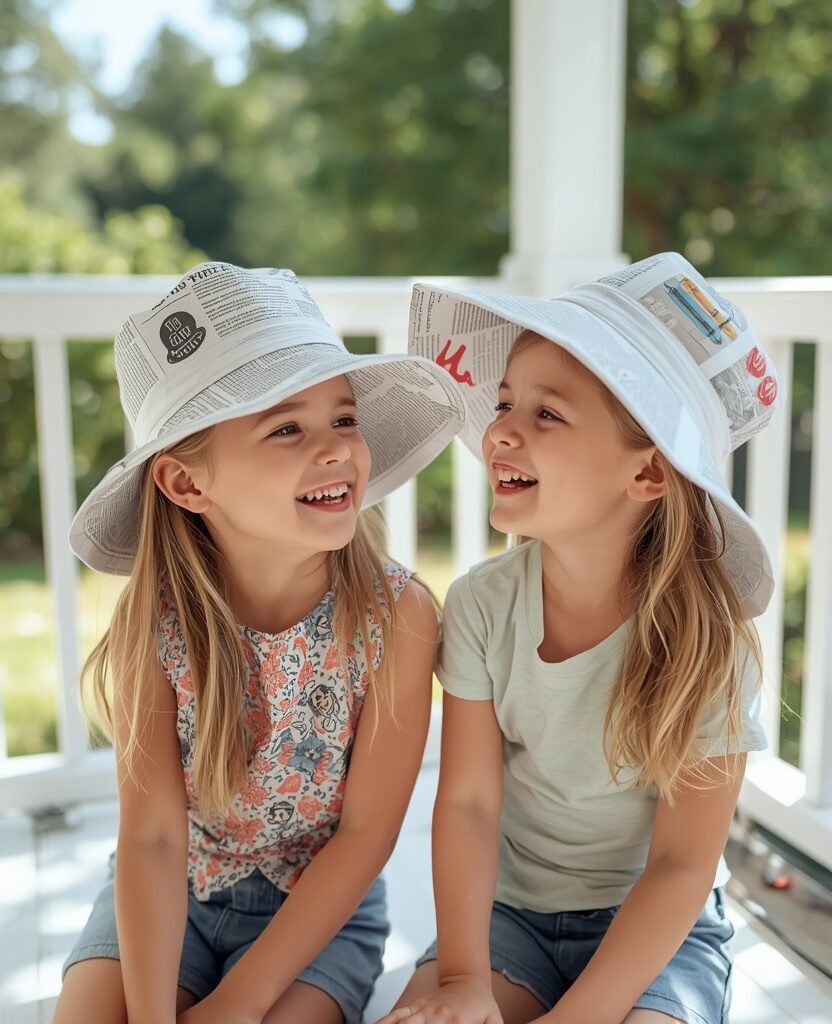
Old newspapers don’t need to pile up in the corner — fold them into hats and suddenly you’ve got a whole parade going. Classic origami-style newspaper hats are surprisingly sturdy and endlessly customizable. Kids can paint them, stick stickers on them, draw designs with markers, or leave them as-is for that authentic newspaper artist aesthetic. There’s something satisfying about turning yesterday’s headlines into today’s headgear.
This one is fast, low-mess, and requires zero shopping, which makes it a solid go-to on a spontaneous afternoon. Younger kids (3–5) will need help with the folding steps, but once they get the basic shape, decorating is all theirs. You can level it up by turning it into a hat fashion show — who made the most creative design? Who built the tallest hat tower? It’s easy fun that takes about 20 minutes start to finish.
5. Tin Can Wind Chimes
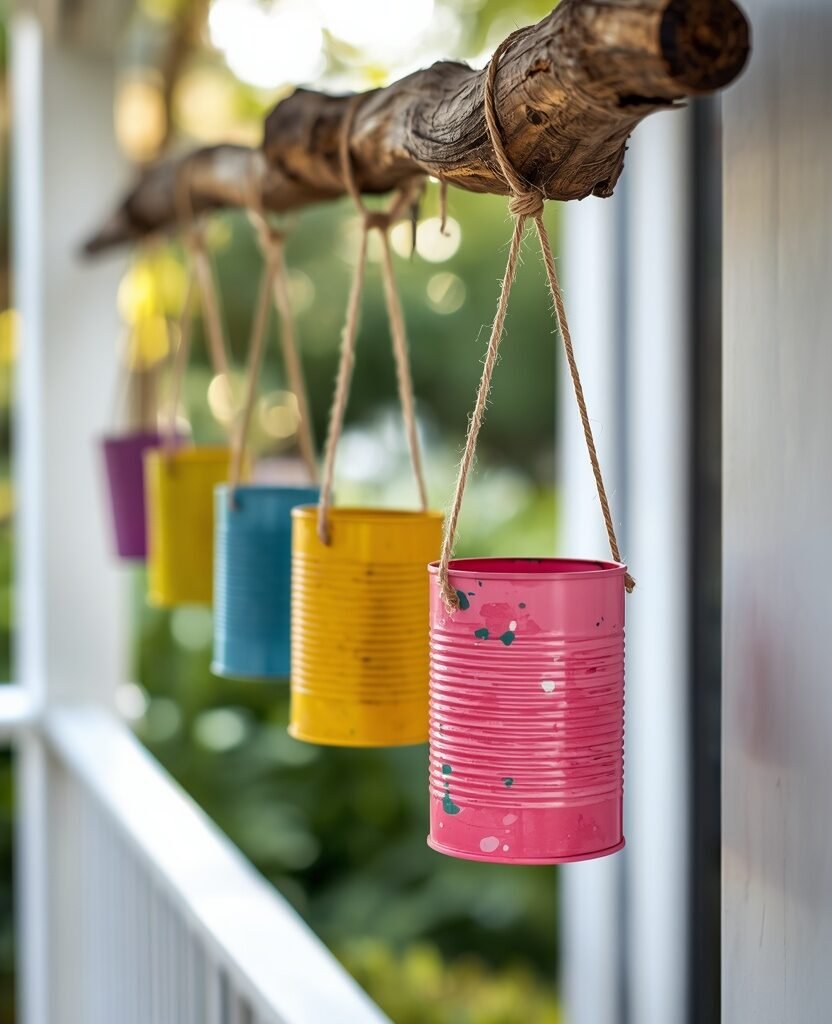
Clean tin cans are basically free percussion instruments. String a few together at different heights from a piece of dowel or a stick, let kids decorate each can with outdoor paint or washi tape, and hang the whole thing outside. When the breeze hits, you get a gentle tin can wind chime that’s uniquely theirs. Make sure to file down any sharp edges first — that part’s a grown-up job, obviously.
Wind chimes are a great way to combine art, music, and recycling into a single project. Kids discover that the size and thickness of the can affect the sound it makes, which is a sneaky little physics lesson. Hang it by their bedroom window or on the back porch as a permanent display. It’s a project they’ll point out to every visitor, which honestly never gets old for either of you.
6. Toilet Paper Roll Binoculars
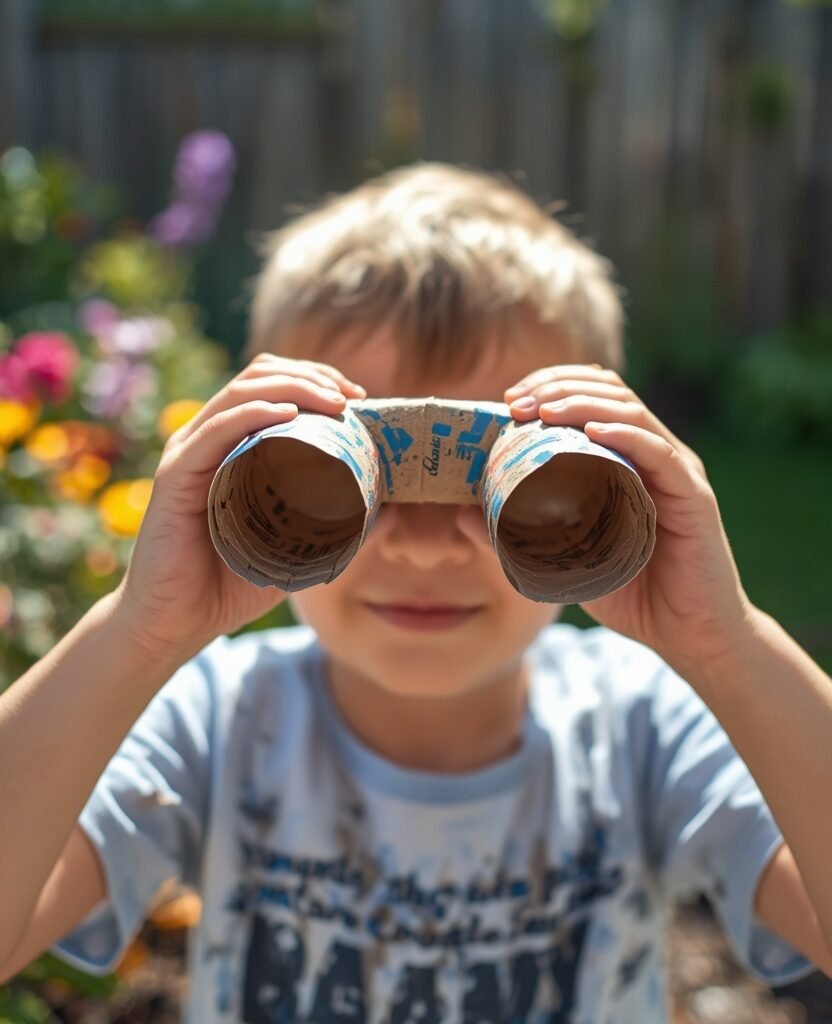
Two toilet paper rolls, some tape, string, and five minutes — that’s all it takes to make DIY binoculars that will send your kid on an “expedition” around the backyard. Decorate with paint, colored tape, or stickers before assembly. The string makes a strap so they can wear it around their neck like a proper explorer. Fair warning: once these are made, expect to spend at least an hour “spotting wildlife” (i.e., the neighbor’s cat)
This project slots perfectly into a nature-themed afternoon. Pair it with a simple scavenger hunt — spot a bug, find a bird, identify a leaf — and you’ve turned recycled cardboard into a whole outdoor learning adventure. It works especially well for kids who love imaginative play. Check out our guide to indoor activities for kids for rainy day backup plans when the expedition gets rained out.
7. Magazine Collage Art
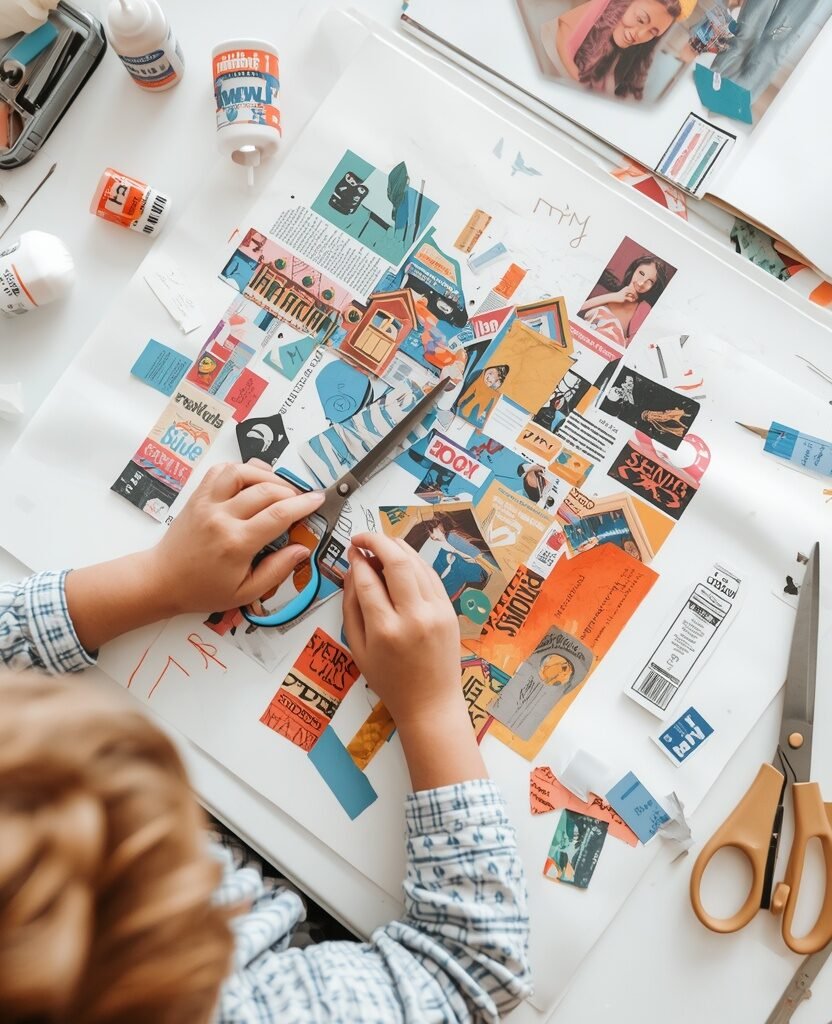
Old magazines are gold for collage projects. Let kids flip through, cut out colors, patterns, faces, animals — whatever catches their eye — and arrange it all into a piece of art. No drawing skills required, which is a relief for kids who feel frustrated when their artistic vision doesn’t match reality. Collage art is about composition, color, and storytelling, and those are skills worth building early.
You can give it a theme (ocean animals, favorite foods, dream bedroom) or let it be completely free-form. Glue everything onto cardboard for a sturdy base — another recycled material ticked off. The finished pieces look genuinely impressive framed up, and kids get a huge sense of pride seeing their work on the wall. This is also a fantastic fine motor activity for preschoolers who are working on scissor skills.
8. Bottle Cap Magnets
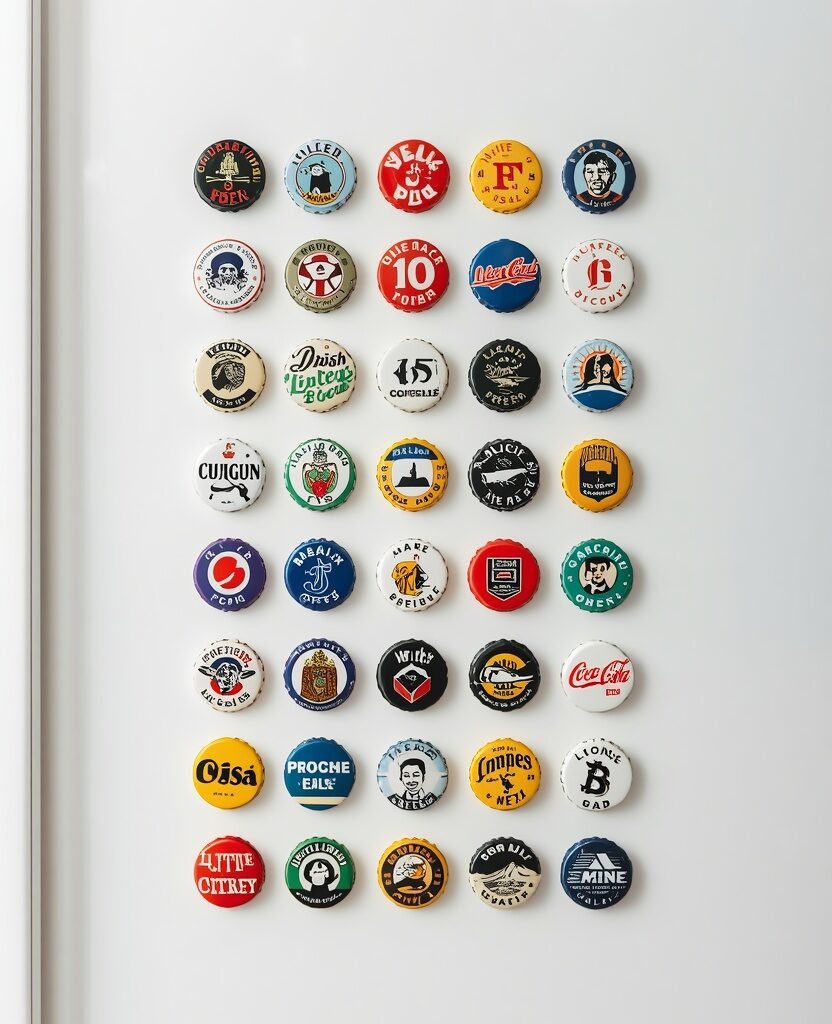
Collect metal bottle caps from water bottles, beer bottles, or soda bottles — kids are surprisingly good at spotting these. Clean them up, fill each cap with a tiny drawing, a printed photo, or a cutout from a magazine, then seal it with a layer of Mod Podge and glue a small magnet to the back. The result is a set of custom bottle cap magnets that look like something from a craft market, not a recycling bin.
This works well for kids ages 6 and up who have the patience for small detail work. Younger kids can still participate by choosing the images and doing the painting — just handle the Mod Podge yourself. These make great gifts, which means you can quietly redirect the “I want to give Grandma something” energy into a productive afternoon craft. Everybody wins :/
9. Cardboard Tube Castles
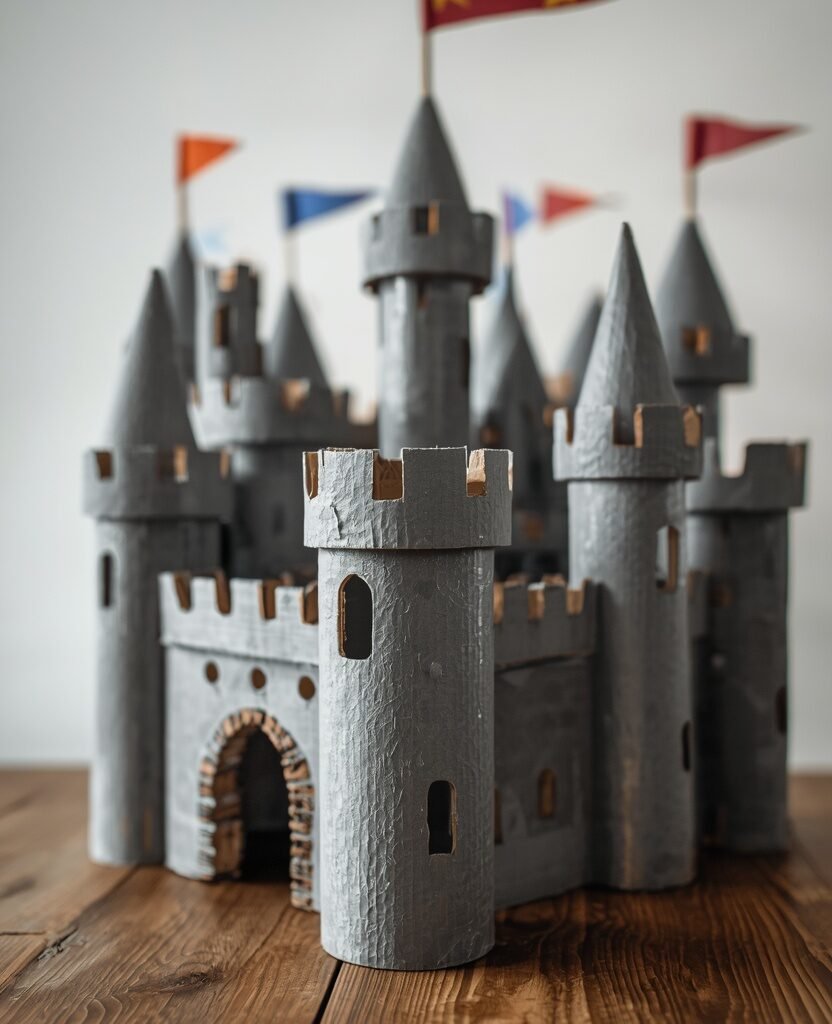
Paper towel rolls, toilet paper rolls, and a little imagination — that’s your castle-building kit. Stack and tape tubes together to form towers, cut battlements into the tops, add a drawbridge from a piece of cardboard, and paint the whole thing in stone-gray or fairy-tale colors. Kids who are into knights, dragons, or royal drama will go absolutely wild with cardboard tube castles
The engineering side of this project is genuinely interesting — figuring out how to make tall towers stand up, how to attach a door that opens, or how to build a spiral staircase from paper strips. It’s open-ended STEM play that doesn’t feel like STEM. Add small plastic figures or LEGO people to the finished castle, and you’ve set the stage for hours of imaginative play afterward. This one’s a weekend-long project if you let it be.
10. Junk Mail Envelopes
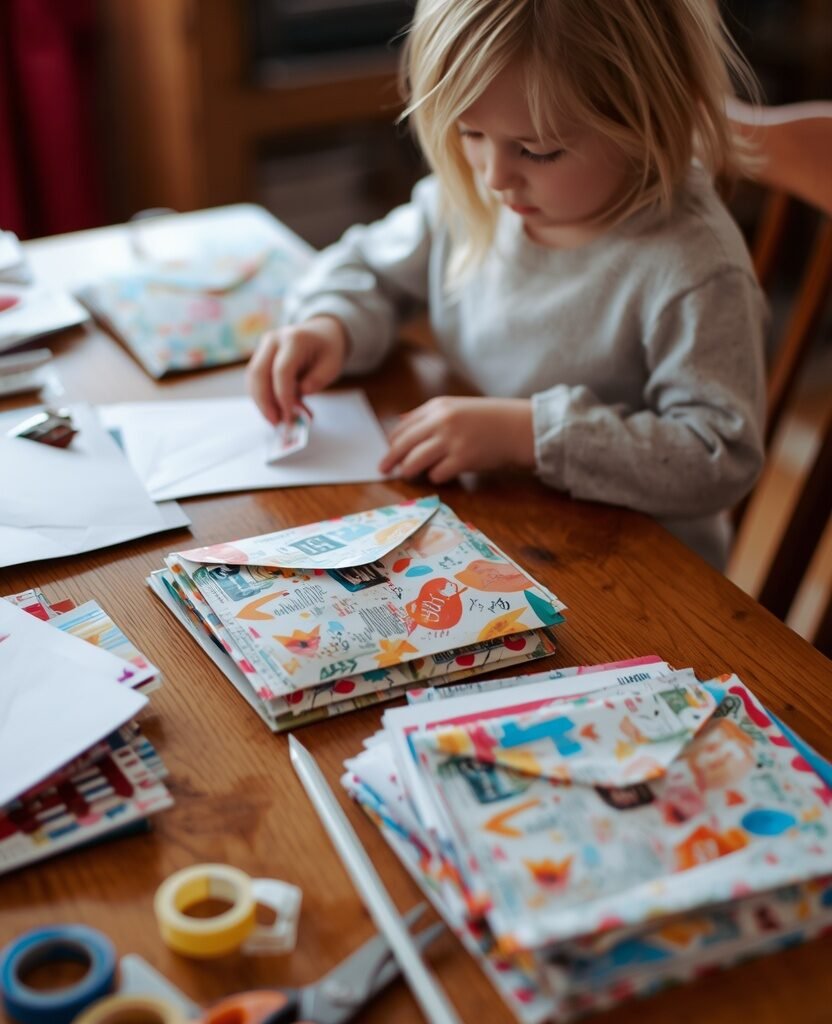
This sounds boring — hear me out. Turning junk mail into working envelopes is actually a satisfying mini-project, especially for kids who love writing letters, making cards, or playing post office. Colorful flyers and catalog pages fold into surprisingly pretty envelopes. There are simple templates online, or you can just unfold an existing envelope and trace it. Junk mail envelope making is a quiet, focused activity that works well for ages 6 and up.
Once they have a stack of custom envelopes, the natural next step is writing letters to fill them — to grandparents, friends, even fictional characters. That’s literacy, creativity, and sustainability all in one afternoon. Slip a small drawing or a joke inside and suddenly your kid has a pen pal waiting to hear from them. It’s charmingly old-school in the best possible way.
11. Plastic Spoon Puppets
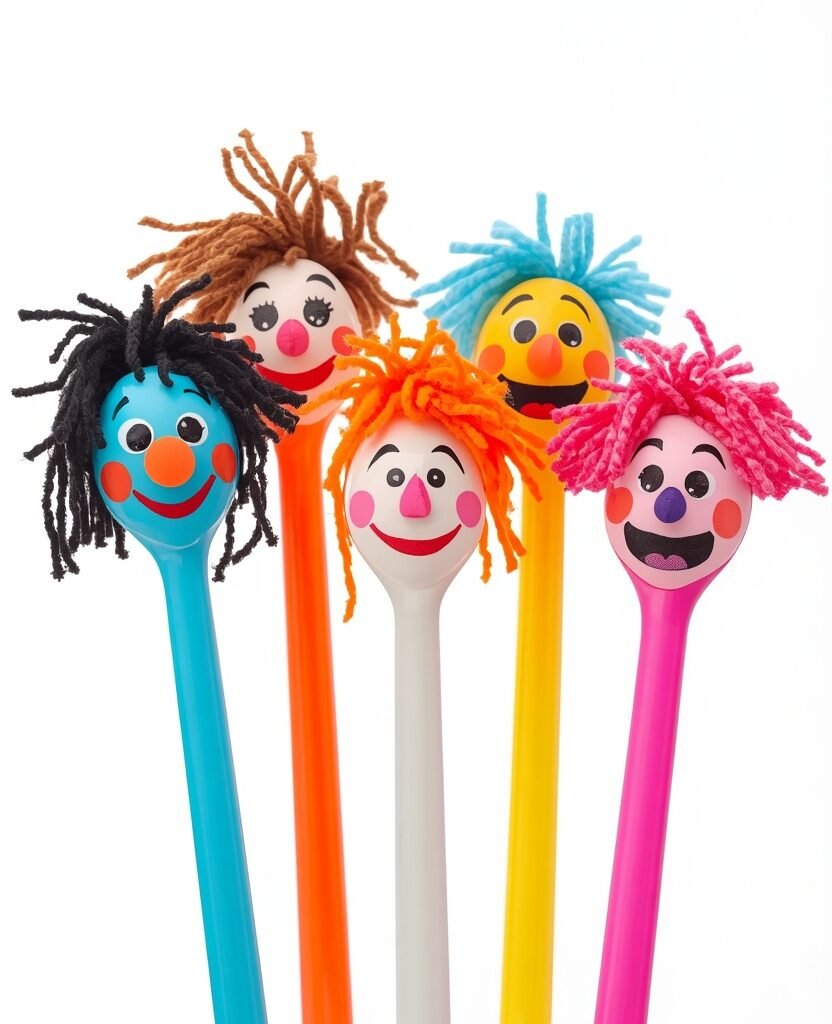
Old plastic spoons (the kind leftover from takeout or picnics) make perfect puppet heads. Draw faces on the bowl of the spoon with a permanent marker, glue on yarn hair, fabric scraps for clothes, and felt details. Kids can make a whole cast of characters — a villain, a hero, a sidekick. Once the puppets are done, puppet shows basically write themselves, and you’ve just bought yourself 45 minutes of entertainment.
Puppet making is particularly great for building storytelling and language skills in a totally natural way. Kids narrate, create dialogue, solve plot problems, and develop characters — all without sitting at a desk. Set up a simple “stage” by draping a blanket over a table and letting them perform behind it. Record the show on your phone and let them watch it back. Their reaction to seeing themselves perform is always gold.
12. Tin Foil Sculptures
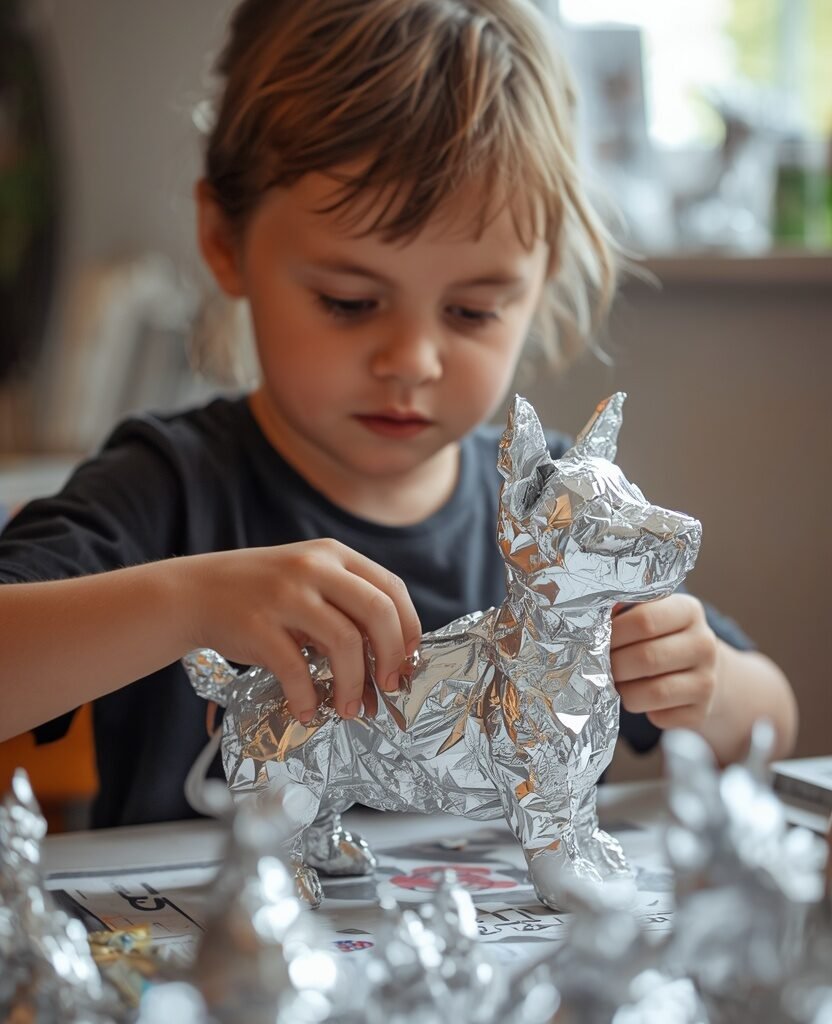
Used tin foil doesn’t need to go straight to the bin. Flatten it out, ball it up, or cut it into strips — foil is incredibly versatile as a sculpting material. Kids can shape animals, robots, people, food, or abstract forms. The material holds shape surprisingly well once you work it enough, and the metallic finish makes everything look a little fancy, honestly.
Tin foil sculpting is a genuinely tactile, sensory experience — kids love the crinkle sounds and the way it reflects light. It’s also a low-stakes medium because nothing is permanent. Don’t love your robot? Scrunch it up and try again. That built-in resilience practice is more valuable than it sounds. For younger kids, start with simple shapes like balls and cylinders, then build toward recognizable figures as their confidence grows.
13. Cereal Box Puzzles
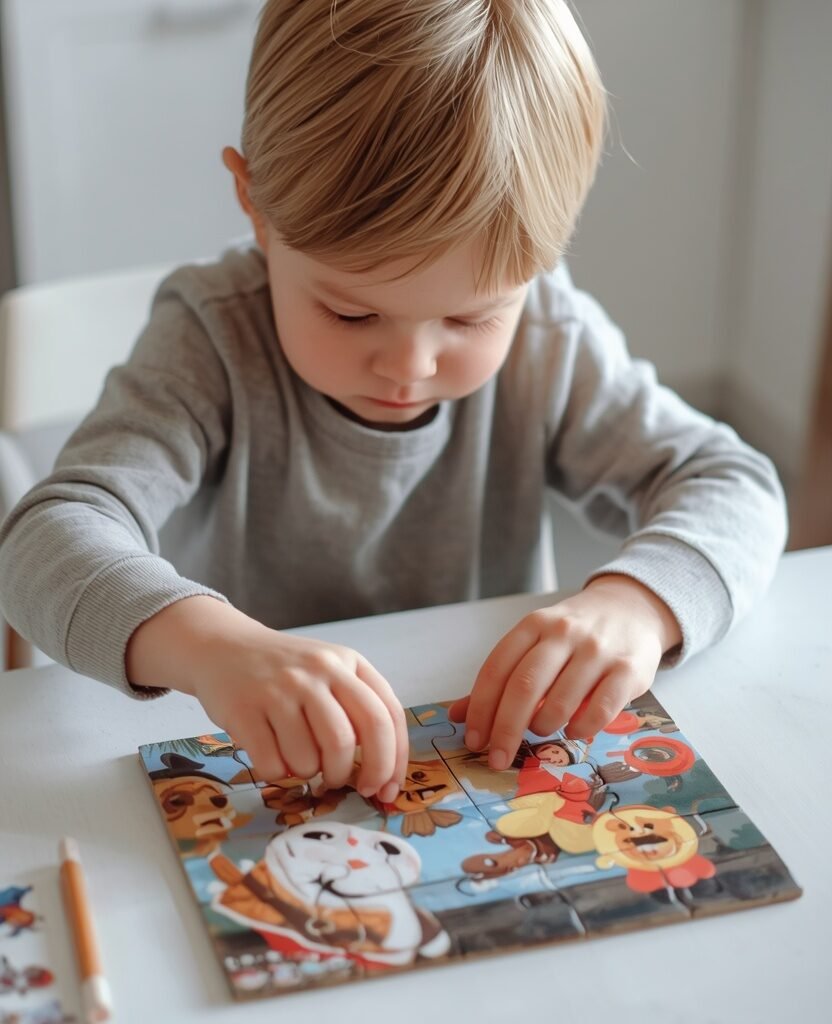
Here’s one that’s as fun to make as it is to solve. Cut out one large panel from a cereal box, draw or paint a picture on the plain side, then cut it into puzzle pieces. The trickier the shape of the pieces, the harder the puzzle. Kids can make puzzles for each other, which is a surprisingly good exercise in spatial reasoning — you have to think about how pieces will fit together before you cut them.
You can also use the printed side of the box and just puzzle the existing artwork. Cereal box graphics are actually pretty bold and interesting when you think about them as art. Store the pieces in a small ziplock bag, and you’ve got a custom puzzle that can be played again and again. For older kids, cutting smaller pieces increases the challenge significantly. It’s a quiet, focused activity that works well after high-energy outdoor play.
14. Paper Roll Kaleidoscope Viewer
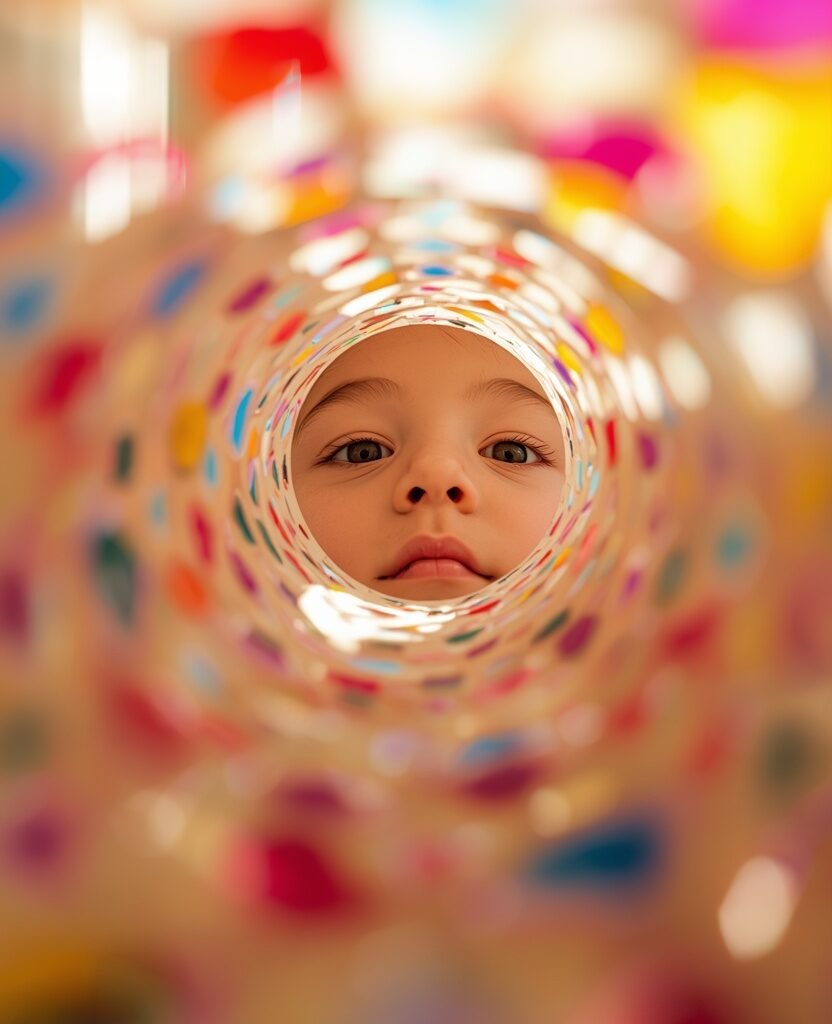
Slide a piece of colorful cellophane or tissue paper over one end of a paper towel roll, secure it with a rubber band, and hold it up to the light. The simplest version gives a beautifully colored viewing tube that kids love. You can upgrade it by layering different colors of tissue paper or adding a layer of crinkled plastic wrap to create texture. Call it a recycled kaleidoscope and watch the wonder happen.
Older kids can get more experimental — what happens with two layers of different colored cellophane? What about looking at different light sources? This sneaks in basic color theory and light science without any worksheets involved. Decorate the outside of the tube with washi tape or markers to make it feel like a proper scientific instrument. They’ll carry it around for days, I promise.
15. Bottle Cap Counting Game
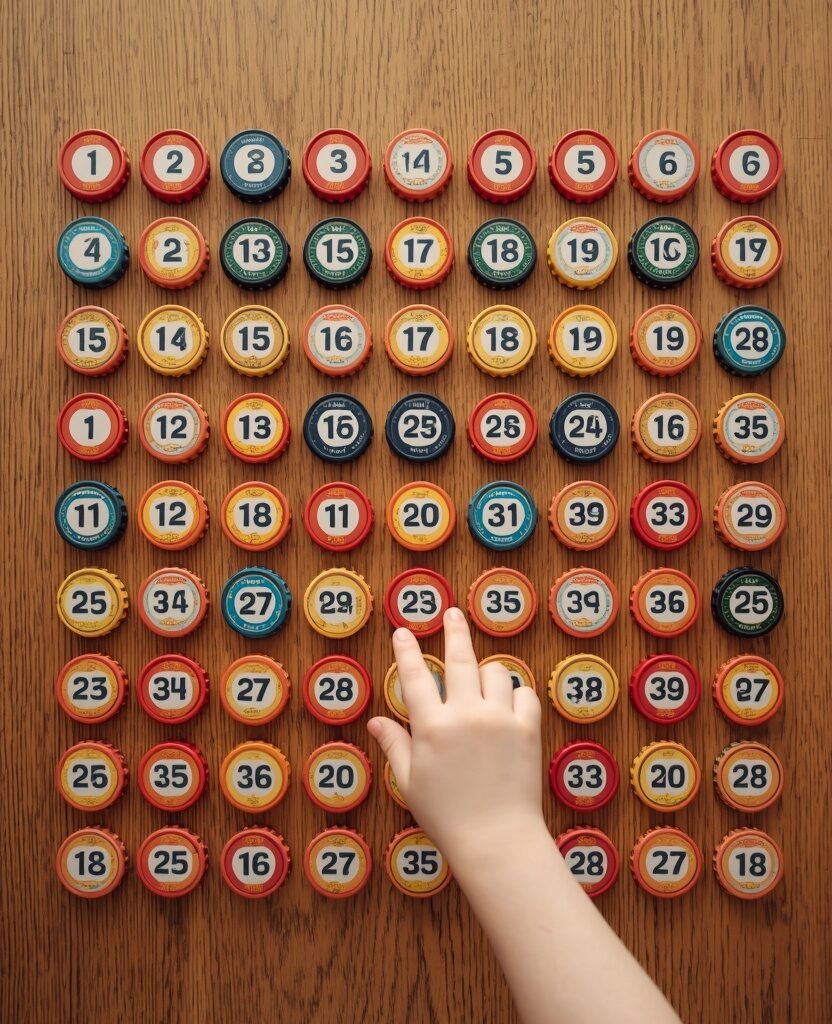
Write numbers on the inside of bottle caps with a permanent marker and boom — you have a hands-on math game. Match numbers, count collections, arrange in order, and play simple memory games with face-down caps. For younger kids, write numbers 1–10 and practice sequencing. For older kids, write equations on one cap and answers on another for a matching math game that actually makes arithmetic feel like a puzzle rather than a chore.
They are significant for preschoolers and early elementary kids. Pair the counting game with physical movement — toss a cap into a numbered bucket, hop to the matching number on the floor — and you’ve added a kinesthetic learning layer. These kinds of multi-sensory recycled activities stick way better than flashcards.
16. Newspaper Seed Starting Pots
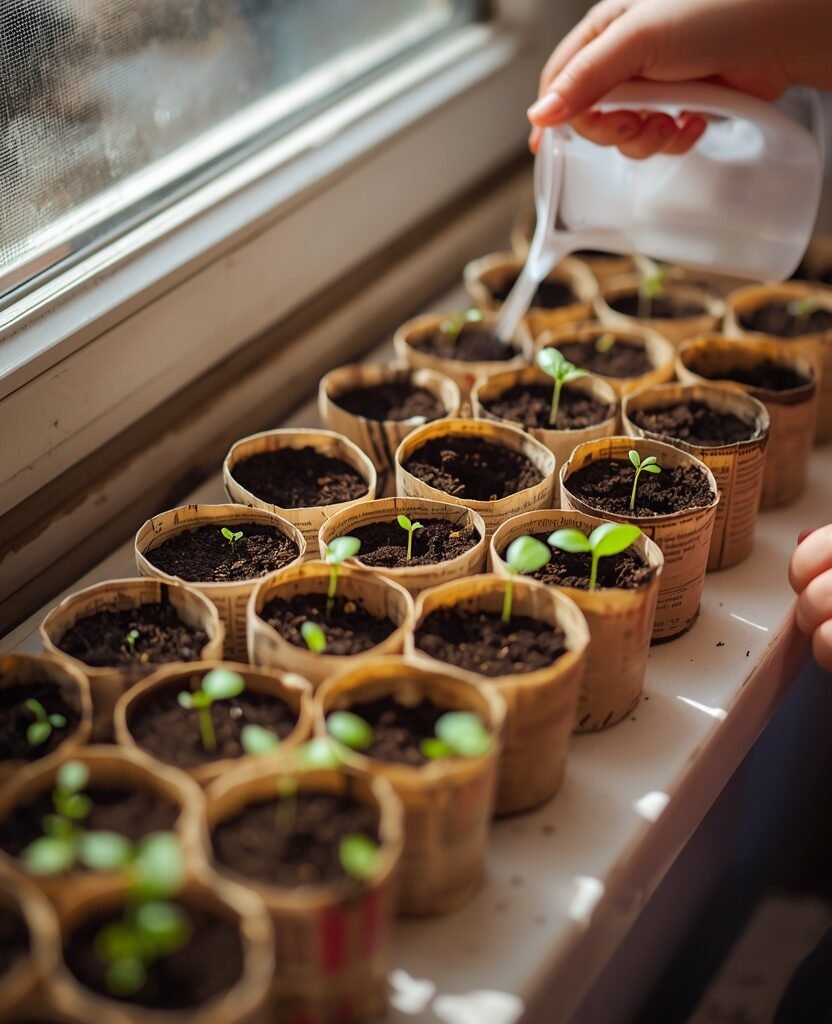
Roll strips of newspaper around a small cylindrical object (like a can), fold the bottom closed, and you’ve got a biodegradable seed starting pot that costs nothing and goes straight into the ground when transplanting time comes. Fill with potting soil, plant a seed, and set in a sunny windowspot. Kids who plant their own seeds and watch them sprout develop a genuine connection to how food and plants grow — which makes them more likely to eat vegetables, FYI.
This is a fantastic cross-seasonal project. Start seeds indoors in early spring, then transition seedlings outside once it’s warm enough. The newspaper pot dissolves naturally into the soil, so there’s no plastic pot waste. Pick beginner-friendly seeds like sunflowers, radishes, or herbs — they germinate quickly, which keeps impatient young gardeners invested. Watching something you planted actually grow is one of the most satisfying experiences for kids.
17. Cardboard Loom Weaving
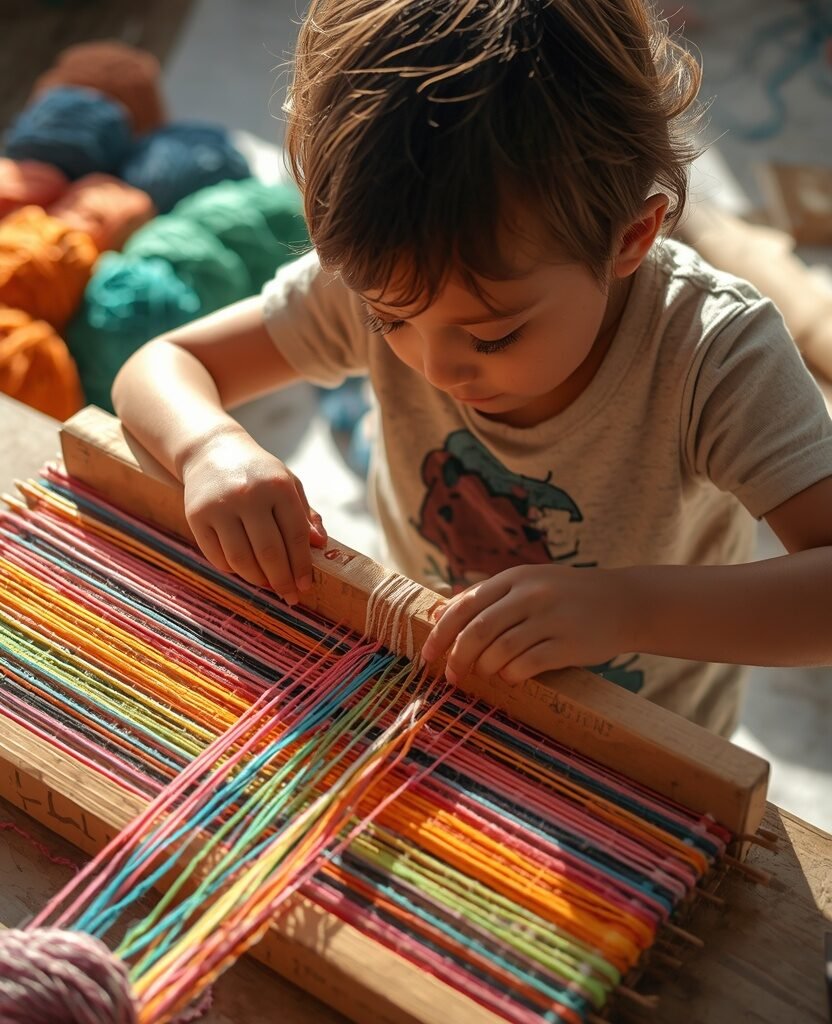
Cut a piece of sturdy cardboard into a rectangle, make evenly spaced notches along the top and bottom edges, stretch yarn across to create the warp threads, and you have a DIY cardboard loom. Kids then weave contrasting colors of yarn, fabric strips, or ribbon over and under the warp threads to create a woven piece. The rhythm of over-under, over-under, is almost meditative, and the finished textile is something they can genuinely use or display.
Weaving on a cardboard loom builds concentration, pattern recognition, and fine motor skills simultaneously. It’s particularly good for kids who enjoy repetitive, satisfying tasks — the kind where you can see steady progress. Use leftover yarn, fabric scraps, or even cut-up old t-shirts for the weaving material. Finished pieces can become coasters, bookmarks, or small wall hangings. It’s one of those activities that grows in complexity as kids get older and more ambitious.
18. Plastic Bottle Watering Can
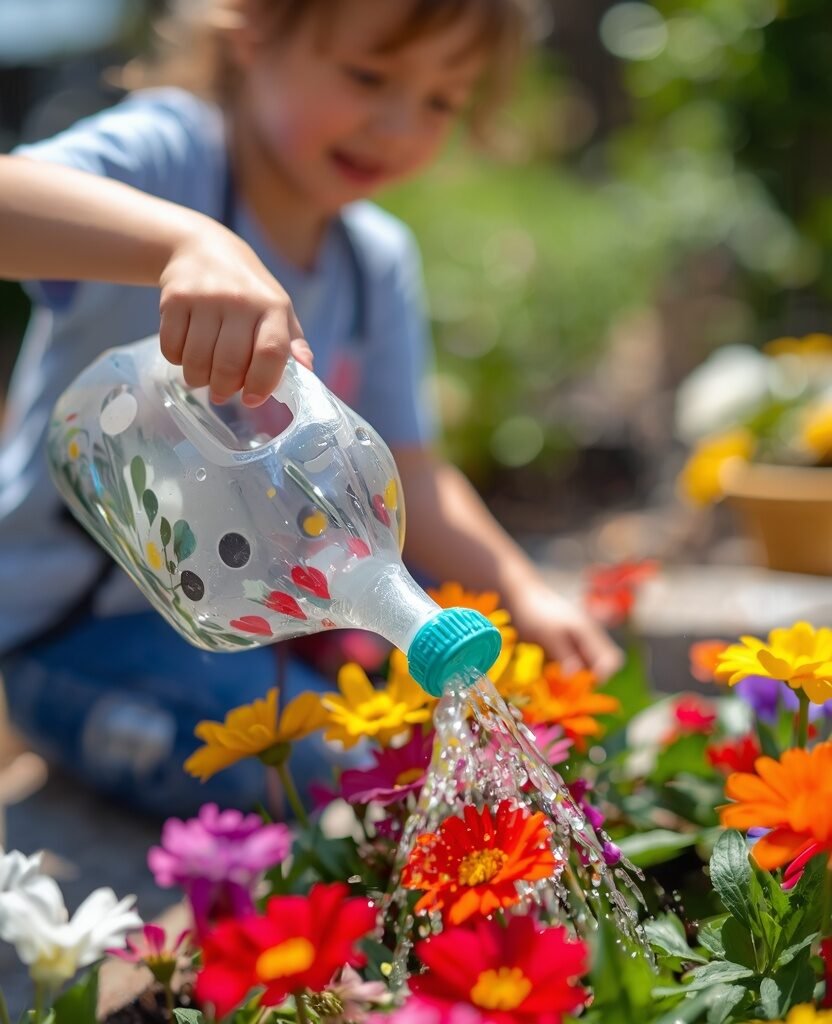
Poke several small holes in the lid of a clean plastic bottle using a nail or skewer (grown-up job), fill with water, and you have a perfectly functional DIY watering can. Decorate the bottle with permanent markers or waterproof stickers to make it personal. Hand it to your kid and send them out to the garden. It’s a simple tool that gives small children a meaningful, independent gardening task.
This activity connects beautifully to plant care, responsibility, and daily routine. Kids who have a plant or a small garden bed to tend develop a wonderful sense of ownership and nurturing. The recycled watering can is also a conversation starter about single-use plastic — why do we reuse bottles instead of throwing them away? At an age-appropriate level, kids genuinely engage with that question. Simple, purposeful, and resourceful all at once.
19. Sock Puppets from Old Socks
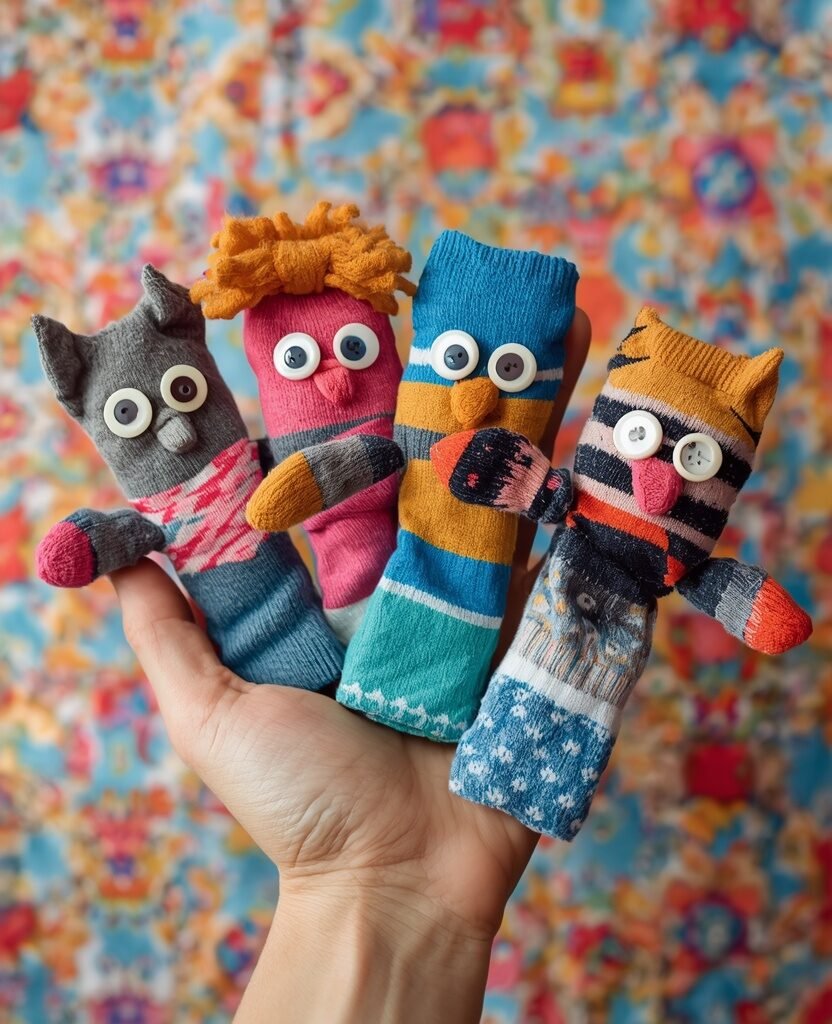
Every household has a collection of single socks with no partner. Put them to work. Slip an old sock over your hand, add button eyes, yarn hair, felt ears, or a bow tie, and you have a sock puppet with actual personality. The loose, floppy nature of socks means they’re endlessly expressive — kids discover quickly that how they move their hand changes the puppet’s mood entirely. It’s a genuinely creative discovery.
Sock puppets open the door to dramatic play, storytelling, and even emotional processing — kids often express feelings through puppets that they wouldn’t say directly. This makes them a surprisingly useful social-emotional learning tool, not just a craft. Make a small family of puppets and encourage kids to put on a show for the household. The “audience” sitting in the living room, politely watching a five-minute puppet drama, is honestly one of parenting’s better moments.
20. Tissue Box
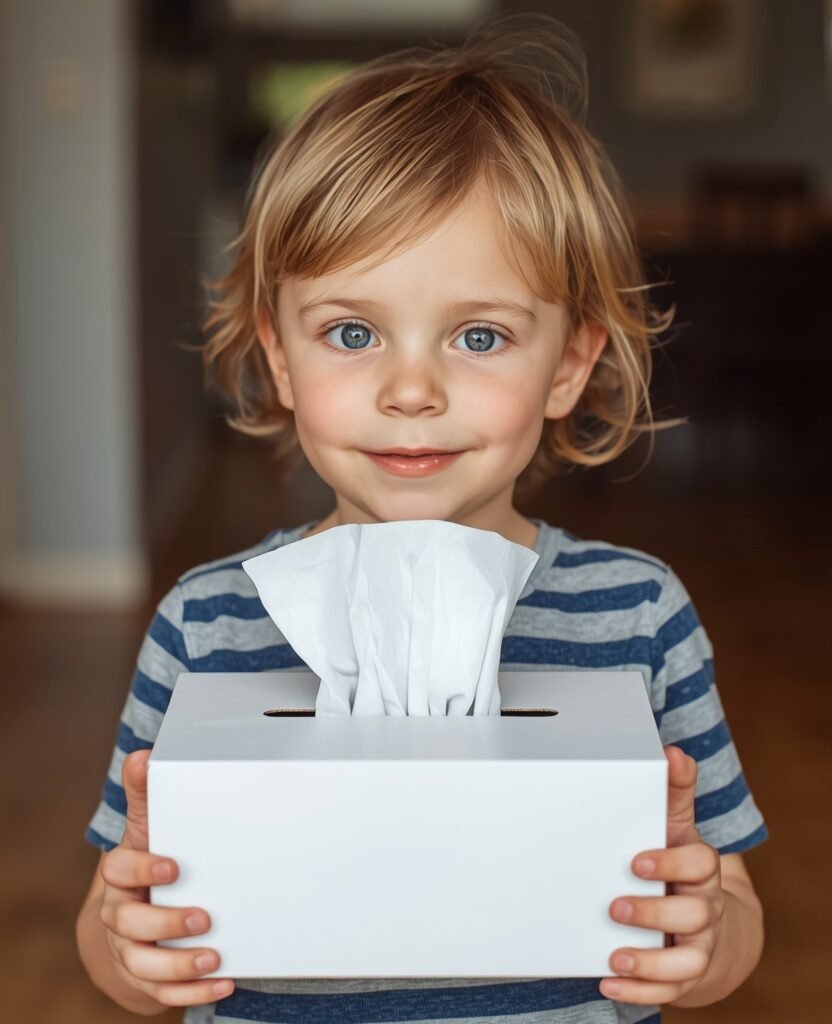
An empty tissue box plus rubber bands equals an instant guitar. Stretch three to five rubber bands of different thicknesses around the open tissue box, pluck them, and you’ll actually get different notes — thicker bands produce lower pitches. Attach a paper towel tube as a neck with tape, decorate the whole thing, and you’ve got a recycled instrument that teaches basic acoustic physics in the most fun way possible.
Put a few of these instruments together, and you have a whole recycled band. Pair with a rain stick made from a tube filled with rice, a drum from a coffee can, and some shaker eggs from plastic Easter eggs filled with dried beans. Music-making from recycled materials teaches kids that sound is about vibration and air — concepts that stick because they’re physically experiencing them. Plus, a living room band performance is chaotic in the best way.
21. Paper Bag Puppets
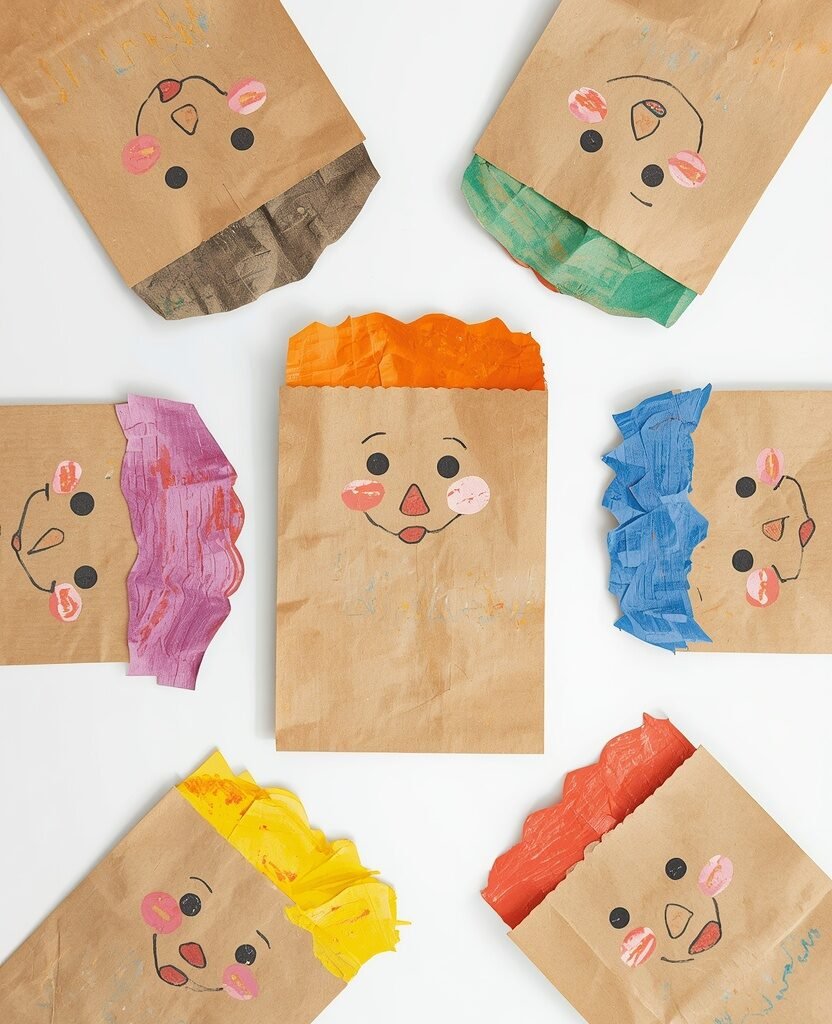
Brown paper lunch bags are the unsung heroes of children’s crafts. Fold the bottom flap, draw a face where the flap meets the bag body, and you have a talking paper bag puppet that opens and closes its mouth every time you move the flap. Kids can create any character they imagine — monsters, robots, animals, historical figures, dragons. The design possibilities are completely wide open, which is exactly how good open-ended activities should work.
Paper bag puppet making pairs naturally with storytelling, which makes it a great language arts activity for early elementary ages. Ask kids to design a puppet that solves a problem, goes on an adventure, or teaches another character something important. That narrative structure — character, conflict, resolution — is real literacy work happening through play. And when the show is over, cleanup is just putting the bags in the recycling. Efficient 🙂
22. Recycled Marble Run
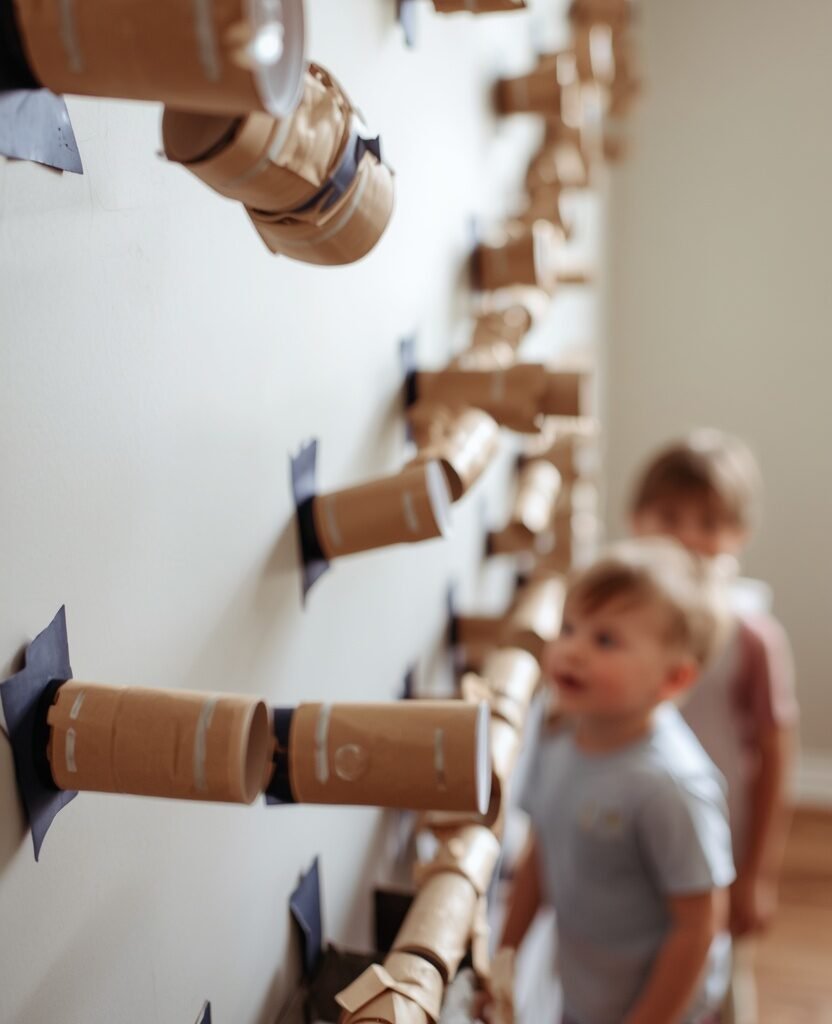
Tape cardboard tubes, paper cup ramps, and folded cardboard chutes to a wall or the back of a door. Drop a marble at the top and watch it race through every twist and turn. Building a recycled marble run is one of the most engaging STEM projects you can do with household recycling, and it’s one of those activities where kids immediately start saying, “let’s add one more piece,” and an hour disappears.
The engineering problem-solving here is genuinely sophisticated — angle, speed, transitions between sections, what happens at curves. Kids test, fail, adjust, and test again in real time. That iterative thinking process is exactly how engineers work, and kids are doing it completely naturally. Use toilet paper rolls, paper towel rolls, cereal box chutes, and plastic cups. Every marble run is different, and every kid will have their own approach to the design challenge.
23. Tin Can Rhythm Drums
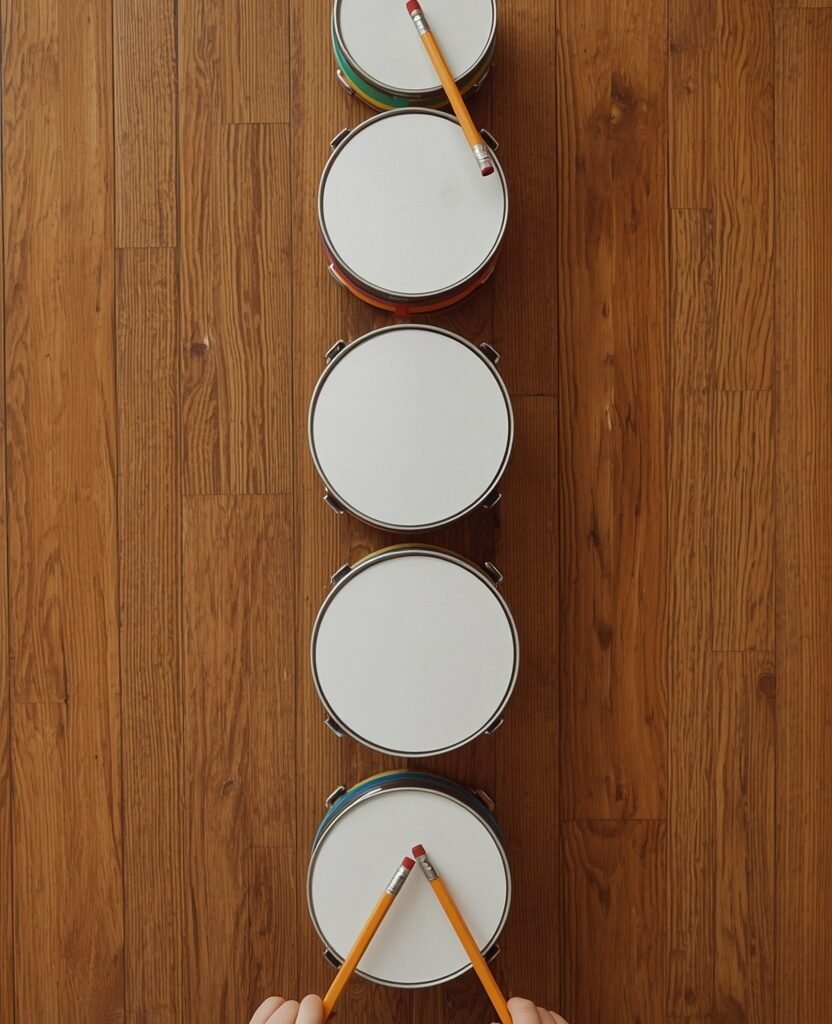
Clean empty tin cans of various sizes make excellent rhythm drums with genuinely different tones. Smaller cans produce a higher pitch, larger cans a lower one. Secure any sharp edges carefully, decorate with colored tape or contact paper, and arrange them largest to smallest like a real drum kit. Use pencils with erasers as drumsticks — the eraser gives a satisfying sound without being too harsh on the can surface.
Rhythm drumming is wonderful for kids because it’s immediately satisfying — there’s no learning curve before it sounds “good.” Let kids tap out simple patterns, copy what you tap, or just improvise freely. Rhythm activities build auditory processing, sequencing, and concentration in ways that directly support reading and math development later. It also burns energy productively, which — let’s be honest — is sometimes exactly what you need from an afternoon activity.
24. Newspaper Origami Animals
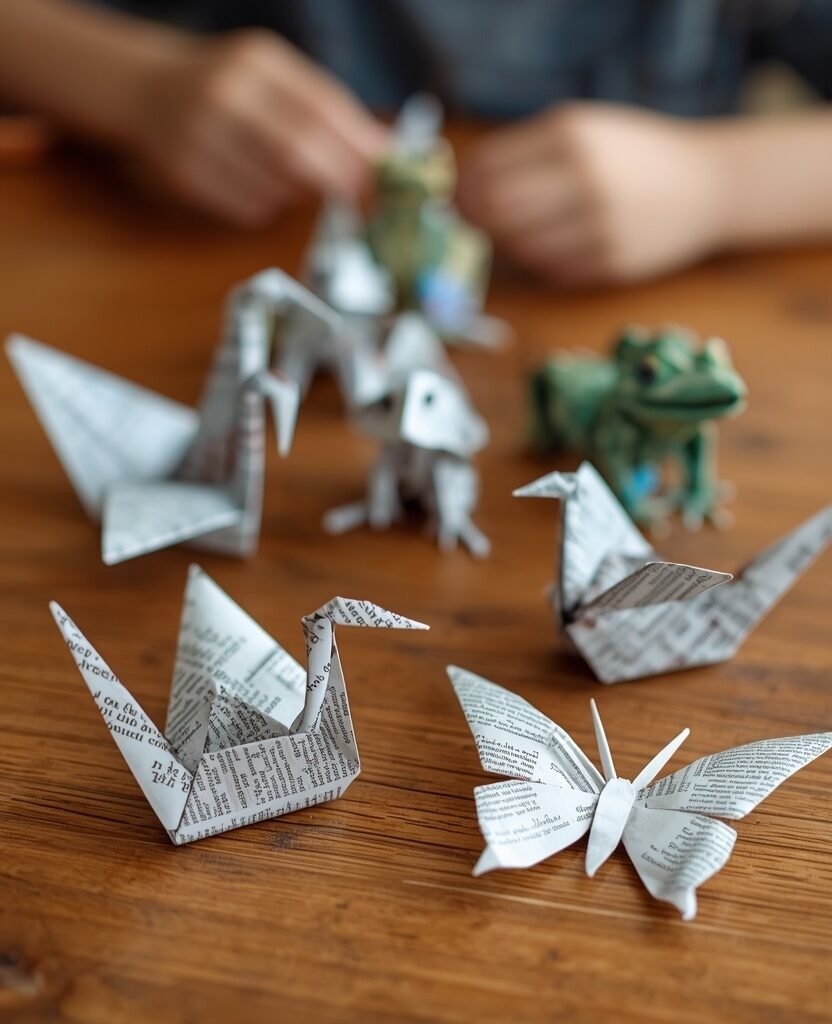
Newspaper folds just as well as origami paper, and it’s completely free. Classic beginner origami, like the paper crane, jumping frog, or simple boat, all work perfectly with newspaper sheets. Print out simple step-by-step diagrams (plenty are free online) and let kids work through the folds. It’s the kind of activity that starts with frustrated “this isn’t working” and ends with the deeply satisfying “I DID it” ten minutes later.
Origami builds spatial reasoning, following sequential instructions, and patience — all valuable skills wrapped in a fun disguise. Newspaper pages give you a larger, easier-to-manipulate sheet than small origami paper, making it more accessible for kids with smaller hands who are still developing fine motor control. Create a whole menagerie of newspaper animals and set them up as a display. The texture and ink of newsprint actually give each piece its own visual character.
25. Cardboard Superhero Costume Pieces
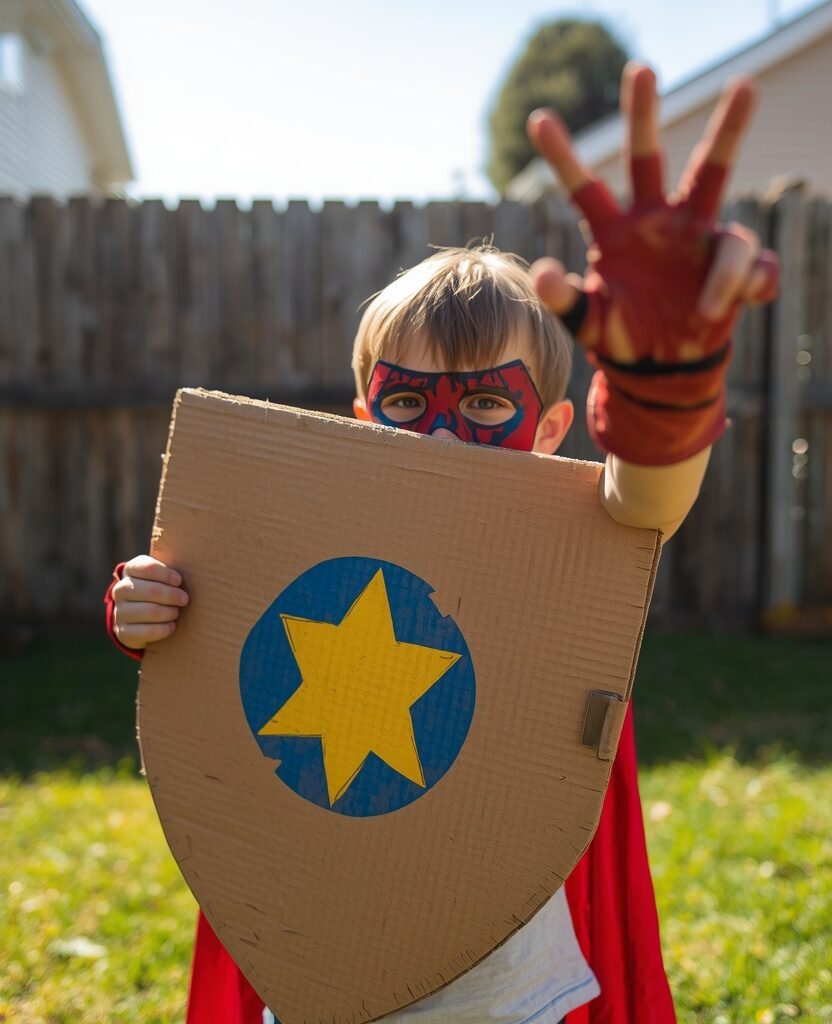
Cut a large piece of corrugated cardboard into a shield shape, cover it in aluminum foil or paint it in bold colors, add an emblem drawn by the kid, and you’ve got a superhero shield that’s both impressive and completely free. Extend the project to gauntlets (tubes of cardboard around the forearms), a breastplate, or a cape from an old pillowcase. Kids design their own hero identity from the ground up — colors, symbol, name, origin story.
This is full-on imaginative play combined with crafting, and the creative ownership kids feel over a character they invented is enormous. They’ll wear the costume for days, incorporate it into games, and probably demand that you address them by their superhero name at dinner. Recycled cardboard costumes prove that the best imaginative play doesn’t require expensive store-bought props. Everything you need is already in the recycling bin — and that’s a pretty great lesson for kids to internalize.
Your Recycling Bin Just Became a Craft Store
Here’s the thing about recycling activities for kids: they don’t just keep little hands busy. They teach kids to look at “trash” and see potential. That skill — seeing resources in what others overlook — is genuinely valuable, and it starts right here at the kitchen table with a cardboard roll and some paint.
Pick three or four activities from this list to start with, don’t worry about doing them all, and see what sparks your kid’s curiosity. Some kids will want to build; others will want to decorate; others will immediately turn everything into a puppet show. Follow their lead. The recycling bin isn’t going anywhere — and honestly, neither is the creative mess. Enjoy every bit of it.