24 Clever Hallway Closet Organization Hacks
Introduction
Your hallway closet has seen better days — and honestly, so have you every time you open it and something falls on your head. Sound familiar? Whether it’s a mountain of shoes, mystery scarves from 2015, or a vacuum cleaner that requires a PhD to navigate around, the hallway closet is everyone’s secret chaos zone. But here’s the thing: it doesn’t have to be. With a few smart hacks, that cramped little space can become the most organized spot in your home. Let’s fix it.
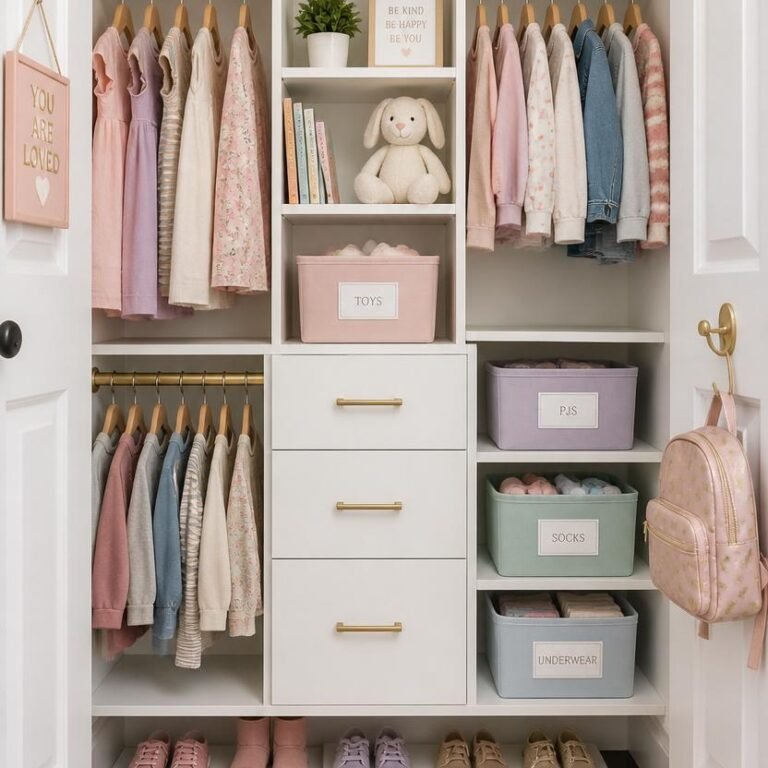
Add a Double Rod System for Hanging Items
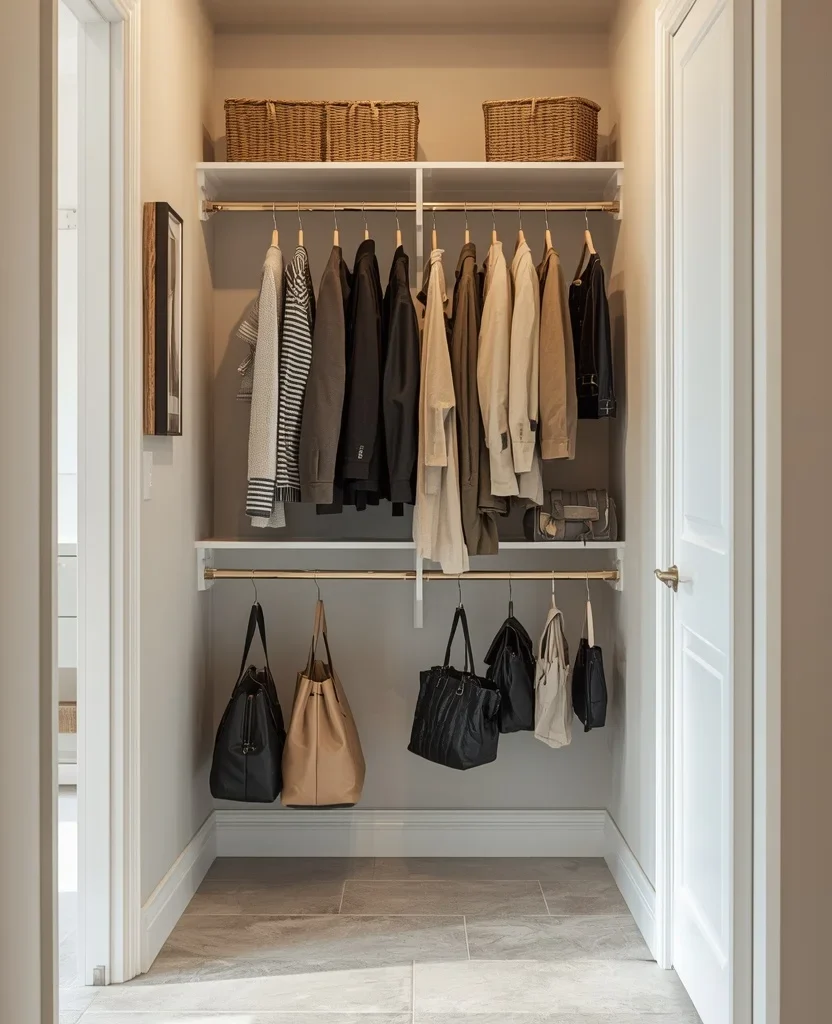
If you’re stuffing coats into a single rod and wondering why the closet feels like a fabric traffic jam, a double rod system is your new best friend. You can install a second rod below the existing one using a hanging rod extender — no drilling required. This instantly doubles your hanging space and makes it easy to separate jackets, bags, and everything in between. It’s one of those solutions that makes you say, “Why didn’t I do this sooner?”
The magic is in the separation. Hang longer coats up top and shorter items — like kids’ jackets or reusable shopping bags — on the bottom rod. You can even use the lower rod for cascading hangers or S-hooks to hang scarves and belts. This one change alone can transform a stuffed, single-rail closet into something that actually makes morning routines faster and less stressful.
Install an Over-the-Door Organizer
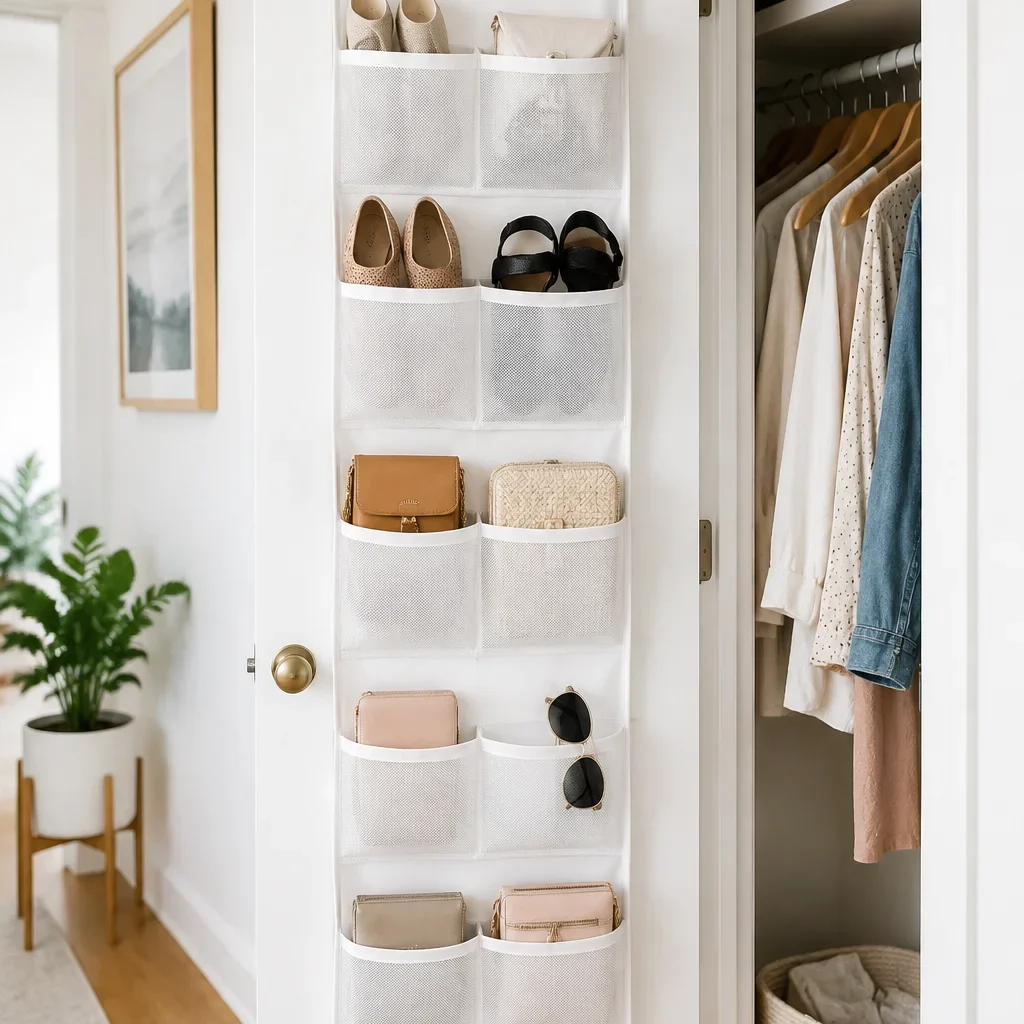
The inside of your closet door is prime real estate that most people completely ignore. An over-the-door organizer turns that blank slab of wood into functional storage. You can find clear-pocket versions perfect for shoes, sunglasses, dog leashes, or even cleaning supplies. They hang in seconds and require zero tools — which, let’s be honest, is the kind of DIY we all actually enjoy
Choose an organizer based on what you need most. Shallow pockets work great for flat items like gloves and masks. Deeper pockets handle bulkier items like small bags or folded scarves. IMO, the clear-pocket style wins every time because you can actually see what’s inside without rummaging. No more losing your favorite beanie for three months straight
Use Stackable Clear Bins on the Top Shelf
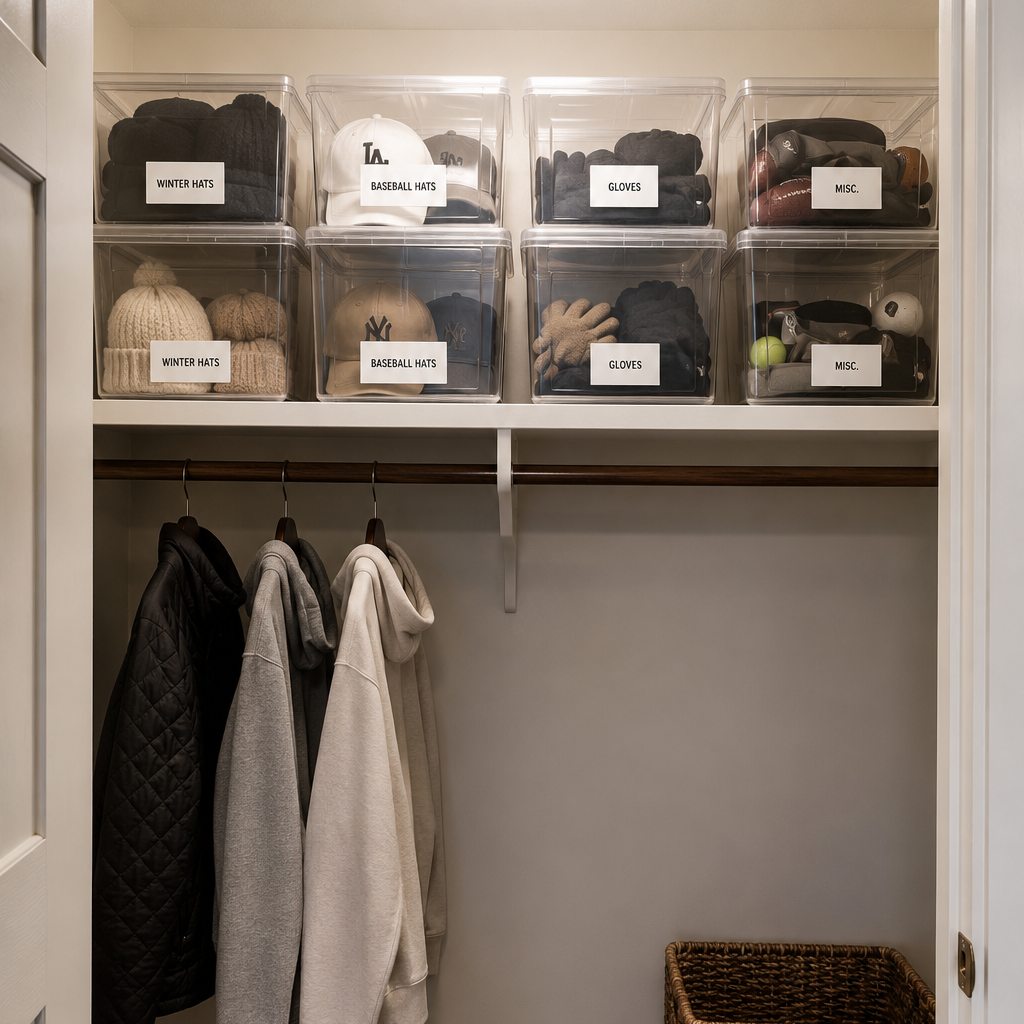
That top shelf collecting dust and random sports equipment deserves better. Stackable clear bins let you actually use the vertical height of your top shelf without everything turning into a landslide. Group similar items together — one bin for hats, one for gloves, one for seasonal accessories — and label each bin so you’re not guessing what’s inside every single time.
Clear bins are a game-changer because visibility is half the organizational battle. When you can see exactly what’s inside without pulling everything down, you use your storage better and put things back properly. Stack them two or three high if your ceiling height allows, and enjoy the satisfaction of a top shelf that doesn’t look like the lost-and-found at an airport.
Mount Hooks on the Side Walls
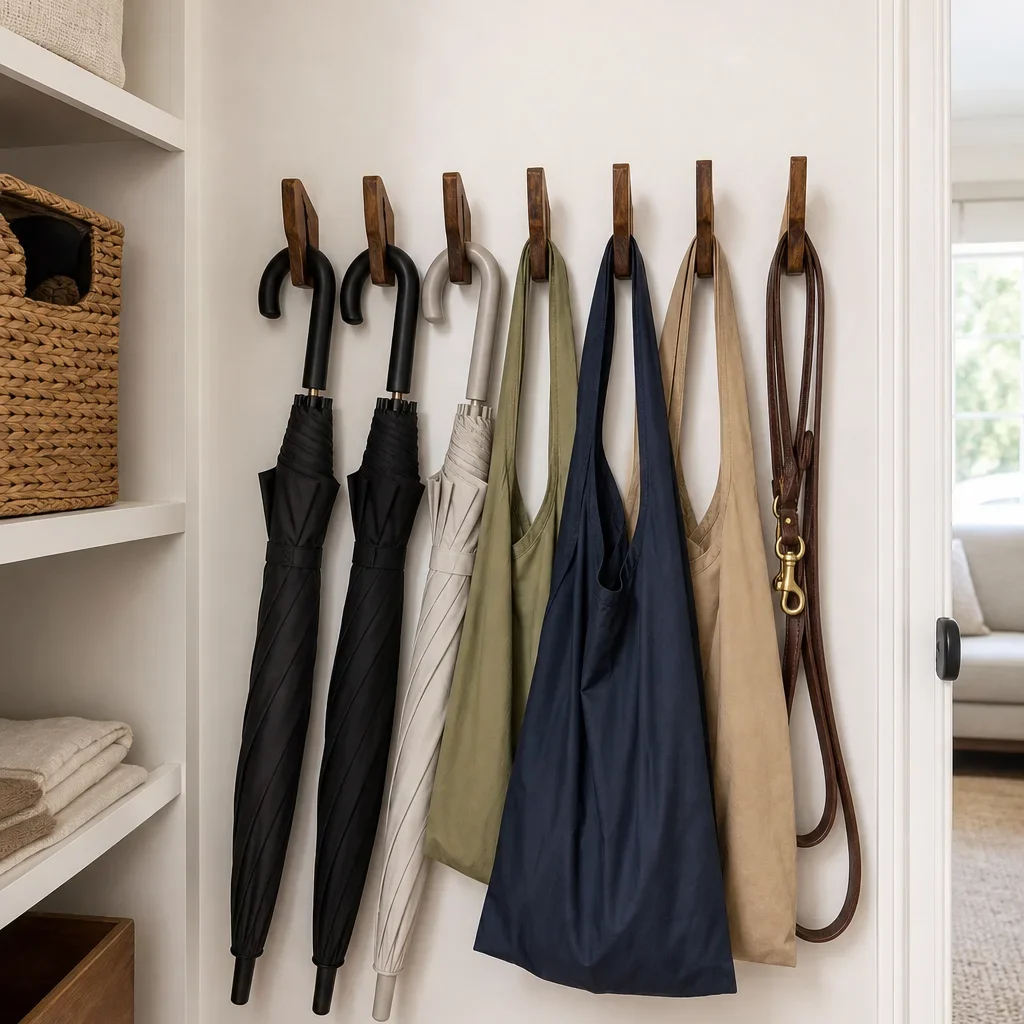
Side walls inside closets are basically unused bonus storage. Mounting a few hooks on the side walls gives you the perfect spot for umbrellas, dog leashes, reusable grocery bags, and baseball caps. Command hooks are great for renters since they peel off without damaging walls, while screw-in hooks offer a sturdier option for heavier items like backpacks.
Arrange the hooks by frequency of use — daily grab-and-go items lower, seasonal stuff higher. You can also stagger hooks at different heights to maximize space. This is one of those hacks that’s so simple it almost feels like cheating, but the result is genuinely impressive. Suddenly, everything has a place, and you stop buying new umbrellas because you forgot you already have four.
Use a Shoe Rack or Shoe Pockets on the Floor
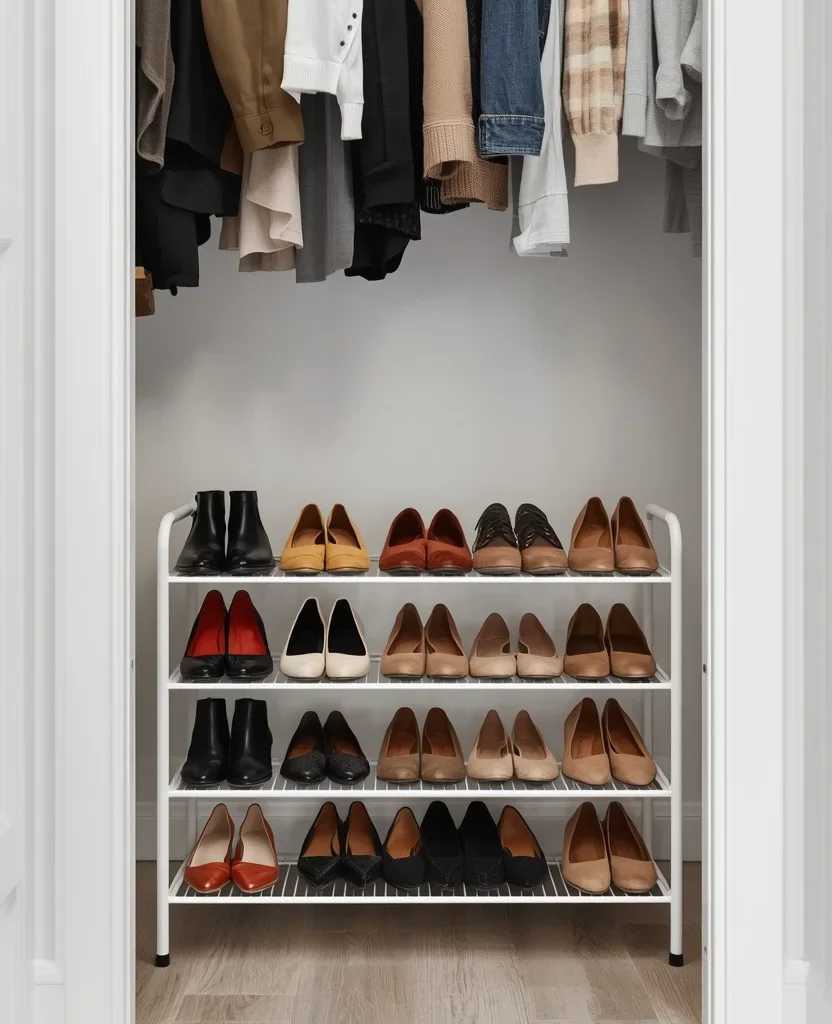
Shoes on the closet floor with no system is chaos. A tiered shoe rack keeps pairs organized, easy to see, and — most importantly — off the floor so you can actually sweep or vacuum under there. Opt for a two or three-tiered metal or bamboo rack, depending on how many pairs need to live in this space. They’re affordable and make a massive visual difference.
If floor space is ultra-tight, vertical hanging shoe pockets are your answer. They hang from the rod and hold pairs in individual pockets, which sounds great until you realize you have mismatched shoes and need to actually think about pairing before storing. Still worth it, though. The floor-level organization alone makes the closet feel twice as big, and mornings become a lot less “where is my other shoe?” chaotic.
Add a Tension Rod for Boot Storage
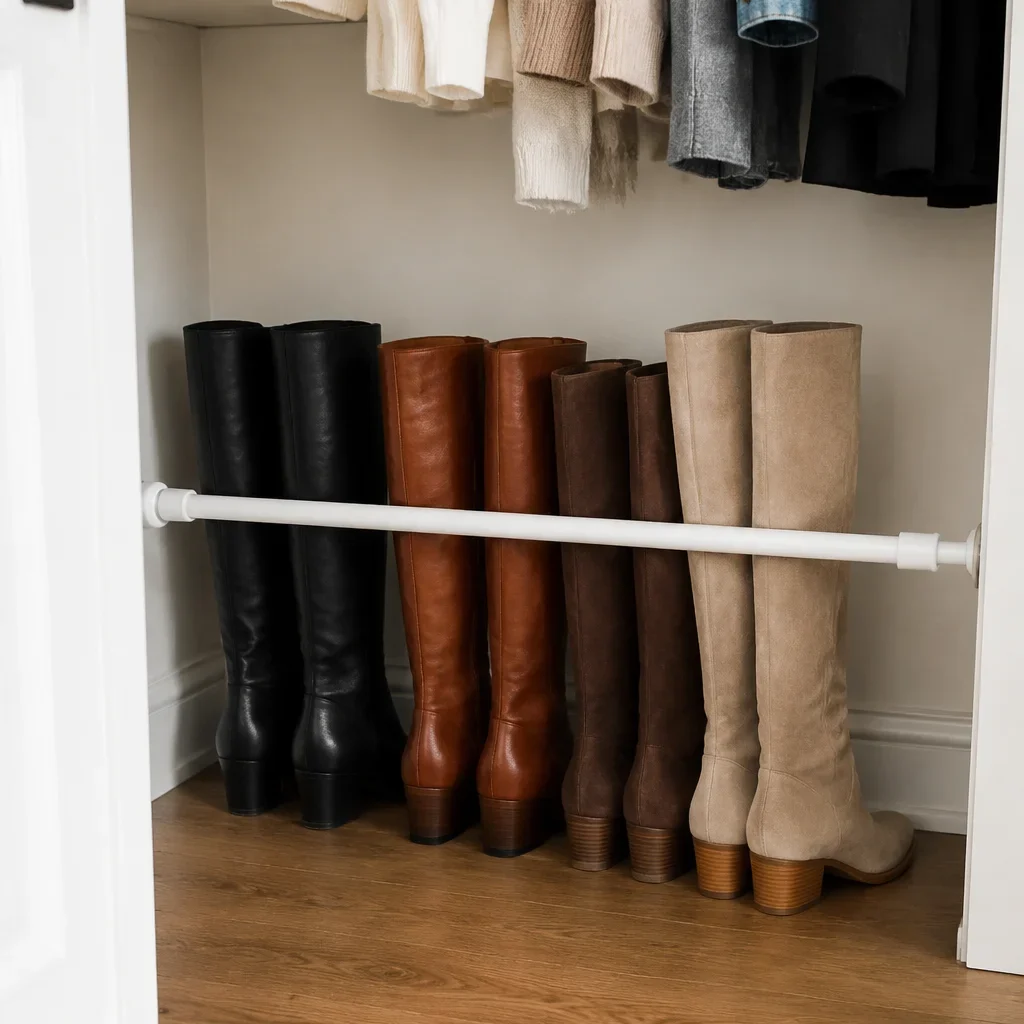
Tall boots are the nightmare of hallway closet organization — they flop over, take up massive floor space, and get creased at the ankle. A simple tension rod placed low in the closet lets you hang boots by looping their tops over it, keeping them upright and crease-free. It sounds almost too simple, but it genuinely works and costs next to nothing.
You can also use pool noodles cut to size and inserted into boots to keep them standing upright on a shelf or floor. Either way, the goal is to prevent the dreaded boot slouch. FYI, both methods also free up floor and shelf real estate for other items, which snowballs into an overall better-organized closet. One boot hack can spark a full closet transformation.
Install a Pegboard on the Back Wall
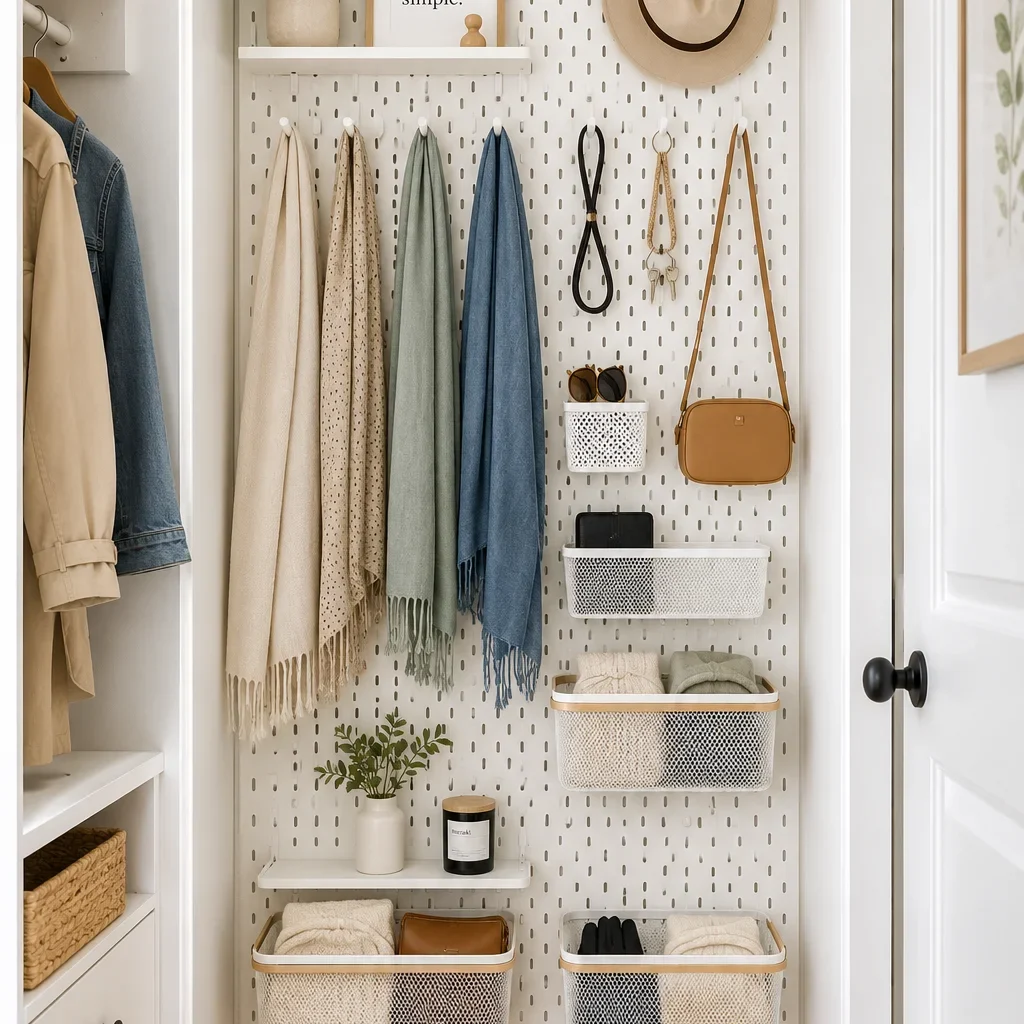
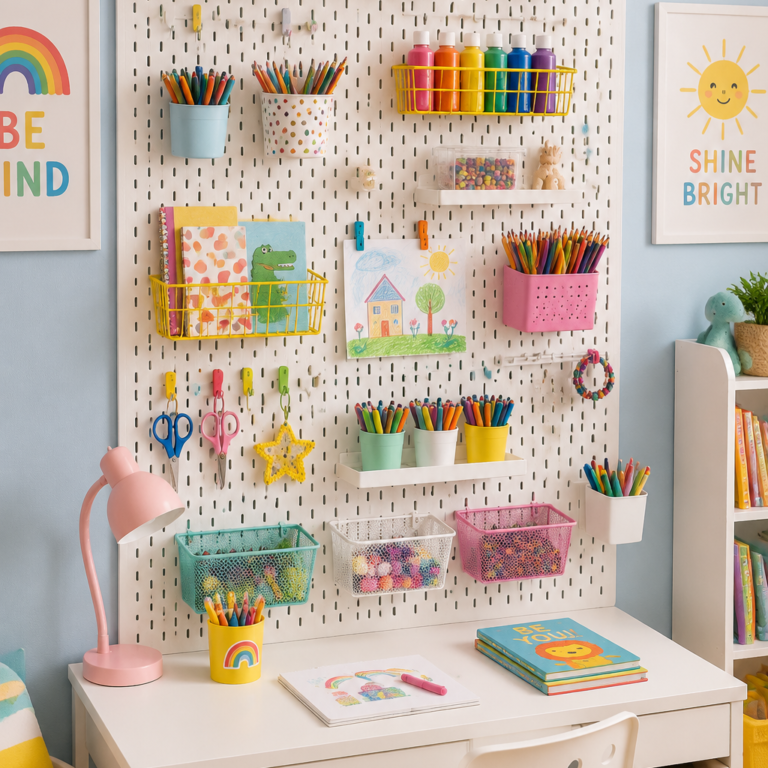
A pegboard on the back wall is the Swiss Army knife of closet organization. You can mount hooks, bins, shelves, and holders anywhere you need them and rearrange freely as your storage needs change. It works brilliantly for accessories like scarves, belts, and bags, but also handles tools, sports gear, or cleaning supplies, depending on what you keep in this closet.
Paint the pegboard a fun accent color or keep it crisp white to match a minimalist aesthetic — either way, it looks intentional and polished. The real beauty of a pegboard system is its flexibility. Unlike fixed shelves, you can adapt the layout every season. It’s the kind of upgrade that makes you feel like you have your life together, even if everything else is slightly chaotic.
Use a Slim Rolling Cart for Extra Storage
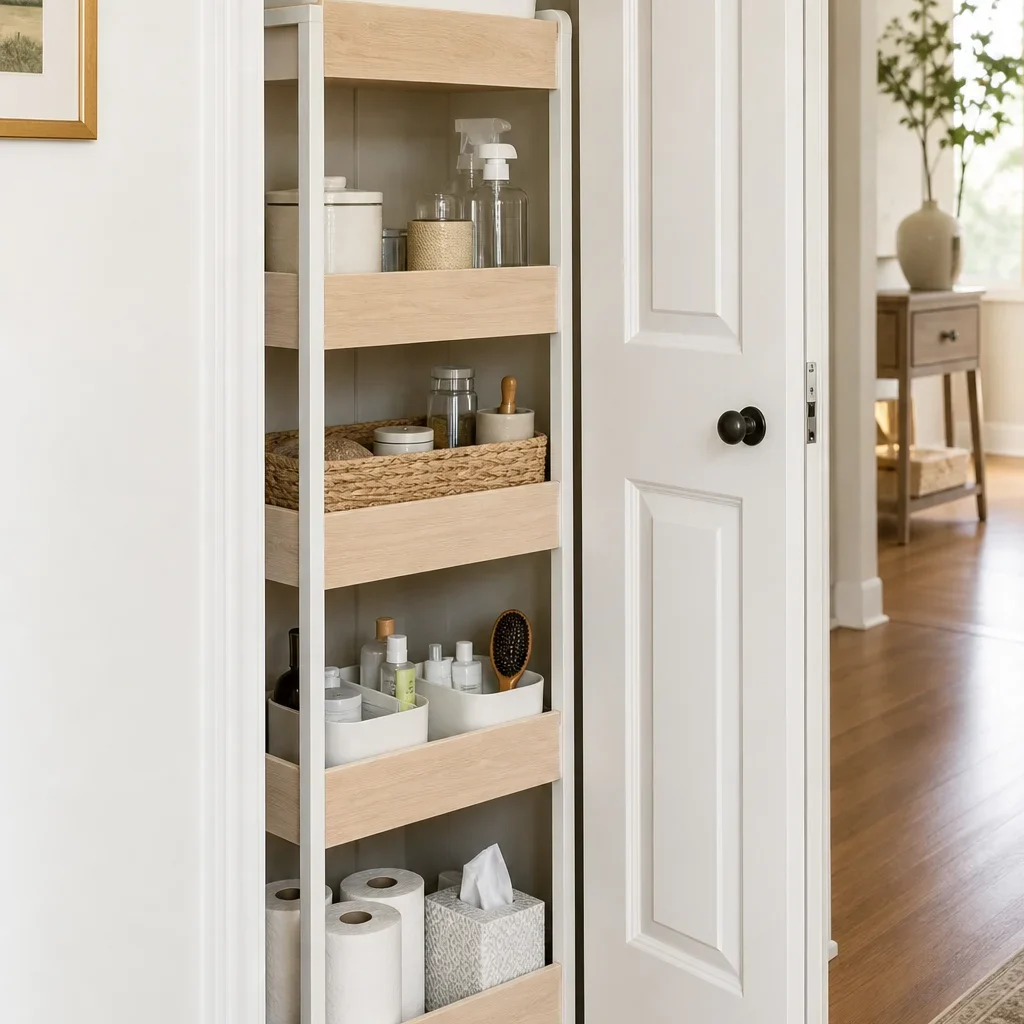
If you have even a few inches of unused width in your closet, a slim rolling cart slots in beautifully to add extra storage tiers. These carts — usually on wheels — give you a movable, flexible storage solution that you can pull out to access and push back in when done. They’re perfect for cleaning supplies, shoe care products, or a collection of small, easily lost items.
Look for carts with three or four tiers that are narrow enough to slide beside your existing shelves or shoe rack. Bathroom-style rolling carts work great because they’re designed for small spaces. The wheels make them easy to pull out without moving everything else — a surprisingly big deal when your closet is packed. You’ll wonder how you lived without this addition.
Label Everything (Seriously, Everything)
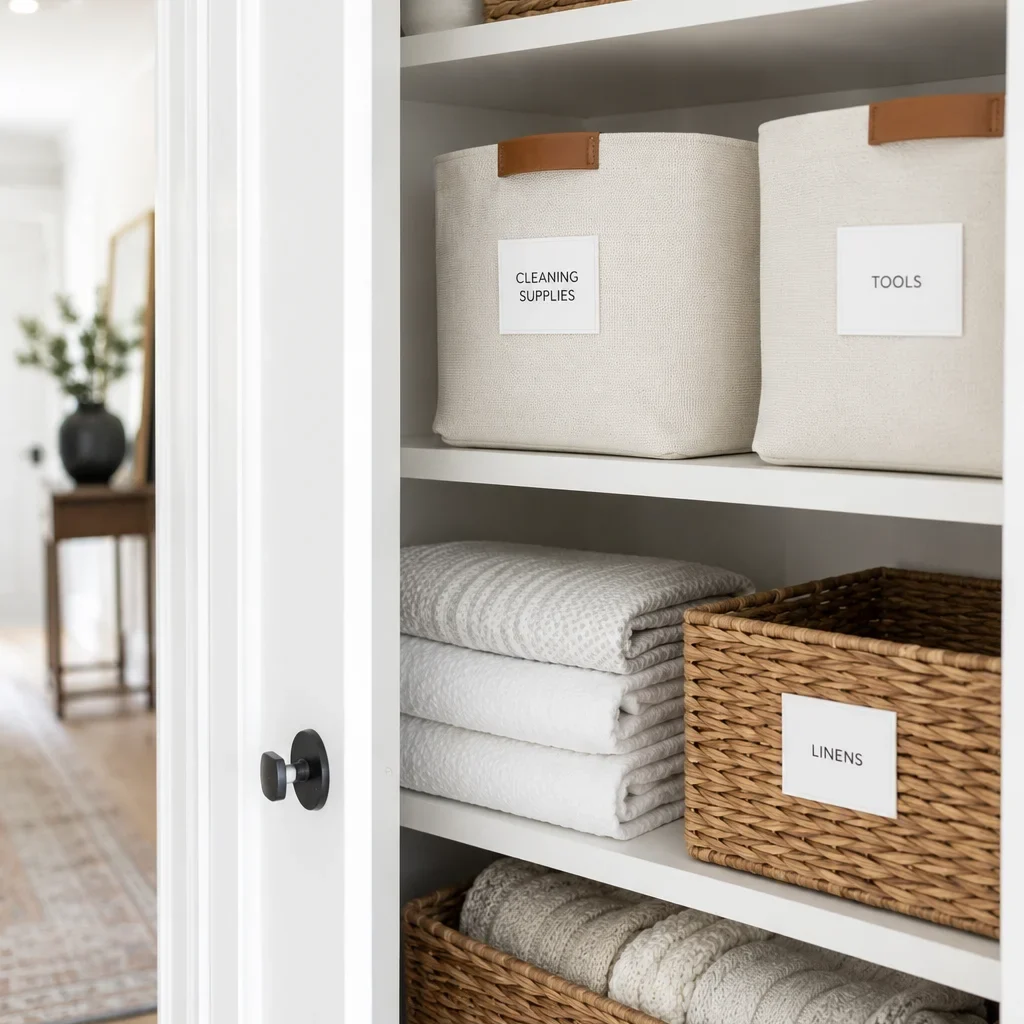
An organization without labels is just a slightly tidier mess waiting to happen. Labeling every bin, basket, and shelf creates a system that’s easy to maintain — especially for families where multiple people need to find and return things. Use a label maker, chalkboard labels, or even simple masking tape with a marker. The method matters far less than the habit.
Broad categories work better than hyper-specific ones. “Hats & Gloves” beats “Left-handed brown leather gloves purchased in winter 2022.” Keep labels readable at a glance, and place them at eye level when possible. Once everyone in your household knows where things go, the closet actually stays organized instead of reverting to chaos within a week. Labels are the unsung heroes of any functional storage system.
Use a Hanging Shelf Organizer
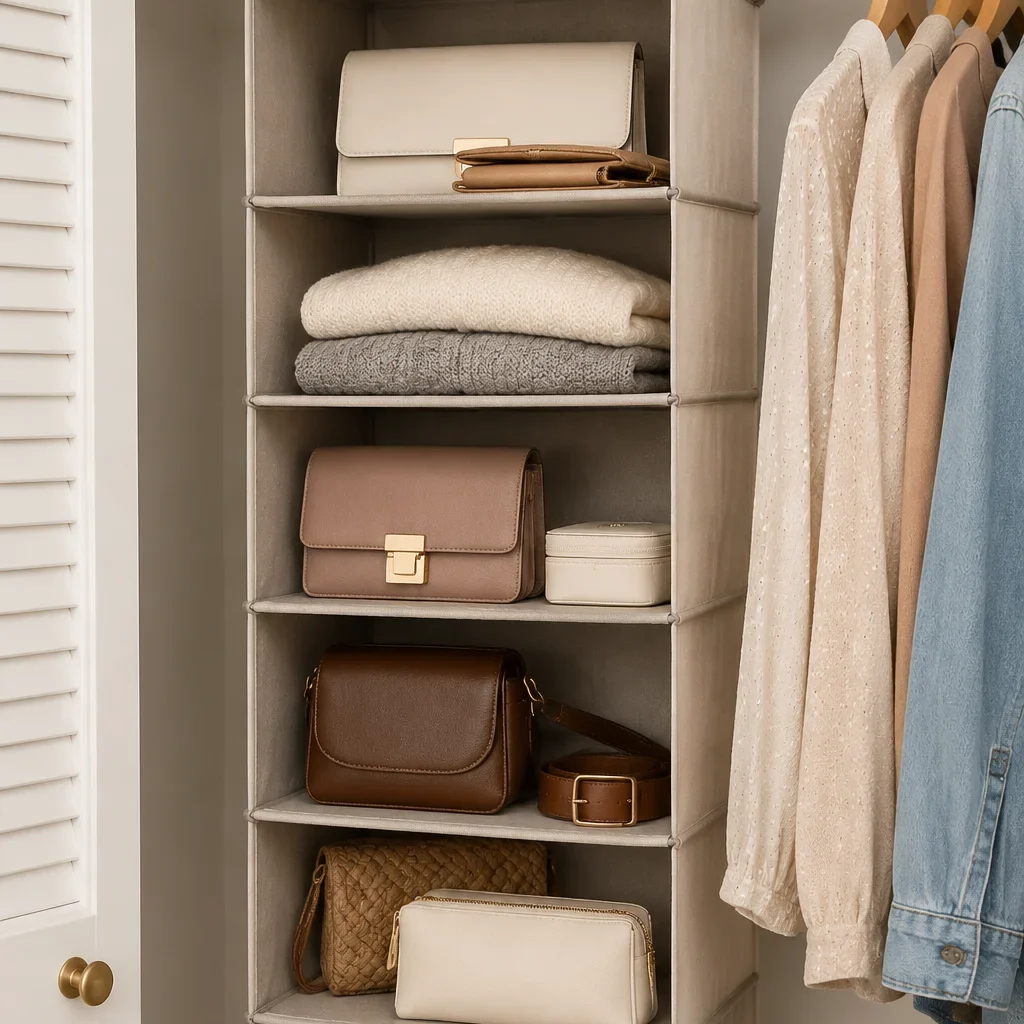
A hanging shelf organizer clips directly onto your existing closet rod and adds multiple tiers of folded storage below your hanging items. It’s brilliant for sweaters, folded jeans, purses, or anything that doesn’t need to be hung. You get the same space but with organized compartments instead of a jumbled pile on the floor or a single shelf.
Canvas versions are soft and flexible, while more rigid ones hold shape better over time — choose based on how heavy the items you plan to store are. These organizers are a particularly smart solution for closets with lots of rod space but limited shelving. They transform dead air beneath hanging clothes into organized, accessible storage. It’s genuinely satisfying to use something that clever.
Add a Small Bench or Stool Inside
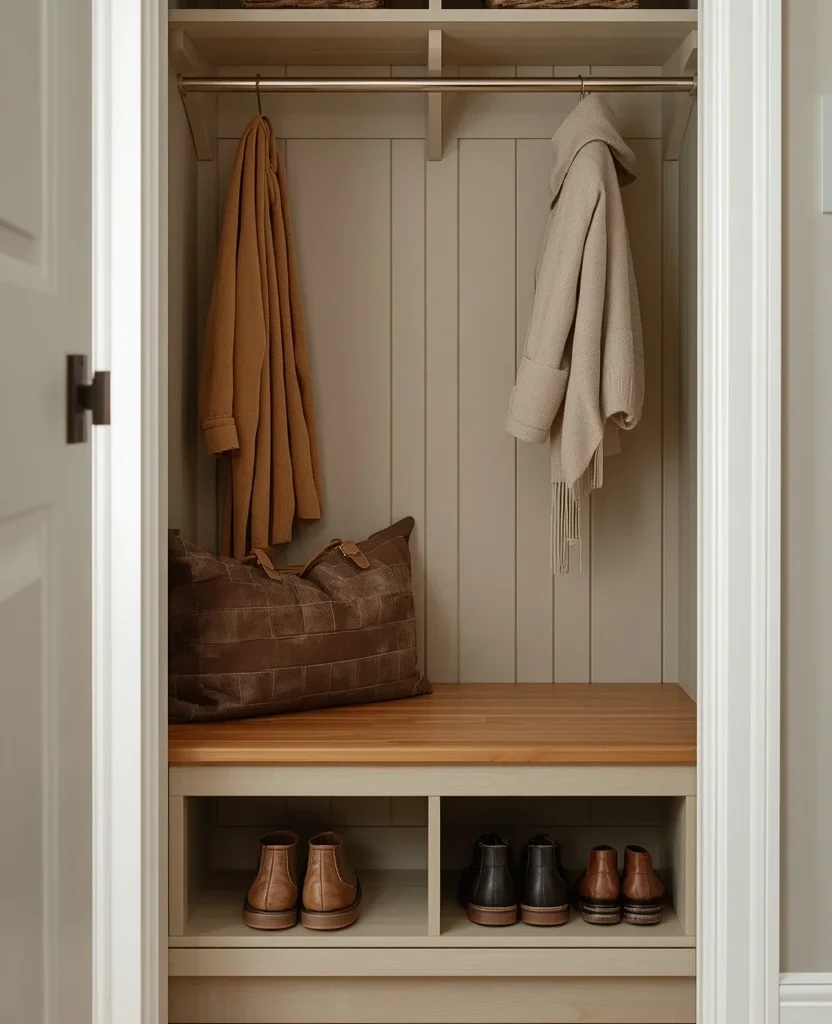
A small bench or stool inside a large hallway closet serves double duty — it’s a place to sit while putting on shoes and can also serve as a surface for bags, shopping totes, or a basket of frequently grabbed items. If you find a bench with hidden storage underneath, even better: toss shoes, an umbrella, or dog-walking gear inside and keep the top clear.
This works best in walk-in or slightly larger hallway closets where you have floor room to spare. Even a small foldable stool adds enormous function without permanently taking up much space. It shifts the closet from pure storage into a functional little entryway nook — which sounds fancy but is really just practical thinking with a stylish twist.
Group Items by Season and Rotate
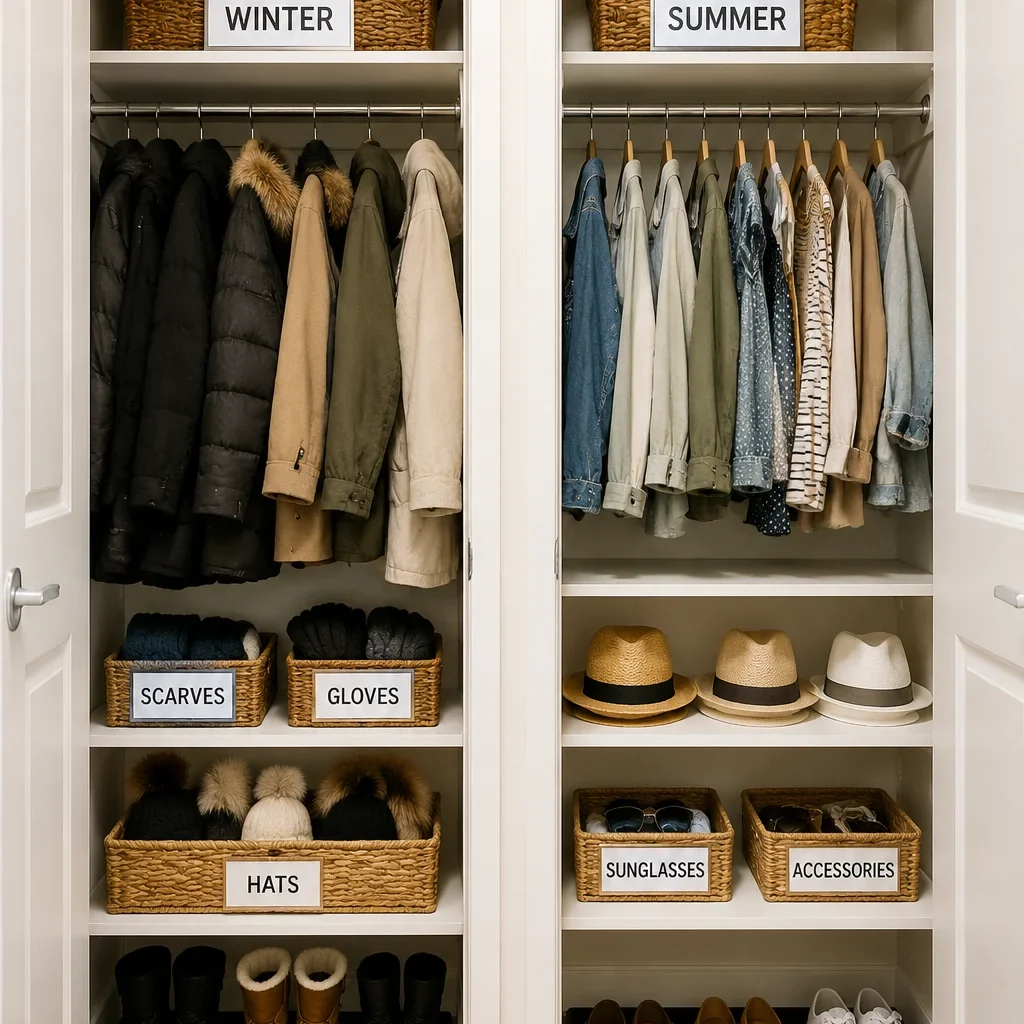
Not everything in your closet needs to be accessible year-round. Grouping items by season and rotating them keeps only relevant items front and center, making the space dramatically easier to navigate. Winter coats and scarves don’t need prime real estate in July — box them up, label clearly, and store them in vacuum bags or bins on the top shelf.
When the seasons shift, do a simple swap: pull out the seasonal bin, unpack it, and stow the off-season items away. It takes maybe twenty minutes twice a year, but it completely transforms how functional your closet feels day-to-day. You stop digging past heavy wool coats to reach a light rain jacket in summer. Seasonal rotation is one of those habits that separates an organized person from everyone else.
Mount a Mirror on the Door
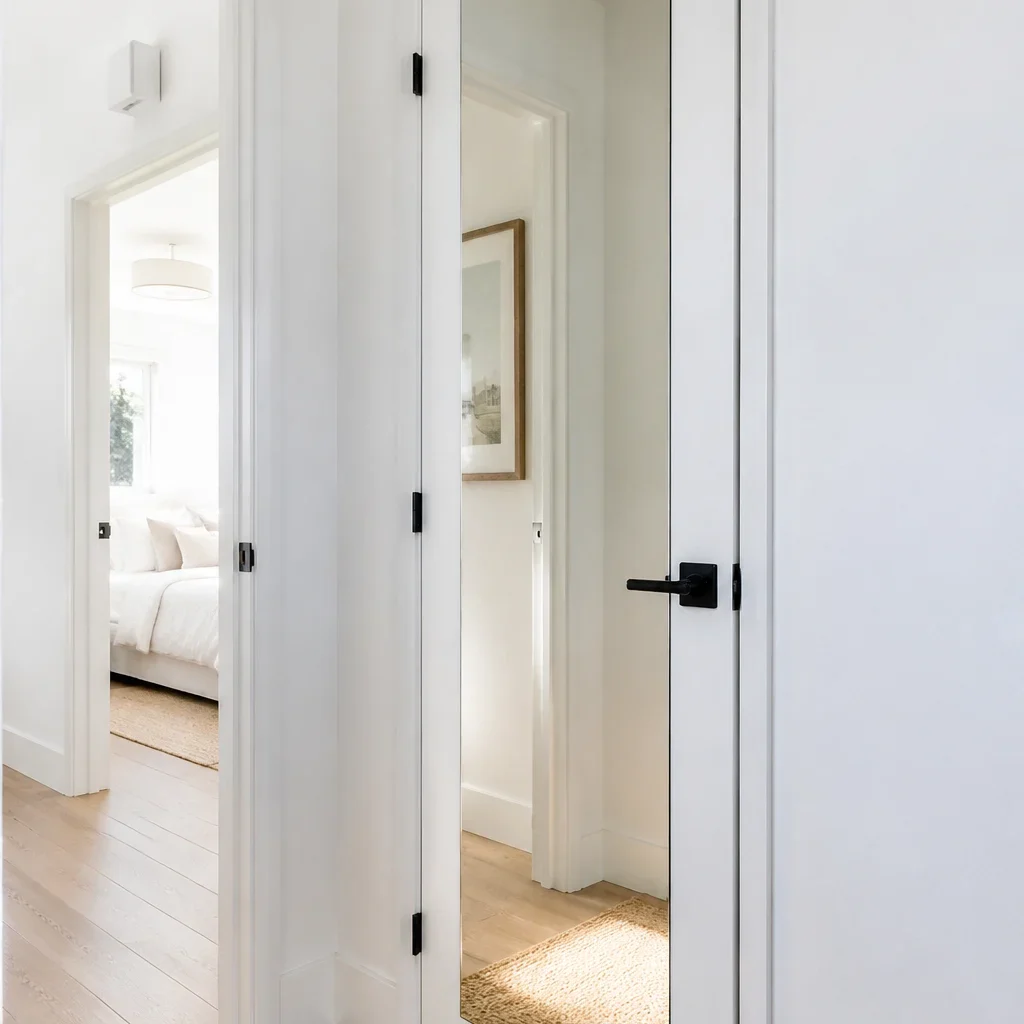
Mounting a full-length mirror on the outside of your closet door is a move that serves two purposes at once. You get a mirror near the entryway for those last-minute outfit checks, and you free up wall space elsewhere in your home. Adhesive-backed mirrors or lightweight framed options work well without requiring complex installation.
Mirrors also make tight hallways feel bigger and brighter by reflecting light — so it’s essentially a free interior design upgrade. Position it at the right height so it shows your full outfit from head to toe. It’s one of those ideas that sounds almost too simple to be this useful, but once it’s up, you’ll use it constantly and wonder why you didn’t do it sooner 🙂
Use Basket Storage for Bulky Items
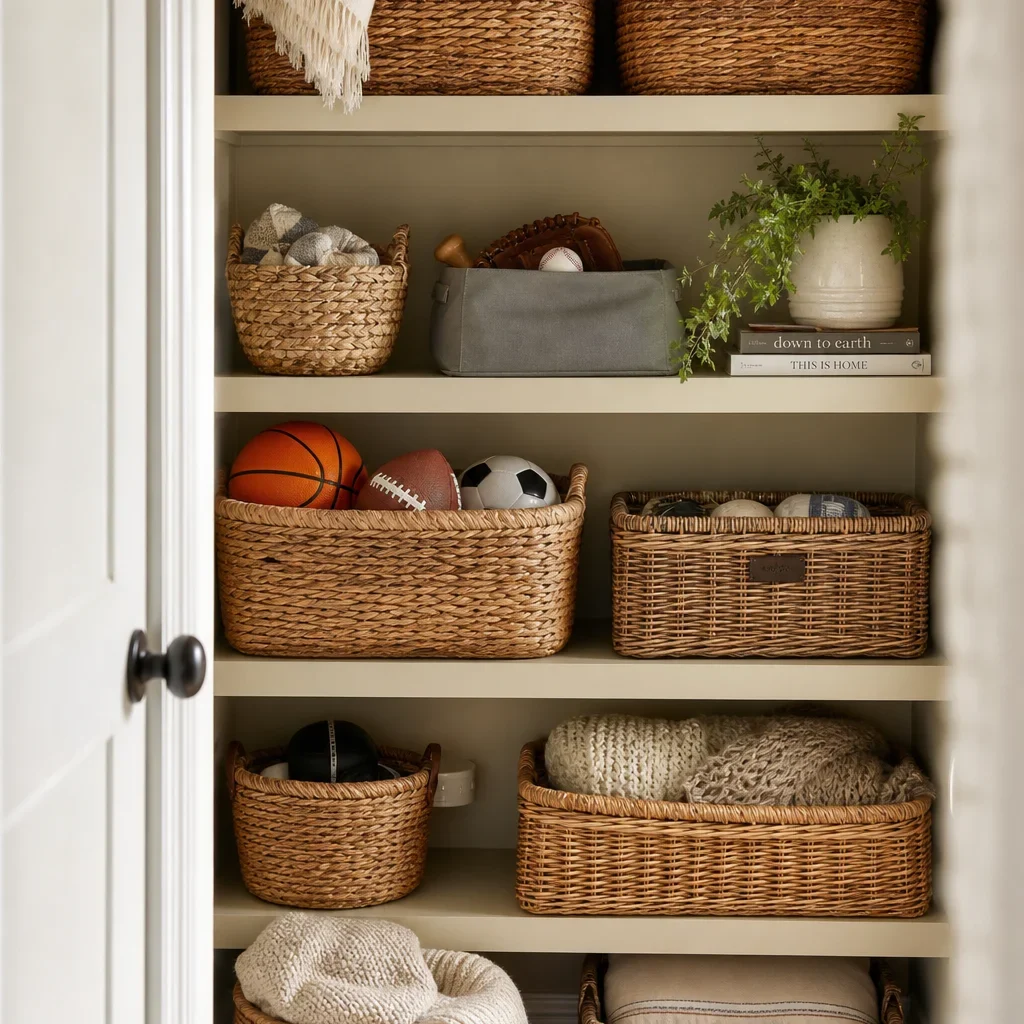
Bulky, awkward items like rolled blankets, sports gear, or oversized accessories tend to be the hardest to organize in a traditional closet. Baskets — whether wicker, fabric, or wire — provide a contained home for these items without requiring precise folding or stacking. Toss items in, push the basket onto the shelf, and the closet immediately looks tidier, even if the basket itself is full of chaos inside.
Match basket sizes to your shelf dimensions for a cleaner look. Larger, deeper baskets handle blankets and bulky gear, while smaller ones are great for grouping gloves, sunglasses, or miscellaneous accessories. The texture baskets also bring a warmth and coziness to a closet that might otherwise feel cold and purely functional. Great storage can be good-looking storage too.
Install LED Strip Lights
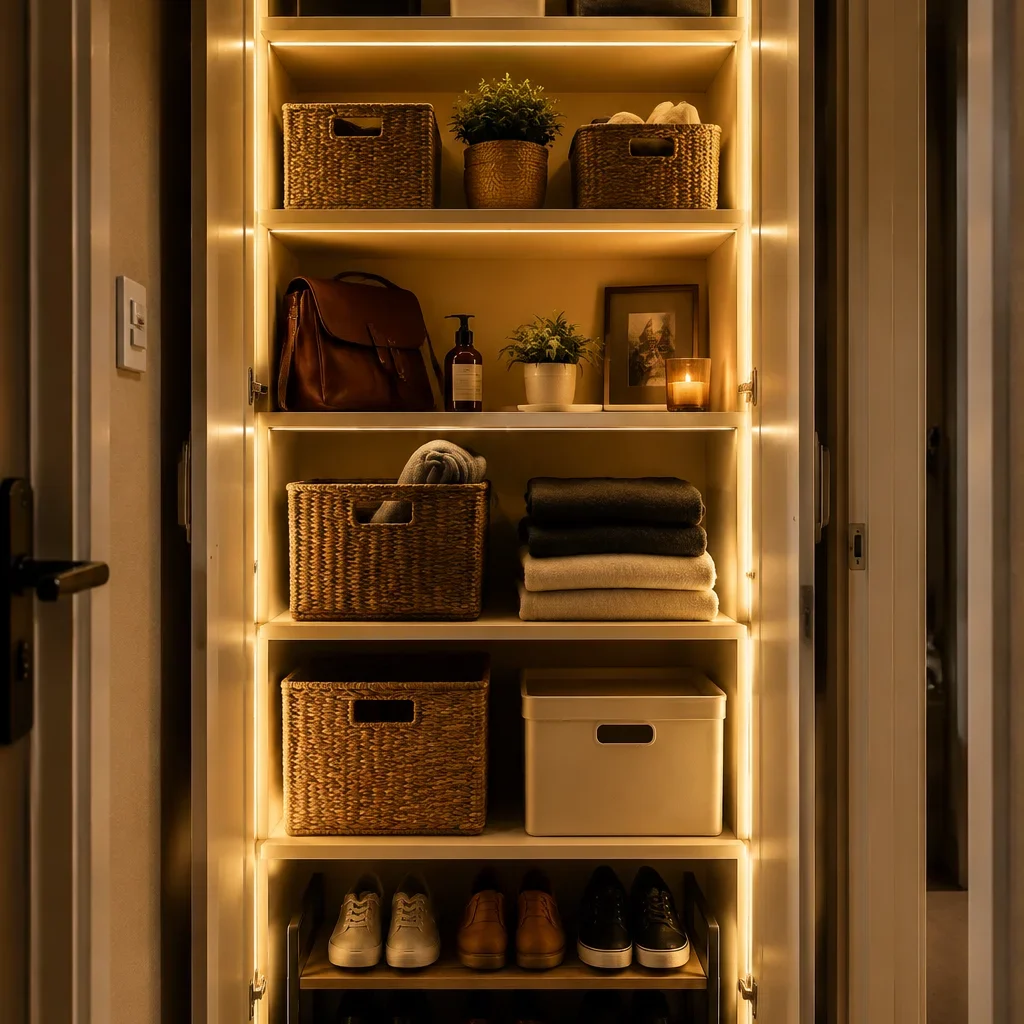
A dark closet is a disorganized closet, because you simply can’t see what’s in there. LED strip lights installed along the top shelf edge or side walls transform the space immediately. Battery-powered or plug-in options are both easy to install, and motion-activated versions turn on the moment you open the door — which is genuinely magical at six in the morning.
Warm white LED strips make the closet feel cozy and inviting rather than clinical. Cool white gives better visibility if you’re matching colors or organizing small items. Either way, adding light makes the entire system you’ve built actually usable in all conditions. Don’t underestimate what good lighting does to a storage space — it’s the difference between functional and frustrating.
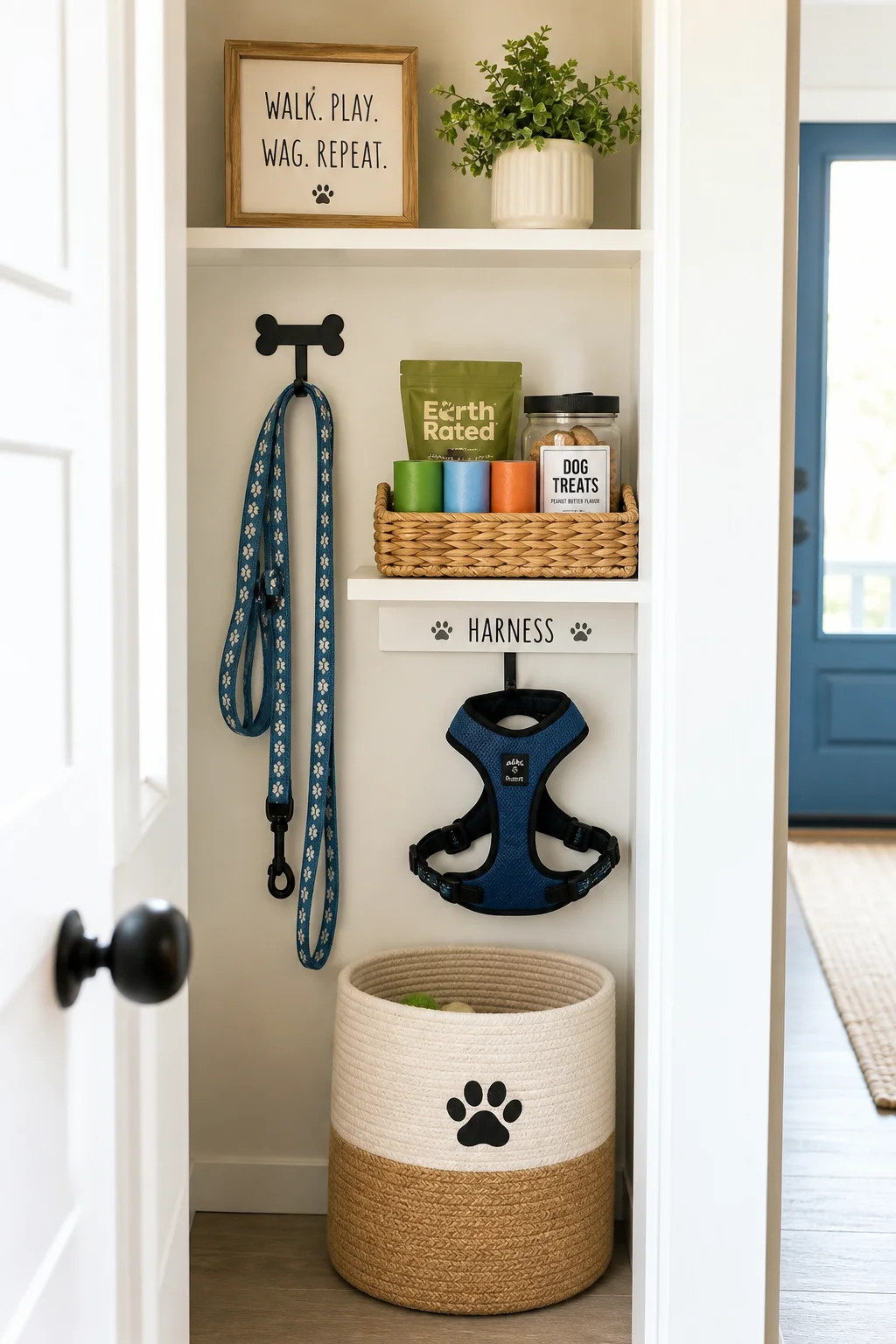
Create a Dedicated Dog-Walking Station
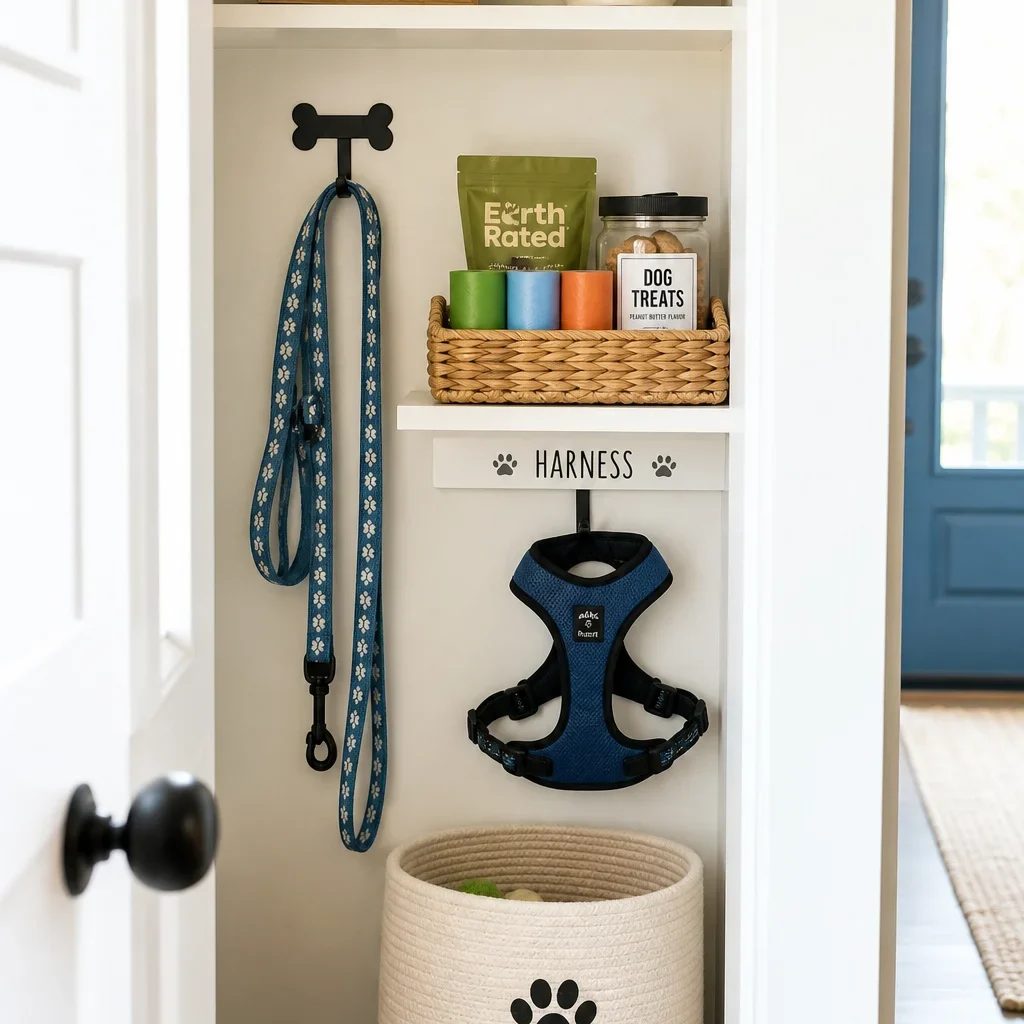
If you have a dog, you already know the morning scramble for the leash, harness, poop bags, and treats. Carving out a dedicated dog-walking station in one corner of your hallway closet solves this instantly. A hook for the leash, a small bin for bags and treats, and a clip for the harness — suddenly the whole routine becomes effortless.
Keep everything at a consistent, easy-to-reach height so the process becomes muscle memory. Label each item’s spot so other household members (or guests helping with the dog) know exactly where things go. This might seem like a niche hack, but for dog owners, it’s genuinely life-changing. No more standing at the door fully dressed while frantically searching for a leash that’s been in your hands a hundred times before.
Add a Scarf and Belt Hanger
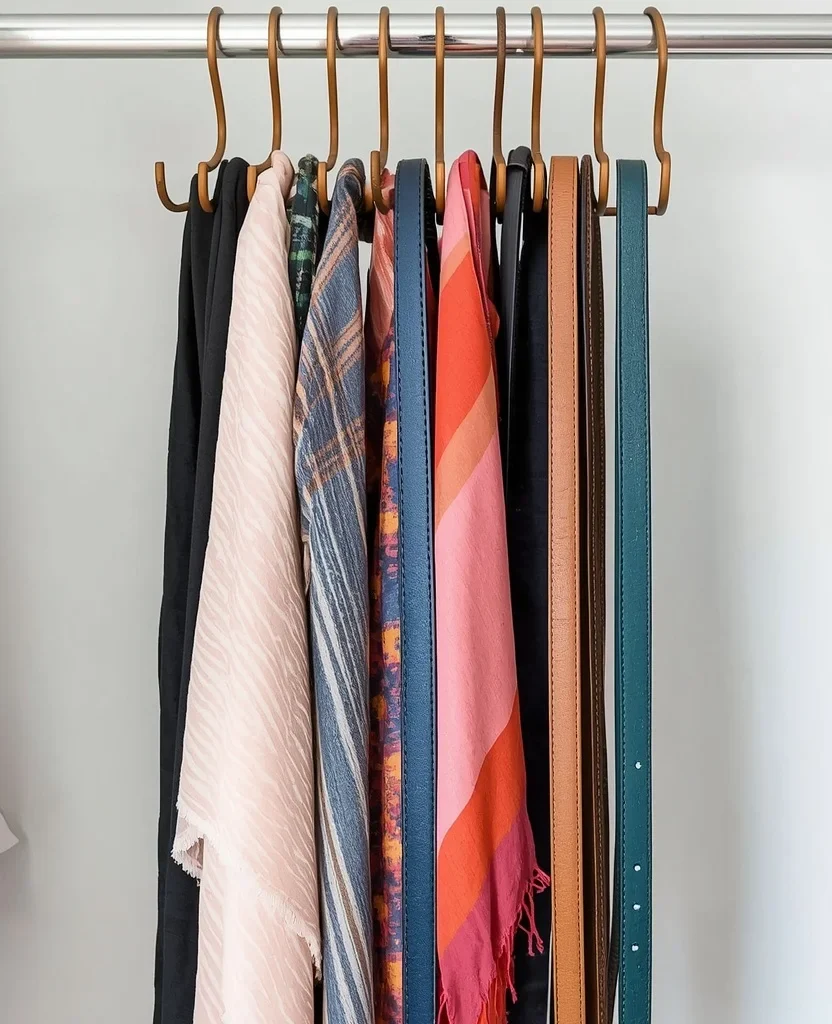
Scarves and belts are the accessories that most easily turn into tangled piles. A multi-loop scarf and belt hanger threads them through individual loops, keeping each one visible and separated. These hangers are slim, hold a surprising number of items, and keep your accessories from becoming a knotted disaster every time you need to grab one quickly.
Organize the hanger by type — scarves on one, belts on another — or go bold and sort by color for a look that’s weirdly satisfying every time you open the closet. Either way, accessories that used to disappear in the chaos now have a proper home. It’s a tiny upgrade that genuinely eliminates a daily frustration, and those are the best kinds of hacks.
Use Vacuum Storage Bags for Off-Season Items
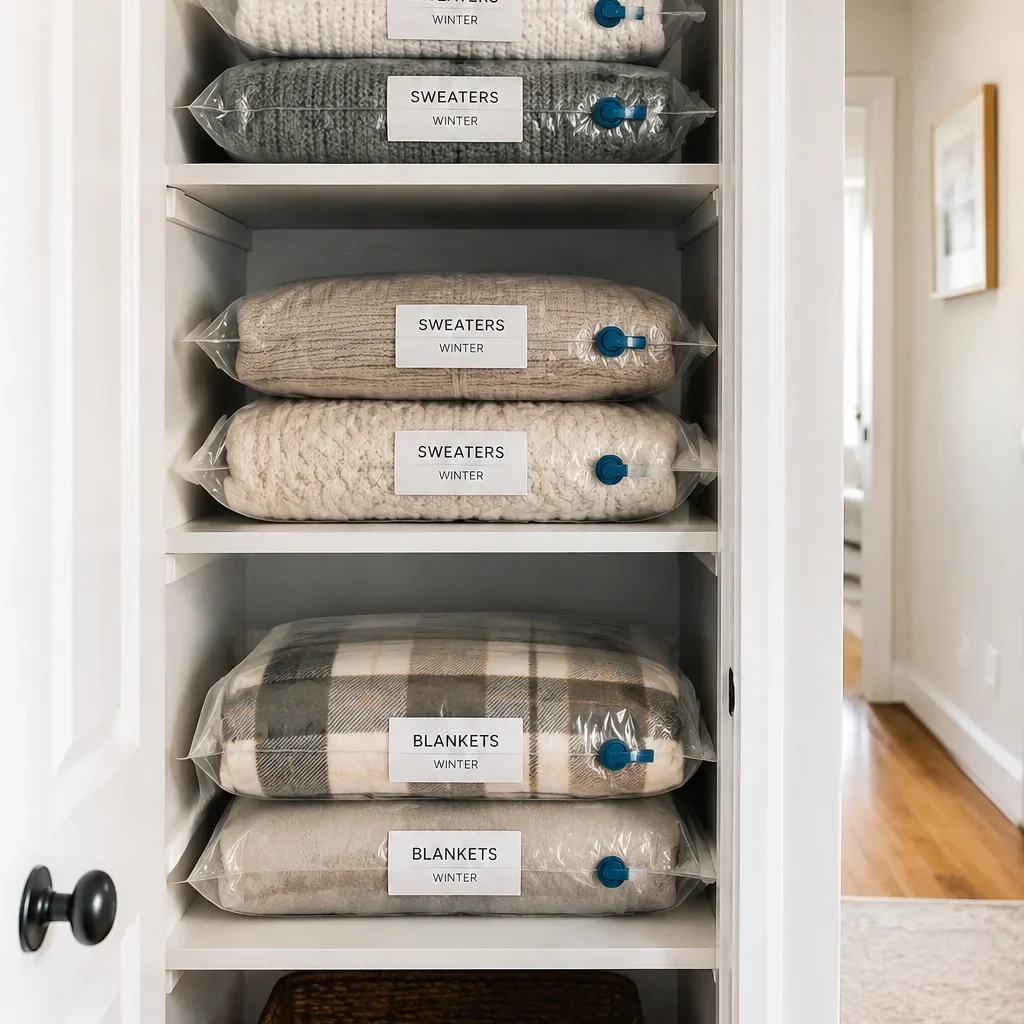
Bulky winter coats, chunky knit sweaters, and heavy blankets take up an absurd amount of space when stored normally. Vacuum storage bags compress these items to a fraction of their original size, giving you back entire shelves of space. Fold items in, seal the bag, and use a vacuum to suck out the air. The result is a flat, stackable, airtight package that protects items from dust and moisture, too.
Label each bag clearly before sealing — because once compressed, you absolutely cannot tell what’s inside without opening it. Store compressed bags flat on the top shelf or slide them under a bench. When the season turns, simply open the bag and let the items expand back to normal. It almost feels like unpacking gifts, which is a fun way to think about seasonal transitions if you squint hard enough.
Install a Pull-Out Drawer System
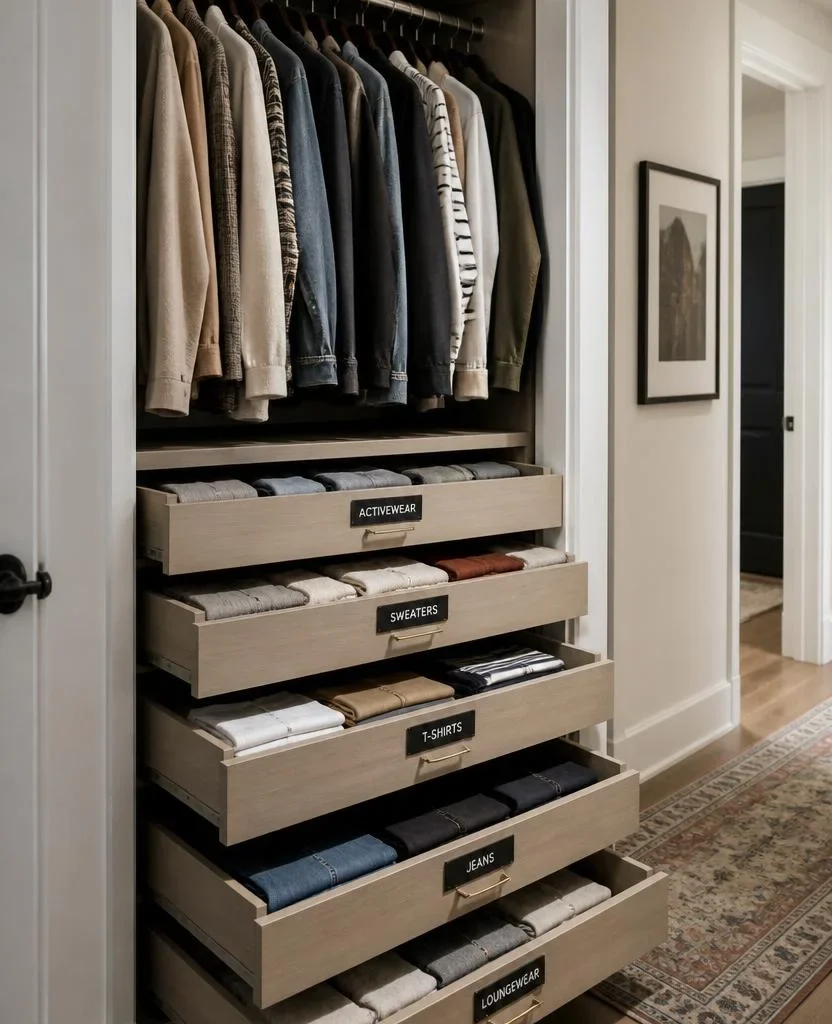
If your closet has floor space below the hanging rod, a pull-out drawer system makes that area incredibly functional. Drawers are perfect for items that need to be contained but accessed frequently — like folded t-shirts, workout gear, or kids’ clothing. A small two or three-drawer unit fits neatly and adds a built-in feel without the built-in price tag.
Freestanding drawer units from places like IKEA or The Container Store are affordable and easy to assemble. Choose ones that match your closet’s color scheme for a more polished, intentional look. Drawers beat open shelves for smaller items because things stay folded and contained rather than getting shoved around every time you grab something from below. It’s a practical upgrade with a big visual payoff.
Create a Gift Wrap Station
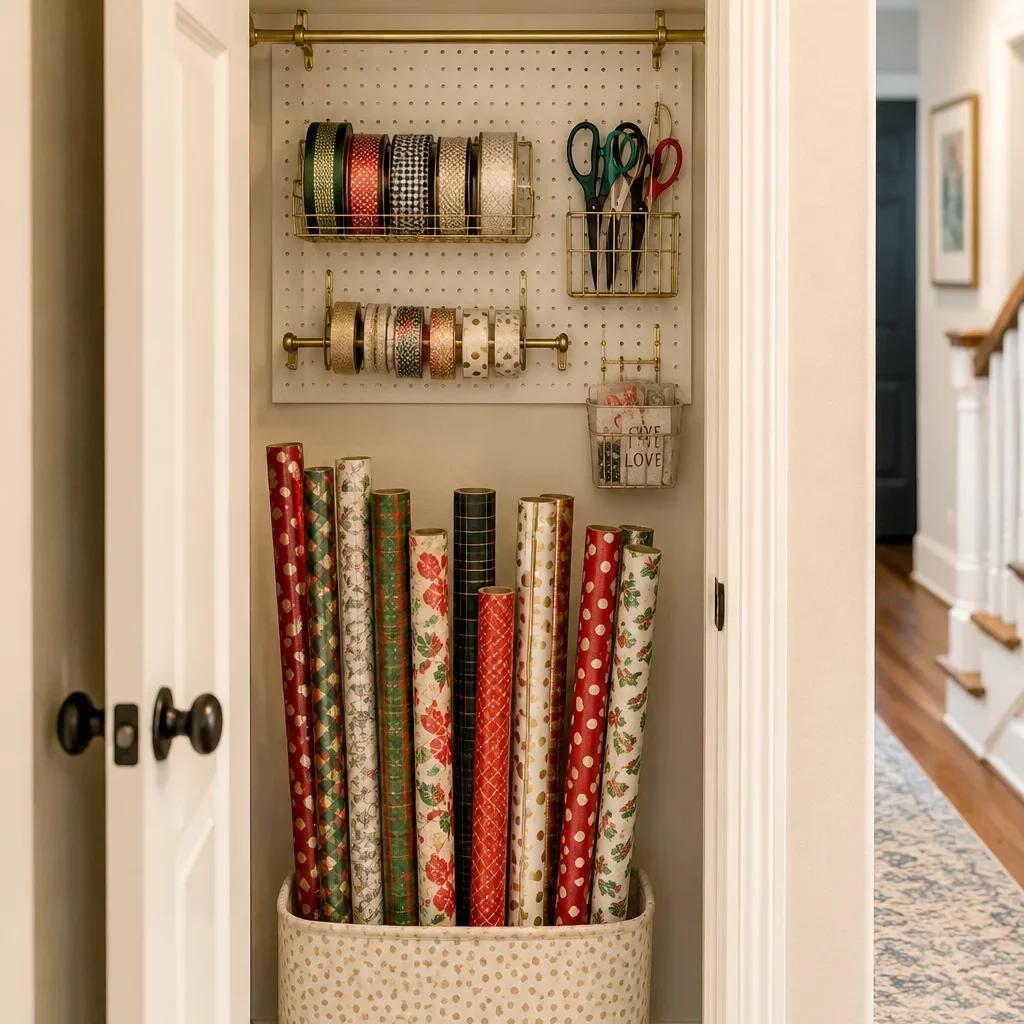
Wrapping paper rolls, ribbons, tape, scissors, and gift bags scattered everywhere is a holiday horror story most people live every year. Dedicate one section of your hallway closet as a gift wrap station to solve this permanently. An upright container for paper rolls, a small basket for ribbons and tape, and a shelf for bags and boxes create a system that’s ready whenever you need it.
Add a small pair of scissors and a label maker to the station so everything you need is right there in one spot. You’ll never again be hunting for tape while a birthday present sits half-wrapped on the table. This station works year-round — not just at the holidays — and it turns a stressful, scattered task into something almost enjoyable. Almost.
Use Tension Rods as Dividers
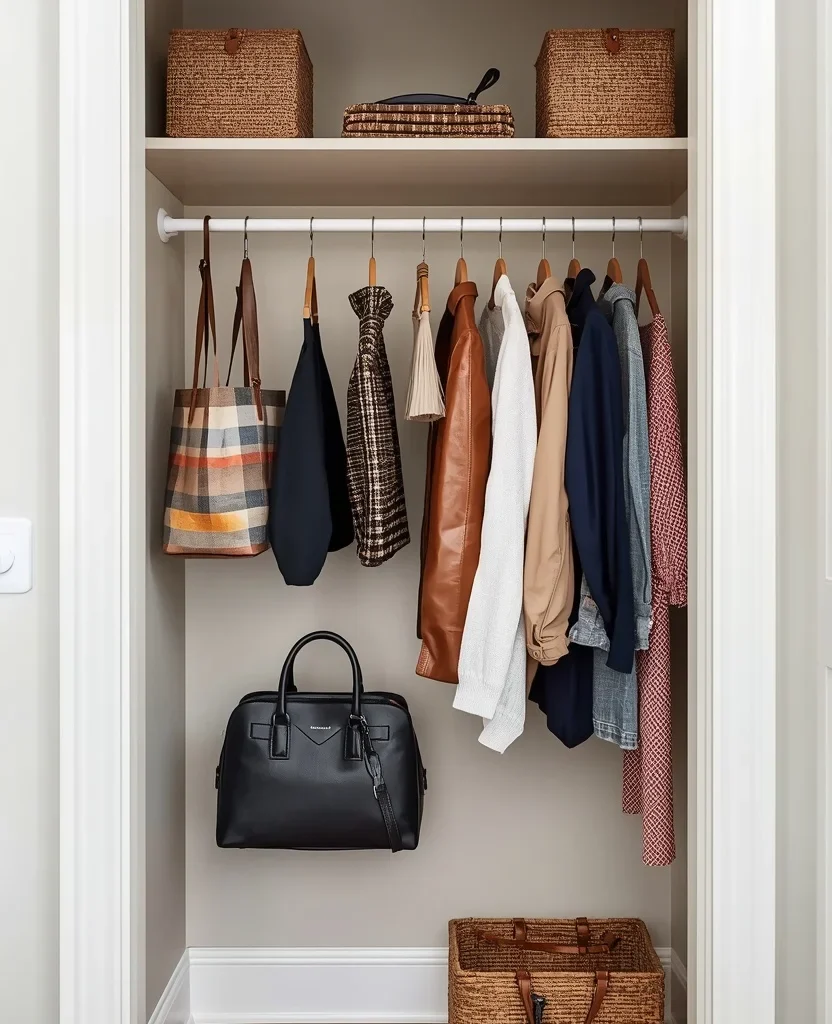
Tension rods aren’t just for hanging — they work brilliantly as vertical dividers on shelves to keep bags, purses, clutches, and flat items like cutting boards or sports equipment standing upright. Instead of bags flopping over and taking up three times the space they should, a couple of tension rods keep everything neatly separated and easy to grab.
Install two or three tension rods across a shelf at evenly spaced intervals and slide bags between them like books on a bookshelf. The rods hold everything upright with zero effort. This is one of those hacks that costs under five dollars and looks like a professional organizer did your closet. The best organization tricks are usually the ones that use what you already own more smartly.
Add a Key and Mail Drop Zone
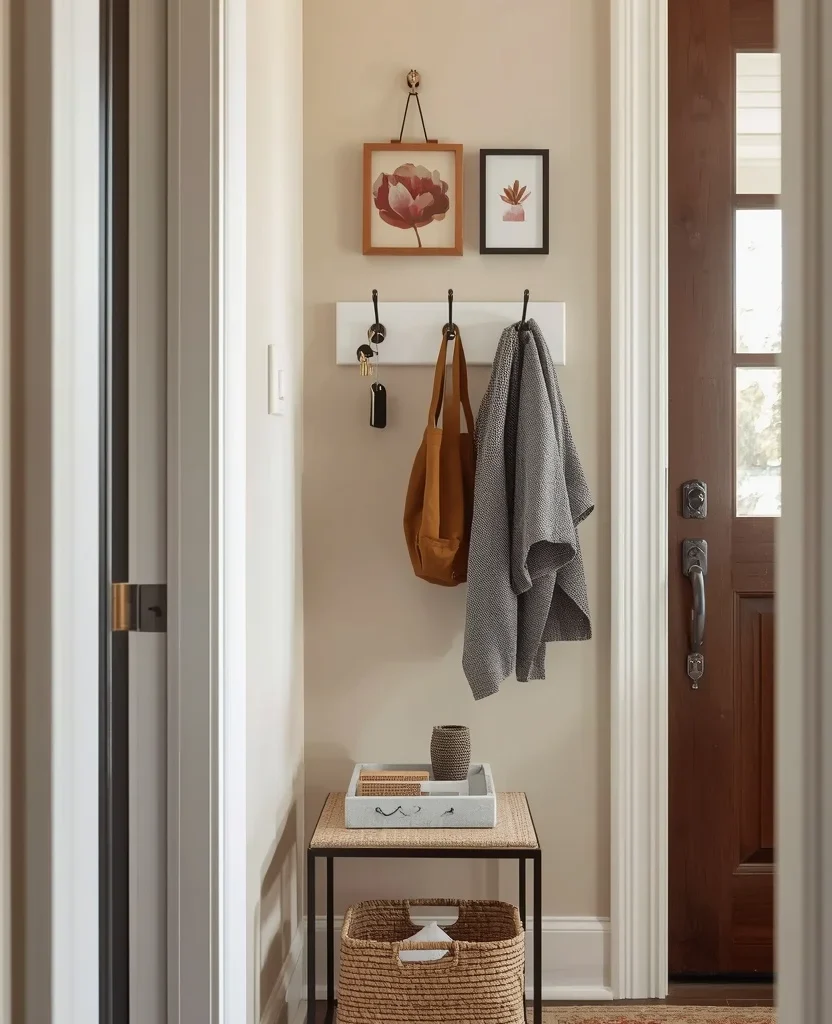
Your hallway closet is likely right near the front door, which makes it the perfect place to create a dedicated key and mail drop zone. Mount two or three small hooks for keys, add a slim wall-mounted tray for incoming mail or outgoing letters, and include a small dish for loose change or earbuds. Suddenly, everything that typically gets lost near the door has an exact spot.
This small system prevents the ‘I can’t find my keys’ panic that derails mornings for millions of people every day — not that we’re judging. Keep the zone small and intentional. If it gets too big, it becomes a clutter collector rather than an organization win. A simple hook-and-tray setup takes five minutes to install and saves five minutes of searching every single day.
Use Magnetic Strips for Small Metal Items
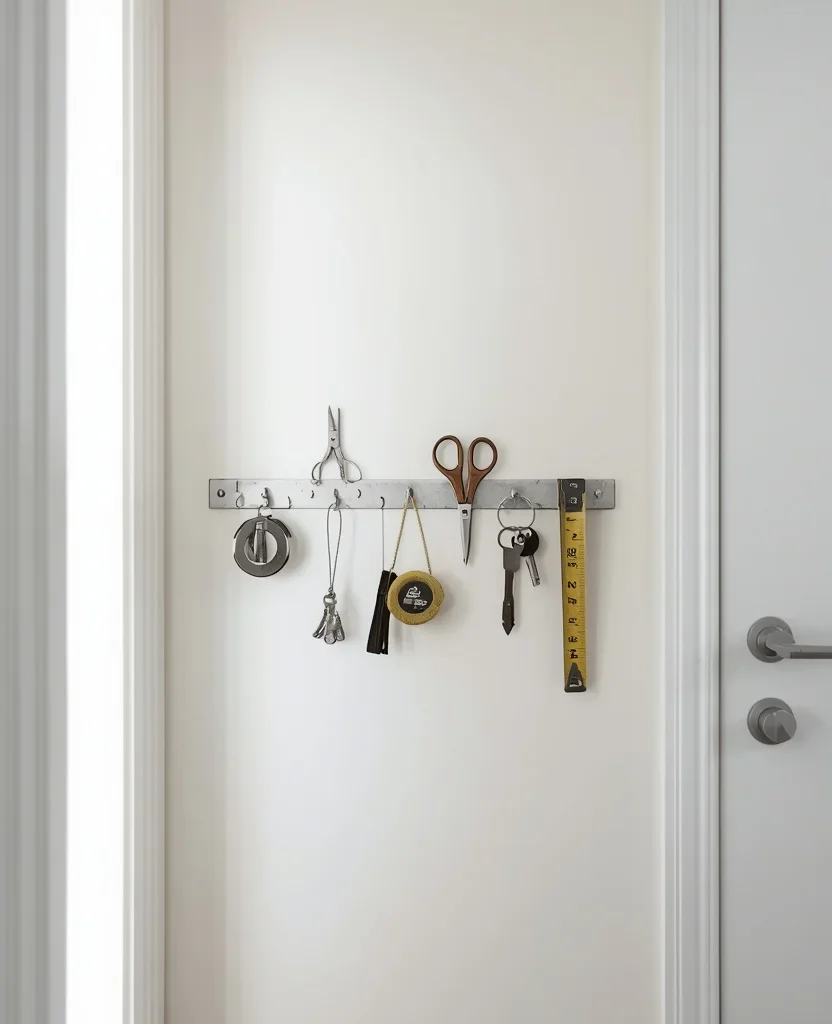
A magnetic strip — the same kind used for kitchen knives — mounted inside your closet wall works brilliantly for small metal items you always lose. Think nail clippers, scissors, a small tape measure, spare keys, or even sunglasses with metal frames. The strip keeps them visible, accessible, and impossible to misplace.
Mount the strip at eye level on the side wall or back wall of the closet. Strong adhesive-backed magnetic strips require zero drilling, making this a renter-friendly option too. The items held magnetically always look intentionally displayed rather than randomly stored, which gives the closet an unexpectedly polished look. Who knew a kitchen accessory would be one of the best hallway closet hacks going?
Do a Monthly 10-Minute Closet Reset
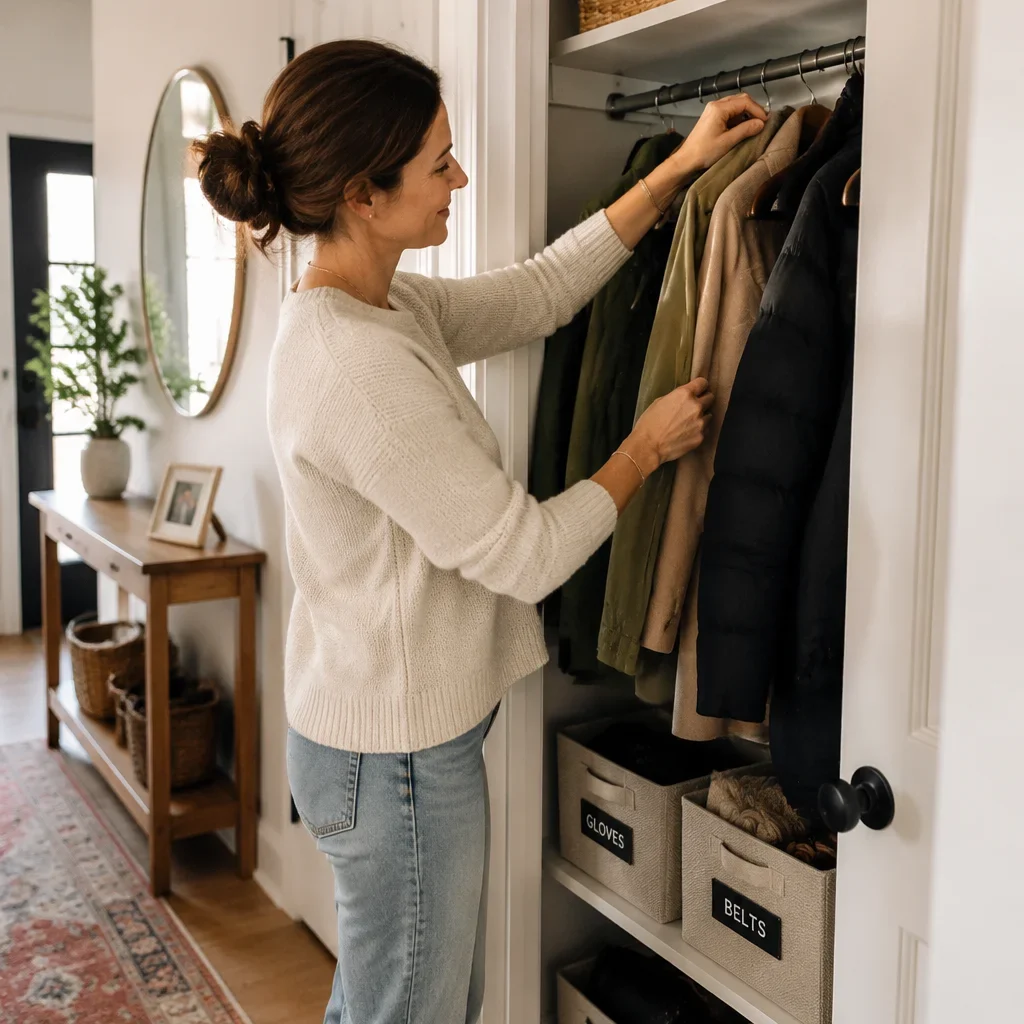
All the hacks in the world mean nothing without maintenance. A monthly 10-minute closet reset keeps everything functioning the way you designed it. Set a recurring reminder, open the closet, put anything out of place back where it belongs, toss items that have snuck in without a home, and take a quick look at whether the system still fits how you’re actually using the space.
Ten minutes once a month is genuinely all it takes. You’ve already built the system — this is just a tune-up. Think of it like clearing your phone’s cache: things run smoother afterward, and you feel weirdly accomplished. The hallway closet that used to stress you out every morning becomes something you’re actually proud to open. And that, honestly, is the whole goal here.
Final Thoughts
There you have it — 24 hallway closet hacks that actually work without requiring a contractor, a huge budget, or a weekend of stress. The real secret isn’t any single one of these ideas; it’s combining a few that fit your specific space and habits. Start with one or two changes this week — maybe the double rod system and some clear labeled bins — and build from there. A well-organized hallway closet makes your whole home feel calmer and your daily routine smoother. It’s one of those improvements that pays off every single day in small, satisfying ways. Now go open that closet door, take a good hard look, and pick your first hack. Your future self will thank you — and so will whoever gets hit by falling things less often

One Comment